
Custom App Development Toronto: Hiring Guide 2026

As Toronto continues to grow as Canada’s leading tech hub, more businesses are investing in custom app development Toronto to build scalable, secure, and fully tailored digital products.

Unlike ready-made software, custom apps are built specifically around your business model, workflow, and customer needs.

But how much does it cost?
What is the development process?
And how do you choose the right agency in 2026?

Let’s break it down.


Why Businesses Choose Custom App Development in Toronto

Off-the-shelf software may seem cheaper initially, but it often creates limitations in:

  • Scalability
  • Feature flexibility
  • Integration capabilities
  • Security customization

That’s why companies prefer working with bespoke app developers Toronto who can create solutions designed specifically for their operations.

Toronto’s ecosystem offers access to experienced engineers, UI/UX designers, and enterprise architects capable of building complex digital platforms.


Cost of Custom App Development in Toronto (2026)

The cost depends on scope, complexity, and integrations.

💰 Estimated Pricing:

  • Basic custom MVP: $30,000 – $60,000
  • Mid-size business app: $60,000 – $120,000
  • Enterprise app development Toronto projects: $120,000 – $250,000+

Factors affecting cost:

  • Number of features
  • Backend complexity
  • API integrations
  • Security requirements
  • Cloud infrastructure
  • Ongoing maintenance

If you’re comparing pricing models and service structures, explore professional mobile app development services in Canada here:


Custom App Development Process in Toronto

A professional Ontario software agency typically follows these stages:

1️⃣ Discovery & Strategy

  • Business analysis
  • Market research
  • Competitor evaluation
  • Feature planning

2️⃣ Wireframing & UI/UX Design

  • User journey mapping
  • Interactive prototypes
  • UX validation

3️⃣ Development Phase

  • Frontend & backend coding
  • API integrations
  • Database architecture

4️⃣ Testing & QA

  • Functional testing
  • Performance testing
  • Security validation

5️⃣ Deployment & Launch

  • App Store / Play Store submission
  • Cloud deployment
  • Performance monitoring

6️⃣ Post-Launch Support

  • Updates
  • Feature expansion
  • Bug fixes

If you’re looking for a reliable app development company in Toronto, you can explore expert development solutions here:


Custom vs Ready-Made Solutions

Custom DevelopmentReady-Made Software
Fully scalableLimited scalability
Built for your workflowGeneric functionality
Stronger security controlShared infrastructure
Long-term ROIShort-term savings

For businesses planning long-term growth, custom development provides strategic advantage.


How to Choose the Right Custom App Developers in Toronto

When selecting a Toronto app development agency, evaluate:

✅ Technical Expertise

  • iOS & Android development
  • Cross-platform frameworks
  • Cloud-native architecture
  • API integration experience

✅ Portfolio Strength

  • Real case studies
  • Industry-specific projects
  • Measurable results

✅ Communication Transparency

  • Clear milestones
  • Transparent pricing
  • Defined contracts

✅ Scalability Planning

Make sure the architecture supports business growth.


Why Local Toronto Agencies Have an Advantage

Hiring local developers ensures:

  • Better time-zone coordination
  • Easier meetings
  • Understanding of Canadian regulations
  • Higher accountability

Many businesses prefer working with an experienced Ontario software agency rather than offshore teams to avoid communication and compliance risks.


Questions to Ask Before Hiring

Before finalizing your custom app partner, ask:

  • Who owns the intellectual property?
  • What security standards do you follow?
  • How do you handle future scalability?
  • What does the maintenance contract include?
  • Do you provide analytics and performance tracking?

Professional agencies will answer confidently and transparently.


Common Mistakes to Avoid

🚩 Choosing solely based on price
🚩 Skipping discovery phase
🚩 Ignoring long-term maintenance
🚩 Not defining project scope clearly
🚩 Hiring developers without reviewing past work

Custom app development is an investment — not an expense.


Final Thoughts

The demand for custom app development Toronto is rising rapidly in 2026 as businesses seek tailored digital solutions.

Whether you’re a startup building an MVP or an enterprise launching a scalable platform, choosing the right Toronto development partner is critical.

Focus on:

  • Experience
  • Process maturity
  • Transparent pricing
  • Long-term partnership

The right agency will not just build your app — they’ll help you grow it.

Mobile App Developers Vancouver: Hiring Guide 2026

Vancouver has rapidly emerged as one of Canada’s strongest technology ecosystems. With a growing startup culture, strong gaming and SaaS industries, and proximity to Silicon Valley, businesses are actively searching for experienced mobile app developers in Vancouver to build scalable digital products.

But how do you choose the right development partner in 2026?

This guide explains costs, expertise, hiring options, and what to look for when selecting a Vancouver app development agency.


Why Vancouver Is a Growing Tech Hub

Vancouver offers:

  • Access to skilled developers and tech graduates
  • Strong presence in gaming, AI, and SaaS
  • Competitive development costs compared to US cities
  • High-quality digital innovation ecosystem

Because of this, many startups and enterprises prefer working with a BC mobile app company rather than outsourcing overseas.


Types of Mobile App Developers in Vancouver

Before hiring, understand your options:

1️⃣ Freelancers

Best for small tasks or prototype-level work.
Lower cost, but limited scalability.

2️⃣ Boutique Agencies

Ideal for startups building MVPs.

3️⃣ Full-Service Development Companies

Best for scalable apps, enterprise platforms, and long-term growth.

If you’re looking for a reliable app development company in Vancouver, explore professional development services here:


Cost of Hiring Mobile App Developers in Vancouver (2026)

Development costs vary depending on complexity.

Estimated Pricing:

  • Basic MVP: $25,000 – $45,000
  • Mid-Level App: $50,000 – $110,000
  • Enterprise App: $120,000+

Factors affecting pricing:

  • Features & functionality
  • Custom UI/UX design
  • Third-party integrations
  • Backend complexity
  • Cloud infrastructure

For a broader breakdown of Canadian pricing trends, you can refer to:
mobile app development services in Canada


Key Expertise to Look for in Vancouver App Developers

When you hire app developers in Vancouver, ensure they offer:

✅ Native Development

  • iOS (Swift)
  • Android (Kotlin)

✅ Cross-Platform Development

  • Flutter
  • React Native

✅ Backend & Cloud

  • API integrations
  • AWS / Azure / Google Cloud
  • Scalable database architecture

A professional Vancouver app development agency should offer end-to-end services — not just coding.


How to Choose the Right Vancouver App Development Agency

1️⃣ Review Portfolio

Look for:

  • Real client case studies
  • App Store / Play Store links
  • Industry experience

2️⃣ Evaluate Communication

A serious Vancouver app development agency will:

  • Provide clear milestones
  • Offer weekly updates
  • Use project management tools
  • Share transparent timelines

3️⃣ Ask About Scalability

Can the app handle:

  • 10,000+ users?
  • Payment systems?
  • High-traffic growth?

Architecture matters more than design in the long run.


Why Businesses Prefer Local Vancouver Developers

Choosing local developers offers:

  • Same time zone collaboration
  • Easier legal compliance
  • Better accountability
  • In-person meetings when required

Compared to offshore development, local teams understand Canadian data regulations and user expectations better.

If you’re building a scalable digital product in British Columbia, partnering with an experienced mobile app development company in Canada can reduce long-term risks.


Questions to Ask Before Hiring

Before you hire app developers in Vancouver, ask:

  • Who owns the source code?
  • What is included in post-launch support?
  • How do you manage app security?
  • Do you provide maintenance plans?
  • Can you assist with App Store Optimization (ASO)?

Clear answers indicate professional maturity.


Red Flags to Avoid

🚩 Unrealistically low pricing
🚩 No legal contract
🚩 No clear project scope
🚩 Poor communication
🚩 No post-launch support

Cheap development often leads to expensive fixes later.


Final Thoughts

The demand for mobile app developers in Vancouver is growing rapidly in 2026. However, choosing the right agency requires more than comparing prices.

Focus on:

  • Technical expertise
  • Transparent process
  • Proven portfolio
  • Long-term partnership mindset

The right development team will not just build your app — they’ll help you scale it.

Mobile App Developers in Toronto: How to Choose the Right Agency in 2026

Toronto has rapidly become one of North America’s leading tech hubs. With a thriving startup ecosystem, strong enterprise presence, and growing investment in AI and fintech, businesses are actively searching for reliable mobile app developers in Toronto to build scalable and innovative digital products.

But with hundreds of agencies claiming to be the best, how do you choose the right one?

This guide will help you understand what to look for, typical costs, red flags to avoid, and how to hire the right Toronto app development agency in 2026.


Why Toronto Is a Hotspot for Mobile App Development

Toronto offers:

  • A large pool of experienced developers
  • Access to top universities and tech talent
  • Strong startup and venture capital ecosystem
  • Competitive pricing compared to US cities

Because of this, many businesses prefer working with a Toronto app development agency instead of outsourcing overseas.


Types of Mobile App Developers in Toronto

Before hiring, you need to understand your options.

1️⃣ Freelance Developers

Lower cost but limited scalability and reliability.

2️⃣ Small App Development Agencies

Good for startups and MVP builds.

3️⃣ Full-Service App Development Companies

Best for scalable products, enterprise apps, and long-term growth.

👉 If you’re looking for a reliable app development company in Toronto, you can explore professional services here:


How to Choose the Right Mobile App Developers in Toronto

✅ 1. Check Technical Expertise

Look for experience in:

  • iOS (Swift)
  • Android (Kotlin)
  • Cross-platform (Flutter / React Native)
  • Backend & APIs
  • Cloud deployment

A strong custom app development Toronto team should offer both frontend and backend expertise.


✅ 2. Review Portfolio & Case Studies

Ask for:

  • Real client projects
  • Industry-specific experience
  • App store links
  • Performance metrics

Avoid agencies that cannot show live products.


✅ 3. Understand Their Development Process

Professional agencies follow:

  1. Discovery & Strategy
  2. Wireframing & Prototyping
  3. UI/UX Design
  4. Development
  5. Testing
  6. Deployment
  7. Maintenance

If an agency skips documentation or structured planning, that’s a red flag.


✅ 4. Compare Pricing Models

Typical Toronto app development costs in 2026:

  • MVP: $25,000 – $50,000
  • Mid-Level App: $50,000 – $120,000
  • Enterprise App: $120,000+

If you want a full pricing breakdown, read:
app development cost in Toronto


✅ 5. Evaluate Communication & Transparency

When you hire app developers in Toronto, ensure:

  • Weekly progress updates
  • Project management tools (Jira, Trello, ClickUp)
  • Clear milestone structure
  • Transparent contracts

Why Businesses Prefer Local Toronto App Developers

Many companies choose local developers because:

  • Same time zone
  • Better collaboration
  • Easier legal compliance
  • Face-to-face meetings
  • Stronger accountability

Unlike offshore teams, local agencies understand Canadian compliance requirements and user behavior.

For businesses looking for reliable long-term partnerships, working with experienced mobile app development services in Canada makes a significant difference.


Questions to Ask Before Hiring a Toronto App Development Agency

  • Who owns the source code?
  • Do you provide post-launch support?
  • What tech stack do you recommend and why?
  • How do you handle scalability?
  • Do you assist with App Store Optimization?

A professional Toronto app development agency should answer these confidently.


Red Flags to Avoid

🚩 Extremely low pricing
🚩 No clear contract
🚩 No documented workflow
🚩 Poor communication
🚩 No maintenance plan

Choosing the wrong agency can delay your launch by months and cost thousands in rework.


Final Thoughts

Finding the right mobile app developers in Toronto isn’t about choosing the cheapest option — it’s about selecting a strategic technology partner.

The right team will:

  • Understand your business goals
  • Build scalable architecture
  • Deliver on time
  • Provide ongoing support

If you’re planning to build a mobile app in Toronto in 2026, focus on experience, process, transparency, and long-term partnership — not just cost.

Startup App Development Vancouver: MVP & Pricing Guide

Vancouver has rapidly become one of Canada’s most promising startup ecosystems. From fintech to AI and SaaS, founders are turning ideas into scalable digital products.

If you’re searching for startup app development Vancouver, this guide will walk you through MVP strategy, development costs, timelines, and how to choose the right BC startup app agency in 2026.


Why Vancouver Is a Growing Startup Hub

Vancouver’s startup ecosystem benefits from:

  • Strong tech talent pool
  • Government innovation grants
  • Proximity to US markets
  • Growing SaaS and AI community

This makes Vancouver tech startups highly competitive — and speed to market becomes critical.

That’s where MVP development plays a major role.


What Is Startup App Development?

Startup app development is different from enterprise development.

Startups need:

  • Fast validation
  • Lean budgets
  • Scalable architecture
  • Investor-ready product

Instead of building a full-scale platform immediately, most founders start with MVP development Vancouver services.


What Is an MVP? (And Why It Matters for Vancouver Startups)

An MVP (Minimum Viable Product) includes only:

  • Core features
  • Basic UX
  • Essential backend
  • Real user testing capability

For startups in Vancouver, MVP development helps:

  • Reduce initial cost
  • Validate market demand
  • Attract investors
  • Launch within 8–16 weeks

Startup App Development Vancouver: Cost Breakdown (2026)

Here’s what founders can expect:

App TypeEstimated Cost (CAD)
Basic MVP$20,000 – $35,000
Mid-level Startup App$35,000 – $60,000
Complex / Scalable SaaS$60,000 – $120,000+

Costs depend on:

  • Features
  • Platform (iOS / Android / Web)
  • UI/UX complexity
  • Backend infrastructure
  • API integrations

If you’re also researching overall app development cost Vancouver, pricing structures may vary slightly for startups due to phased development.


Key Features Vancouver Startups Should Prioritize

Instead of building everything, focus on:

  • User onboarding
  • Core functionality
  • Payment integration (if needed)
  • Admin dashboard
  • Analytics tracking

Scaling can happen after product-market fit.


How to Choose the Right BC Startup App Agency

When hiring a BC startup app agency, look for:

1️⃣ Startup Experience

Agencies that understand lean product development.

2️⃣ MVP-Focused Strategy

They should recommend phased development.

3️⃣ Transparent Pricing

Clear milestone-based cost structure.

4️⃣ Local Market Understanding

Experience working with Vancouver tech startups.

If you are evaluating different options, also explore established app developers in Vancouver to compare portfolios and pricing models.


Common Mistakes Vancouver Founders Make

❌ Overbuilding before validation
❌ Hiring the cheapest developers
❌ Ignoring scalability
❌ Skipping market research
❌ Not planning for version 2.0

A structured startup app development strategy prevents budget burn.


Development Timeline for Startup Apps

Typical timeline in Vancouver:

  • Discovery & Planning → 2–3 weeks
  • UI/UX Design → 2–4 weeks
  • MVP Development → 6–10 weeks
  • Testing & Launch → 2 weeks

Total: 3–4 months for most MVP builds.


FAQs – Startup App Development Vancouver

How much does startup app development cost in Vancouver?

Startup app development Vancouver typically ranges between $20,000 to $60,000 depending on MVP scope, features, and scalability requirements.


How long does MVP development take?

Most MVP development Vancouver projects take 8–16 weeks depending on complexity.


Should startups hire local Vancouver developers?

Working with local Vancouver tech startups and agencies can improve collaboration, market understanding, and long-term support.


What industries are growing in Vancouver startups?

AI, SaaS, fintech, health tech, and sustainability-based platforms are rapidly expanding sectors.

App Development Cost Vancouver: 2026 Pricing & Agency Guide

Vancouver has become one of Canada’s fastest-growing tech hubs, attracting startups, SaaS companies, logistics platforms, and AI-driven businesses.

But one of the most common questions business owners ask is:

How much does app development cost in Vancouver in 2026?

The short answer:
It depends on features, complexity, platform, and the development team you hire.

This detailed guide explains:

  • Mobile app cost in Vancouver
  • Hourly developer rates
  • App pricing in BC
  • Factors affecting cost
  • Hidden expenses to consider

Average App Development Cost in Vancouver (2026)

Here’s what businesses typically pay when working with a Vancouver app agency:

App TypeEstimated Cost (CAD)
Basic MVP$25,000 – $45,000
Mid-Level App$45,000 – $110,000
Complex Enterprise App$110,000 – $300,000+

These ranges reflect current mobile app cost Vancouver trends for startups and enterprises.


Vancouver Developer Hourly Rates

In British Columbia, developer rates vary based on experience:

  • Junior Developer: $60–$85/hour
  • Mid-Level Developer: $90–$130/hour
  • Senior Developer: $130–$180/hour
  • Vancouver App Agency (blended): $100–$200/hour

Agencies typically cost more but provide structured project management, QA, and post-launch support.


What Affects App Pricing in BC?

1️⃣ App Complexity

  • Login & user accounts
  • Payment integration
  • Admin dashboards
  • Real-time features
  • AI integrations

More features = higher Vancouver app agency cost.


2️⃣ Platform Choice

  • iOS app
  • Android app
  • Cross-platform (Flutter / React Native)
  • Web app

If you’re building both iOS and Android separately, cost increases significantly.

👉 If you’re considering native mobile builds, check our detailed mobile app development services guide.


3️⃣ UI/UX Design Quality

Custom design increases cost but improves:

  • User retention
  • Conversion rates
  • Brand perception

If you want premium UI/UX, your cost may increase by $5,000–$20,000.


4️⃣ Backend Infrastructure & Cloud Hosting

Scalable apps require:

  • Secure APIs
  • Cloud hosting
  • Database management
  • Performance optimization

If you’re planning a scalable system, review our cloud app development services.


Cost Breakdown by Business Type in Vancouver

Startup MVP in Vancouver

Typical Cost: $25,000–$50,000
Timeline: 3–5 months

Startups usually begin with MVP development before scaling.

If you’re a startup, read our full guide on startup app development in Vancouver.


Enterprise App in Vancouver

Typical Cost: $120,000+
Timeline: 6–12 months

Enterprise apps include:

  • ERP integrations
  • Advanced analytics
  • AI modules
  • Compliance requirements

For larger businesses, explore our app development services in Canada.


Hidden Costs Businesses Often Ignore

Many companies underestimate:

  • App store fees
  • Maintenance & updates
  • Security upgrades
  • Server scaling
  • Ongoing QA

Annual maintenance typically costs:
15%–25% of initial development cost.

If you want long-term reliability, consider professional app maintenance services.


Vancouver vs Toronto App Development Cost

Costs in Vancouver are slightly comparable to Toronto, but:

  • Vancouver has strong AI & SaaS focus
  • Toronto has larger fintech & enterprise demand

If you’re comparing both markets, check our detailed breakdown of app developers in Toronto.


Should You Hire a Vancouver App Agency?

Hiring a local Vancouver app agency is ideal if:

  • You want timezone alignment
  • You prefer local strategy sessions
  • You need BC market understanding
  • You require regulatory compliance knowledge

If you’re looking for trusted professionals, explore our app development company in Vancouver page.


FAQs – App Development Cost in Vancouver

1. How long does it take to build an app in Vancouver?

  • MVP: 3–5 months
  • Mid-level app: 4–8 months
  • Enterprise app: 6–12+ months

2. Is it cheaper to outsource outside Canada?

Yes, but outsourcing may reduce:

  • Communication clarity
  • Quality control
  • Compliance reliability

Many BC businesses prefer local Vancouver teams for long-term success.


3. What is the minimum budget to build an app in Vancouver?

You should realistically budget at least $25,000–$30,000 for a functional MVP.


Final Thoughts

App development cost in Vancouver depends on:

  • Scope
  • Features
  • Platform
  • Team structure
  • Scalability requirements

Instead of choosing the cheapest option, focus on:

✔ Technical expertise
✔ Transparent pricing
✔ Clear process
✔ Long-term partnership

Investing correctly from the start prevents expensive rebuilds later.

How to Hire the Best App Developers in Toronto: Cost, Skills & Red Flags (2026)

Toronto has become one of North America’s fastest-growing tech hubs. From fintech startups to AI-driven enterprises, businesses across industries are investing in mobile and web applications to stay competitive.

But here’s the real challenge:

How do you hire the right app developers in Toronto without overspending or compromising quality?

This guide breaks down:

  • Hiring options
  • Development costs in 2026
  • Must-have skills
  • Red flags to avoid
  • FAQs business owners actually search for

Why Hire App Developers in Toronto?

Toronto offers:

  • A strong tech ecosystem
  • Access to AI and fintech talent
  • Proximity to major North American markets
  • High-quality development standards

When you hire app developers in Toronto, you benefit from:

  • Strong communication
  • Regulatory compliance knowledge (PIPEDA, industry standards)
  • Experience with North American user behavior

Hiring Options: Agency vs Freelancers vs In-House

1️⃣ App Development Agency Toronto

Best for:

  • Startups building MVPs
  • Enterprises scaling platforms
  • Long-term product roadmaps

Pros

  • Full team (designers, developers, QA, PM)
  • Structured process
  • Faster turnaround

Cons

  • Higher upfront cost

2️⃣ Freelance App Developers Toronto

Best for:

  • Small feature updates
  • Short-term fixes
  • Prototype builds

Pros

  • Lower cost
  • Flexible contracts

Cons

  • Risk of delays
  • Limited accountability
  • No structured QA

3️⃣ In-House Developers

Best for:

  • Long-term product companies
  • Continuous product iterations

Cons

  • Salary + benefits
  • Hiring timeline
  • HR overhead

How Much Does It Cost to Hire App Developers in Toronto? (2026)

Here’s what businesses typically pay:

Project TypeEstimated Cost (CAD)
Basic MVP$25,000 – $50,000
Mid-Level App$50,000 – $120,000
Complex Enterprise App$120,000 – $300,000+

Hourly Rates in Toronto:

  • Junior Developer: $60–$90/hour
  • Mid-Level Developer: $90–$130/hour
  • Senior Developer: $130–$180/hour
  • App Development Agency: $100–$200/hour (blended)

Costs depend on:

  • Platform (iOS, Android, Web)
  • Features & integrations
  • UI/UX complexity
  • Backend infrastructure
  • Compliance requirements

Skills to Look For in Toronto Mobile App Developers

When hiring, ensure they have:

✅ Technical Skills

  • Swift / Kotlin (native)
  • Flutter / React Native (cross-platform)
  • Node.js / .NET / Python backend
  • Cloud experience (AWS, Azure, GCP)

✅ Business Understanding

  • MVP strategy knowledge
  • Scalability planning
  • Monetization models

✅ Process Expertise

  • Agile methodology
  • Sprint planning
  • QA & testing workflows
  • Post-launch support

Red Flags to Avoid

🚩 No clear development process
🚩 Unrealistically low pricing
🚩 No portfolio or case studies
🚩 Poor communication during early discussions
🚩 No clear IP ownership terms

If an agency avoids signing NDAs or structured contracts — walk away.


Questions to Ask Before Hiring

  1. What industries have you worked in?
  2. Can you show live apps you’ve built?
  3. What’s your development methodology?
  4. How do you handle app scalability?
  5. What support do you offer after launch?

Toronto Tech Ecosystem Advantage

Toronto is home to:

  • A rapidly growing startup scene
  • AI-focused innovation
  • Fintech expansion
  • Government-supported tech growth initiatives

This makes Toronto mobile app developers highly adaptable and future-ready.


When Should You Choose a Toronto-Based App Development Agency?

Choose a local agency if:

  • You want in-person strategy sessions
  • You need compliance clarity
  • You prefer time-zone alignment
  • You’re targeting the Canadian or North American market

FAQs – Hiring App Developers in Toronto

1. How long does it take to build an app in Toronto?

  • MVP: 3–5 months
  • Mid-level app: 4–8 months
  • Complex enterprise app: 8–14 months

2. Is it better to hire locally or outsource?

Local developers offer better communication, regulatory familiarity, and quality assurance. Outsourcing may reduce cost but increases coordination risk.


3. Do Toronto developers handle both iOS and Android?

Yes. Most agencies offer:

  • Native iOS development
  • Native Android development
  • Cross-platform frameworks

4. What industries do Toronto app developers specialize in?

  • Fintech
  • Healthcare
  • Real Estate
  • E-commerce
  • SaaS platforms

Final Thoughts

Hiring the best app developers in Toronto isn’t about choosing the cheapest option — it’s about choosing the right strategic partner.

Focus on:

  • Process transparency
  • Proven portfolio
  • Technical depth
  • Long-term support

A strong development partner can turn your idea into a scalable digital product that grows with your business.

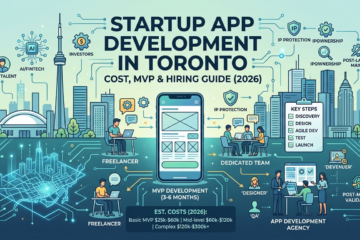
Startup App Development in Toronto: Cost, MVP & Hiring Guide (2026)

Toronto has become one of North America’s fastest-growing tech ecosystems. With a booming startup culture, strong investor network, and access to top engineering talent, the city is a prime location for building innovative mobile and web applications.

If you’re a founder planning to build an app in 2026, this guide covers everything you need to know — costs, MVP strategy, hiring options, and how to choose the right app development agency in Toronto.


Why Toronto Is a Hub for Startup App Development

Toronto is home to:

  • 20,000+ tech companies
  • Strong AI and fintech ecosystems
  • World-class universities producing tech talent
  • Access to venture capital and angel investors

For startups, this means access to:

  • Experienced product designers
  • Skilled mobile and backend developers
  • Innovation-driven development agencies
  • Scalable infrastructure support

However, building an app in Toronto also requires careful budgeting and planning.


Step 1: Start With an MVP (Minimum Viable Product)

Most successful Toronto tech startups don’t launch with a full-feature product. They begin with an MVP (Minimum Viable Product) — a simplified version of the app that solves one core problem.

Why MVP Development Is Crucial

  • Reduces initial investment
  • Helps validate market demand
  • Attracts investors faster
  • Collects real user feedback
  • Minimizes development risk

Typical MVP Timeline in Toronto

  • Planning & Wireframes: 2–4 weeks
  • UI/UX Design: 3–5 weeks
  • Development: 8–14 weeks
  • Testing & Launch: 3–4 weeks

Total: 3 to 6 months


How Much Does Startup App Development Cost in Toronto?

Costs vary depending on complexity, features, and development partner.

Estimated App Development Costs (2026)

App TypeEstimated Cost
Basic MVP$25,000 – $60,000
Mid-level App$60,000 – $120,000
Complex Startup App (AI, Marketplace, Fintech)$120,000 – $300,000+

Hourly Rates in Toronto

  • Freelancers: $50 – $100/hour
  • Small Agencies: $75 – $130/hour
  • Established App Agencies: $100 – $180/hour

Toronto rates are higher than offshore markets, but you benefit from:

  • Strong communication
  • Easier collaboration
  • Legal alignment
  • Higher quality standards

Choosing the Right Startup App Agency in Toronto

Not all development partners are the same. For startups, selecting the right team is critical.

1. Look for Startup Experience

Agencies that work with startups understand:

  • Budget constraints
  • Investor expectations
  • Rapid iteration cycles
  • MVP-first approach

Ask for case studies of previous startup projects.


2. Evaluate Technical Expertise

Ensure the agency has experience in:

  • iOS & Android development
  • Cross-platform frameworks (Flutter, React Native)
  • Cloud infrastructure (AWS, Azure, GCP)
  • API integrations
  • Security & compliance

If your app includes AI or fintech components, confirm relevant experience.


3. Understand Their Development Process

A reliable Toronto startup agency should follow:

  • Discovery & strategy workshops
  • Wireframing & prototyping
  • Agile development (2-week sprints)
  • Regular demo calls
  • QA testing
  • Post-launch support

Transparency is key.


Hiring Options for Toronto Startups

You have three main paths:

1. Freelancers

Best for small MVPs or limited budgets.

Pros:

  • Lower cost
  • Flexible

Cons:

  • Limited scalability
  • Single-point dependency

2. App Development Agency

Best for structured, end-to-end development.

Pros:

  • Full team (design, development, QA)
  • Professional processes
  • Faster execution

Cons:

  • Higher cost

3. Dedicated Development Team

Ideal for funded startups scaling rapidly.

Pros:

  • Long-term collaboration
  • Flexible scaling
  • High control

Cons:

  • Requires strong management

Common Mistakes Toronto Startups Make

  1. Building too many features in version 1
  2. Ignoring user validation
  3. Choosing the cheapest developer
  4. Skipping proper testing
  5. Not planning post-launch marketing

Remember: Development is only 50% of the journey. Growth and retention matter just as much.


Post-Launch: What Happens After Your App Goes Live?

Your launch is just the beginning.

After launch, focus on:

  • Performance monitoring
  • Bug fixes & updates
  • User analytics
  • Feature improvements
  • Marketing & user acquisition

Ongoing maintenance typically costs 15–25% of initial development cost annually.


Why Local Toronto Development Can Be a Smart Move

Working with a Toronto-based agency offers:

  • In-person meetings
  • Better alignment with Canadian regulations
  • Stronger IP protection
  • Easier communication across time zones

For many funded startups, the reliability and quality outweigh the cost difference.


FAQs: Startup App Development in Toronto

1. How long does it take to build a startup app in Toronto?

An MVP usually takes 3–6 months. A full-feature app can take 6–12+ months depending on complexity.


2. Is Toronto expensive for app development?

Yes, compared to offshore markets. However, you gain higher quality, smoother communication, and legal security.


3. Should startups outsource outside Canada?

If budget is tight, hybrid models (Toronto strategy + offshore development) can reduce costs while maintaining quality.


4. What tech stack is best for startups?

For most startups:

  • Frontend: Flutter or React Native
  • Backend: Node.js, Python
  • Cloud: AWS or Google Cloud
  • Database: PostgreSQL or MongoDB

The final stack depends on your product goals.


5. How do I protect my app idea?

  • Sign NDAs
  • Register your business
  • Trademark your brand
  • Ensure IP ownership is defined in your development contract

Final Thoughts

Startup app development in Toronto is a powerful opportunity — but it requires strategic planning.

If done right, you can:

  • Launch faster
  • Attract investors
  • Validate your idea efficiently
  • Scale sustainably

Toronto offers the talent, ecosystem, and infrastructure needed to turn your startup idea into a scalable digital product in 2026.

App Development Outsourcing in Canada: Benefits, Costs & Risks Explained

Outsourcing app development has become a strategic move for Canadian startups, SMEs, and even enterprise companies. With rising talent shortages, increasing development costs, and faster go-to-market pressures, businesses are now looking beyond in-house teams to build scalable, high-quality mobile and web applications.

But is outsourcing the right choice for your business?

In this detailed guide, we’ll break down the benefits, costs, risks, and best practices of app development outsourcing in Canada so you can make an informed decision.


What Is App Development Outsourcing?

App development outsourcing means hiring an external team — either in Canada or overseas — to design, develop, test, and sometimes maintain your mobile or web application.

Instead of building an internal development team, companies partner with:

  • Specialized app development agencies
  • Offshore or nearshore development firms
  • Freelance developers
  • Dedicated remote development teams

Why Canadian Businesses Are Outsourcing App Development in 2026

1. Access to Specialized Talent

Canada has strong tech hubs like Toronto, Vancouver, Montreal, and Calgary. However, skilled developers — especially in AI, blockchain, and cloud technologies — are in high demand and limited supply.

Outsourcing gives businesses access to:

  • AI/ML engineers
  • Cross-platform developers (Flutter, React Native)
  • DevOps & cloud specialists
  • UI/UX experts

You’re not limited to your local hiring market.


2. Cost Efficiency

Hiring full-time in-house developers in Canada can cost:

  • Junior Developer: $70,000–$90,000/year
  • Mid-Level Developer: $90,000–$120,000/year
  • Senior Developer: $120,000–$160,000+/year

Plus benefits, infrastructure, HR costs, and software tools.

Outsourcing allows you to:

  • Pay per project
  • Pay hourly
  • Hire a dedicated team for a fixed monthly fee

This significantly reduces overhead costs.


3. Faster Time to Market

Outsourced agencies already have:

  • Established workflows
  • Ready tech stacks
  • QA teams
  • DevOps pipelines

Instead of spending months hiring and onboarding, you can start development almost immediately.

For startups, speed often means survival.


4. Scalability & Flexibility

Need 2 developers today and 6 next month? Outsourcing makes scaling easy.

You can:

  • Increase team size during development
  • Reduce costs after launch
  • Add specialists for specific features

This flexibility is difficult with full-time employees.


Types of App Development Outsourcing Models

1. Fixed-Price Model

Best for clearly defined projects.

  • Predefined scope
  • Set budget
  • Lower financial risk
  • Limited flexibility for changes

2. Hourly / Time & Material Model

Ideal for evolving projects.

  • Flexible scope
  • Pay for actual hours worked
  • Transparent billing
  • Suitable for startups

3. Dedicated Team Model

Works like an extended in-house team.

  • Long-term collaboration
  • Monthly billing
  • High control over workflow
  • Great for scaling businesses

How Much Does App Development Outsourcing Cost in Canada?

Costs vary depending on project complexity and location of the outsourcing team.

Average App Development Costs (2026)

  • Simple app: $20,000 – $50,000
  • Medium complexity app: $50,000 – $120,000
  • Complex app (AI, fintech, marketplace): $120,000 – $300,000+

Hourly Rates Comparison

  • Canada-based agency: $80 – $150/hour
  • Eastern Europe: $40 – $80/hour
  • Asia: $20 – $50/hour

While offshore options may seem cheaper, quality, communication, and time-zone differences must be considered.


Risks of App Development Outsourcing

Outsourcing isn’t risk-free. Here are key challenges Canadian businesses should watch for:

1. Communication Gaps

Time zone differences and cultural variations can cause delays or misunderstandings.

Solution: Use structured communication tools (Slack, Jira, weekly sprint calls).


2. Quality Concerns

Not all outsourcing companies follow strict coding standards.

Solution:

  • Review portfolios
  • Ask for code samples
  • Conduct technical interviews
  • Start with a small paid trial project

3. Security & IP Risks

Data privacy is crucial in Canada, especially under PIPEDA regulations.

Solution:

  • Sign NDAs
  • Define IP ownership clearly in contracts
  • Work with legally registered companies

4. Hidden Costs

Poor planning can lead to scope creep and unexpected expenses.

Solution:

  • Define project scope clearly
  • Use milestone-based payments
  • Maintain documentation

When Should You Outsource App Development?

Outsourcing is ideal when:

  • You don’t have an internal tech team
  • You need to launch quickly
  • Your project requires specialized expertise
  • You want to reduce operational costs
  • You’re building an MVP before raising funding

However, if your app is your core long-term product and you plan continuous development, a hybrid model (in-house + outsourced) may work better.


Best Practices for Successful Outsourcing

  1. Clearly define your app goals and target audience
  2. Prepare wireframes or MVP documentation
  3. Choose the right pricing model
  4. Ensure legal agreements protect your IP
  5. Set clear KPIs and milestones
  6. Maintain regular communication
  7. Plan for post-launch maintenance

Outsourcing is not “set it and forget it.” Active collaboration ensures better results.


FAQs: App Development Outsourcing in Canada

1. Is outsourcing app development safe?

Yes — if you work with reputable agencies, sign legal agreements, and follow security best practices.


2. Should I outsource within Canada or overseas?

If budget allows, Canadian agencies provide easier communication and regulatory alignment. Offshore teams reduce costs but require stronger management.


3. How long does outsourced app development take?

  • MVP: 3–6 months
  • Medium app: 6–9 months
  • Complex app: 9–12+ months

4. Who owns the app code after outsourcing?

Ownership depends on the contract. Always ensure IP rights are transferred to your company upon payment.


5. Can I switch vendors during development?

Yes, but it can cause delays. Ensure documentation and code repositories are accessible to you from day one.


Final Thoughts

App development outsourcing in Canada is no longer just a cost-saving tactic — it’s a strategic growth decision. When executed correctly, it provides:

  • Faster product launches
  • Access to global expertise
  • Lower operational costs
  • Greater scalability

However, success depends on choosing the right partner, defining expectations clearly, and maintaining consistent communication.

If you approach outsourcing strategically, it can become one of your biggest competitive advantages in 2026 and beyond.

Top App Development Trends in Canada for 2026: What Businesses Must Know

Mobile app development continues to evolve rapidly — and 2026 will be a pivotal year for businesses looking to stay competitive and relevant in Canada’s tech landscape. With innovations like AI, 5G, immersive technologies, and smarter UX integrations, the mobile ecosystem is transforming from simple utility tools into deeply personalized digital experiences that shape how people live, work, and shop.

Here’s a detailed look at the key trends Canadian businesses and developers must watch, why they matter, and how they’re reshaping the future of mobile apps.


📱 1. AI-Powered and AI-Native Mobile Apps

Artificial intelligence isn’t optional — it’s expected. In 2026, AI and machine learning will power almost every major feature inside successful apps: real-time personalization, intelligent recommendations, smart search, adaptive interfaces, and automated workflows.

Why it matters for Canada:

  • AI can tailor experiences based on user behavior and location.
  • On-device AI improves privacy and speed without needing constant cloud access.
  • AI-based analytics help businesses better understand customer journeys.

Business impact: Better engagement, stronger retention, and higher lifetime value.


📶 2. 5G + Edge Computing Enable Ultra-Fast, Real-Time Experiences

5G adoption continues to expand across Canada and worldwide, empowering apps with lightning-fast load times, richer media delivery, and near-instantaneous response. When paired with edge computing, apps can process data locally — which cuts latency, enhances interactivity, and boosts performance without round trips to distant servers.

What this enables:

  • Real-time collaboration tools (e.g., shared whiteboards, live gaming)
  • 4K/8K streaming
  • AR/VR features with minimal lag

Business impact: Exceptional user experiences that fuel retention and user delight.


🌐 3. Progressive Web Apps (PWAs) and Zero-Download Experiences

In 2026, the line between mobile web and native apps blurs. Progressive Web Apps (PWAs) are quickly becoming a preferred choice for many businesses because they load instantly, work offline, and don’t require users to install anything from an app store — yet behave like native apps.

Benefits for Canadian businesses:

  • Lower development & maintenance costs
  • Broader device reach through a single codebase
  • Push notifications and home-screen installation without app store friction

🔄 4. Cross-Platform Development Is Standard Practice

Whether you’re targeting iOS, Android, or both, cross-platform frameworks like Flutter and React Native continue to mature. They deliver near-native performance while significantly reducing development time and cost — a big competitive advantage for Canadian startups and SMBs alike.

Business impact:

  • Faster time to market
  • Easier updates and maintenance
  • Consistent UI across platforms

🤝 5. Superior UX: Voice, Multimodal Interfaces & Immersive Tech

Apps in 2026 are increasingly interactive and intuitive — moving beyond tapping and typing to voice commands, visual search, gestures, and camera-based interactions.

At the same time, AR (Augmented Reality) and VR (Virtual Reality) are becoming mainstream — not just for gaming, but in retail try-ons, immersive education, real-estate walkthroughs, and interactive marketing.

Business impact: Deeper engagement and novel experiences that capture attention.


🛡️ 6. Privacy and Security Take Center Stage

With stricter privacy regulations and growing user concerns, mobile apps must adopt strong security practices — including encryption, secure authentication, and privacy-first design. For Canadian businesses, aligning with PIPEDA and other local data laws isn’t just good practice — it’s essential for trust.

Business impact: Reduced risk, improved trust, and better compliance.


🌍 7. IoT and Connected Devices Become App Hubs

Apps are no longer confined to phones. In 2026, mobile applications increasingly serve as central control hubs for wearables, smart homes, connected cars, and industrial IoT devices.

Business impact: New service opportunities and deeper ecosystem integration.


📈 8. Super Apps and Mini-Apps Ecosystems

Inspired by apps like WeChat and Grab, the concept of **super apps — platforms that host multiple services under one roof — **is gaining traction globally. In Canada, businesses exploring this model can offer integrated experiences such as chat, payments, bookings, and commerce — all within one app.

Business impact: Higher engagement, stronger retention, and more monetization opportunities.


📊 Business Benefits of Adopting 2026 App Trends

TrendBusiness Impact
AI & ML integrationHigher personalization & user satisfaction
5G & edge computingFaster experiences & richer features
PWAsBroader reach & lower cost
Cross-platformFaster development & consistent UX
Immersive interfacesEngaging experiences & standout apps
Privacy/securityCompliance & customer trust
IoT connectivityNew product ecosystems & services
Super appsIncreased retention & monetization

FAQs: App Development Trends in Canada for 2026

Q1. Why is AI such a big trend in 2026 mobile apps?
AI enables apps to understand users better, personalize experiences, automate workflows, and make contextual recommendations — all of which drive engagement and business value.

Q2. Are PWAs replacing native apps?
Not entirely. PWAs complement native apps by offering instant, install-free experiences ideal for many business uses — especially ecommerce, info services, and content platforms.

Q3. Is cross-platform development worth it for Canadian businesses?
Yes — frameworks like Flutter and React Native offer near-native performance while dramatically reducing development cost and time to market.

Q4. What industries benefit most from 2026 app trends?
Industries such as ecommerce, fintech, healthcare, education, logistics, and smart home technologies will benefit significantly from personalization, 5G experiences, IoT integration, and immersive interfaces.


🔍 Conclusion

Mobile app development in Canada for 2026 isn’t just about “building apps” — it’s about crafting intelligent, immersive, high-performance digital experiences that align with user expectations and business goals. Whether your company is launching a new app or optimizing an existing one, aligning with these trends will ensure you stay ahead of the competition and deliver world-class mobile products.

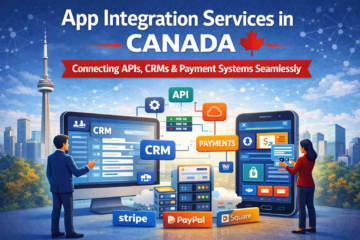
App Integration Services in Canada: Connecting APIs, CRMs & Payment Systems Seamlessly (2026 Guide)

Modern applications don’t work in isolation. Whether you run a startup, SME, or enterprise, your mobile or web app likely needs to connect with CRMs, payment gateways, cloud platforms, analytics tools, and third-party services.

That’s where app integration services in Canada play a critical role.

In this guide, we’ll explore integration types, costs, technologies, compliance considerations, and why seamless API connectivity is essential for scalable business growth in 2025.


What Are App Integration Services?

App integration services connect different software systems so they can share data and function as a unified ecosystem.

For example:

  • Your e-commerce app connects to a payment gateway
  • Your mobile app syncs with a CRM
  • Your SaaS platform integrates with accounting software
  • Your marketplace app connects to shipping APIs

Instead of manual data entry, everything communicates automatically through APIs (Application Programming Interfaces).


Why App Integration Is Critical for Canadian Businesses

1️⃣ Real-Time Data Synchronization

Customer orders, payment confirmations, CRM updates — all synced instantly.

2️⃣ Improved Operational Efficiency

Automation reduces manual work and human errors.

3️⃣ Better Customer Experience

Seamless payments, faster service delivery, personalized interactions.

4️⃣ Scalable Growth

Integrated systems make it easier to expand features and services.


Types of App Integration Services in Canada

🔹 API Integration

Connecting your app with external APIs for payments, logistics, analytics, or communication.

🔹 CRM Integration

Syncing customer data between apps and CRM platforms like:

  • Salesforce
  • HubSpot
  • Zoho

This enables better lead tracking, marketing automation, and customer management.

🔹 Payment Gateway Integration

Secure payment processing via:

  • Stripe
  • PayPal
  • Square

Essential for e-commerce, fintech, and subscription apps.

🔹 ERP & Accounting Integration

Connect business operations with platforms like:

  • SAP
  • QuickBooks

🔹 Cloud & Database Integration

Seamless connection with:

  • Amazon Web Services
  • Microsoft Azure

Cost of App Integration Services in Canada (2025)

Integration costs vary based on complexity and number of systems involved.

Integration TypeEstimated Cost (CAD)
Basic API Integration$5,000 – $15,000
CRM or Payment Integration$10,000 – $25,000
Multi-System Enterprise Integration$25,000 – $80,000+

Factors Affecting Cost:

  • Number of APIs involved
  • Data security requirements
  • Custom vs pre-built connectors
  • Real-time vs batch processing
  • Compliance requirements

Key Technologies Used in App Integration

Backend Technologies

  • Node.js
  • Python (Django, FastAPI)
  • Java (Spring Boot)

Integration Tools & Protocols

  • REST APIs
  • GraphQL
  • Webhooks
  • OAuth 2.0 Authentication
  • JSON / XML Data Formats

Architecture Approach

  • Microservices architecture
  • Middleware integration layers
  • Enterprise Service Bus (ESB)

Security & Compliance in Canada

When integrating applications, businesses must ensure compliance with Canadian data privacy regulations, especially when handling personal or financial data.

Key considerations:

  • End-to-end encryption
  • Secure token authentication
  • Role-based access control
  • Compliance with PIPEDA
  • PCI-DSS compliance for payment integrations

Security-first integration design is critical for fintech, healthcare, and enterprise applications.


Benefits of Professional App Integration Services

✅ Automated Workflows

Reduces manual processes and increases productivity.

✅ Data Accuracy

Prevents duplication and inconsistencies.

✅ Improved Customer Insights

Integrated analytics provide deeper business intelligence.

✅ Faster Scaling

New services can be added without rebuilding core systems.


Challenges in App Integration

While powerful, integration can present challenges:

  • API version changes
  • Third-party dependency risks
  • Data mapping complexities
  • Legacy system compatibility
  • Security vulnerabilities

Working with experienced integration specialists reduces these risks significantly.


Industries That Rely on App Integration in Canada

  • E-commerce & Retail
  • FinTech & Digital Banking
  • Healthcare & Telemedicine
  • Logistics & Transportation
  • SaaS & Enterprise Platforms

Nearly every modern industry now depends on seamless third-party app integration.


App Integration vs Custom Development

FactorApp IntegrationFull Custom Build
SpeedFasterSlower
CostLowerHigher
FlexibilityModerateFull Control
Ideal ForSystem ConnectivityNew Platform Creation

Often, integration complements custom development rather than replacing it.


Future of App Integration in Canada (2025 & Beyond)

With increasing API-driven ecosystems and cloud-native infrastructure, integration services will continue to grow. Businesses are shifting toward modular architectures where multiple tools connect seamlessly instead of relying on monolithic systems.

AI-powered automation and API marketplaces will further simplify integrations in the coming years.


Final Thoughts

App integration services in Canada are essential for businesses that want to scale efficiently, automate operations, and deliver seamless customer experiences.

Whether you’re integrating CRMs, payment gateways, cloud systems, or enterprise platforms, a well-structured integration strategy ensures long-term scalability, security, and operational efficiency.

In 2025, connectivity is no longer optional — it’s the backbone of digital growth.