
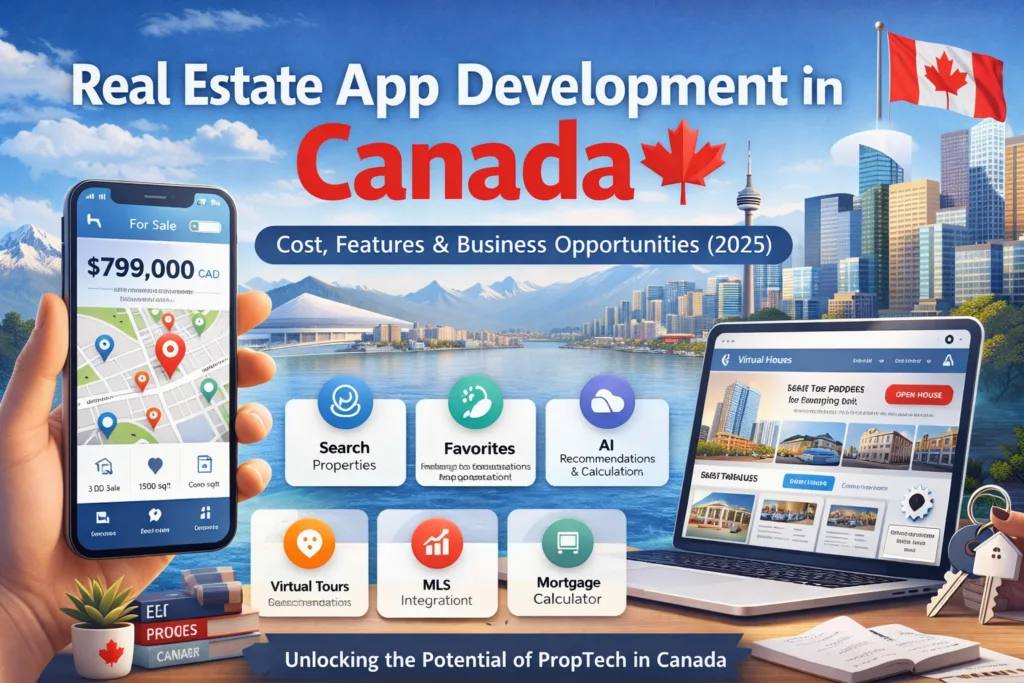
Real Estate App Development in Canada: Cost, Features & Business Opportunities (2025)
The Canadian real estate market is becoming increasingly digital. Buyers search for properties online, investors track listings through mobile apps, and real estate agents rely on technology to close deals faster. As a result, real estate app development in Canada is growing rapidly in 2025.
From property listing apps to advanced MLS-integrated platforms, mobile solutions are transforming how Canadians buy, sell, and manage properties.
In this guide, we’ll explore must-have features, development costs, compliance considerations, and business opportunities in the Canadian PropTech space.
Why Real Estate Apps Are in High Demand in Canada
Several factors are driving the growth of property listing apps in Canada:
- Increasing mobile-first property searches
- Rising demand for virtual tours & remote buying
- Growth in real estate investments
- Competitive housing markets in cities like Toronto and Vancouver
- Expansion of AI-powered property recommendations
Modern buyers expect seamless, fast, and data-driven experiences — and real estate mobile solutions deliver exactly that.
Types of Real Estate Apps in Canada
Real estate app developers in Canada typically build:
1. Property Listing Apps
Apps similar to Zillow-style platforms with advanced filtering and search features.
2. MLS Integration Apps
Applications connected with Multiple Listing Services (MLS) databases for real-time updates.
3. Realtor Apps
CRM-enabled tools for agents to manage leads, listings, and communication.
4. Rental & Leasing Apps
Platforms for tenants and landlords with booking, payments, and verification tools.
5. Real Estate Investment Apps
Data-driven apps that analyze ROI, rental yield, and property trends.
Must-Have Features in Property Listing Apps (2025)
To compete in Canada’s digital real estate market, apps must include:
Core Features
- Advanced property search & filters
- Map-based search (Google Maps integration)
- Property detail pages (images, pricing, location insights)
- Favorites & saved searches
- In-app messaging
- Push notifications
Advanced Features
- Virtual tours (360° view integration)
- AI-powered property recommendations
- Mortgage calculator integration
- Real-time MLS updates
- Secure document upload & e-signature
- Analytics dashboard for agents
- Multi-language support
Cost of Real Estate App Development in Canada
The cost of developing a real estate mobile app depends on features, integrations, and scalability requirements.
Estimated Development Cost (2025)
| App Type | Estimated Cost |
|---|---|
| Basic Property Listing MVP | $30,000 – $50,000 |
| Mid-Level App with MLS Integration | $50,000 – $100,000 |
| Advanced AI & Virtual Tour Platform | $100,000 – $250,000+ |
Factors Affecting Cost
- MLS database integration complexity
- AI recommendation systems
- Cloud infrastructure
- UI/UX customization
- Security & compliance
- Ongoing maintenance
Hourly rates in Canada typically range between $80 – $150 per hour.
Compliance & Legal Considerations in Canada
Real estate apps must follow:
- PIPEDA data privacy regulations
- Provincial real estate board rules
- Secure transaction handling standards
- Data encryption best practices
Handling user financial information and legal documentation securely is critical for trust and regulatory compliance.
Technology Stack for Real Estate App Development
Modern property apps in Canada often use:
- Frontend: Flutter, React Native, Swift, Kotlin
- Backend: Node.js, Python, .NET
- Database: PostgreSQL, MongoDB
- Cloud Hosting: AWS, Azure, Google Cloud
- APIs: MLS integration APIs, Google Maps API
Cloud-native architecture ensures scalability during high-traffic market periods.
Business Opportunities in Canadian PropTech (2025)
The PropTech market in Canada presents strong opportunities:
1. AI-Powered Smart Search
Apps that predict buyer preferences based on behavior.
2. Virtual Buying Experience
Remote transactions with digital documentation and online closings.
3. Subscription-Based Realtor Platforms
Monthly SaaS models for agents and brokerages.
4. Investment Analytics Platforms
Data insights for real estate investors.
5. Short-Term Rental Platforms
Airbnb-style property management apps tailored for Canadian markets.
How to Choose the Right Real Estate App Developers in Canada
When selecting a development partner, consider:
- Experience with MLS app development
- Knowledge of real estate compliance laws
- Strong UI/UX design capabilities
- Ability to build scalable cloud architecture
- Post-launch maintenance & updates
An experienced real estate app development company in Canada will ensure your platform remains secure, scalable, and competitive.
Why Invest in Real Estate Mobile Solutions Now?
- Growing mobile property searches
- High competition among agents
- Rising demand for virtual property viewing
- Data-driven buying decisions
- Expanding Canadian housing market
Businesses that invest early in digital real estate platforms can gain long-term market advantage.
Final Thoughts
Real estate app development in Canada is unlocking new growth opportunities for property agencies, brokerages, startups, and investors. From property listing apps to advanced MLS-integrated platforms, mobile solutions are reshaping the industry in 2025.
Whether you’re launching a new PropTech startup or modernizing your brokerage operations, investing in scalable and secure real estate mobile solutions can drive engagement, efficiency, and revenue.
If you’re planning to build a property listing app in Canada, now is the time to capitalize on this digital transformation.
Categories: Uncategorized
Have a project in mind?
Let's talk about how we can build it. Free consultation, no obligation.
Get a Free ConsultationRelated reading
- Super App Development in Canada: Cost, Features & Business Model Explained (2025)April 14, 2026 · 3 min read
- Food Delivery App Development in Canada: Cost, Features & Business Model Guide (2025)April 13, 2026 · 3 min read
- On Demand App Development Canada: Features, Cost & Business Models GuideMarch 20, 2026 · 5 min read