
Game App Development in Canada: Cost, Tech Stack & Monetization Strategies (2025)

The gaming industry in Canada is booming. From indie mobile studios to AAA console developers, Canada has become a global hub for innovation in interactive entertainment. With strong tech talent, government support, and a thriving startup ecosystem, game app development in Canada is a smart investment for businesses and entrepreneurs in 2025.

If you’re planning to build a gaming app, this guide covers everything — development cost, tech stack, hiring options, and monetization strategies.


Why Canada Is a Strong Market for Game App Development

Canada is home to globally recognized gaming companies like Ubisoft, Electronic Arts, and Behaviour Interactive. Cities such as Montreal, Vancouver, and Toronto are major gaming hubs offering:

  • Skilled mobile game developers
  • Government tax incentives for digital media
  • Access to AR/VR and AI talent
  • A competitive yet innovation-driven market

For startups and enterprises, partnering with experienced mobile game developers in Canada ensures high-quality production and global scalability.


Types of Game Apps You Can Build

Before estimating budget or technology, define your game type:

  1. Casual & Hyper-Casual Games (puzzle, arcade, runner games)
  2. Multiplayer Online Games
  3. AR-Based Mobile Games
  4. Educational & Gamified Learning Apps
  5. Fantasy, RPG & Strategy Games

Each category impacts cost, timeline, and technical requirements.


Game App Development Cost in Canada (2025)

The gaming app cost in Canada depends on complexity, graphics, backend infrastructure, and monetization features.

💰 Estimated Cost Breakdown

Game TypeEstimated Cost (CAD)Timeline
Simple 2D Game$30,000 – $60,0002–4 months
Mid-Level Multiplayer Game$60,000 – $120,0004–8 months
Advanced 3D / AR Game$120,000 – $300,000+8–12+ months

Factors Affecting Cost:

  • Game design complexity
  • 2D vs 3D graphics
  • Multiplayer backend development
  • In-app purchase integration
  • Cross-platform compatibility
  • Ongoing maintenance & updates

Hiring a professional game app development company in Canada may cost more than offshore teams, but it ensures better compliance, smoother communication, and higher quality standards.


Best Tech Stack for Game App Development

Choosing the right technology stack is crucial for performance and scalability.

🎮 Popular Game Engines

  • Unity – Most popular for mobile and cross-platform games
  • Unreal Engine – Ideal for high-end 3D graphics
  • Godot – Open-source and lightweight

Unity game development remains the top choice in Canada due to:

  • Cross-platform support (iOS, Android, Web)
  • Strong developer community
  • AR/VR integration
  • Large asset marketplace

🧠 Backend & Infrastructure

  • Node.js / Python for backend
  • Firebase for real-time database
  • AWS or Google Cloud for scalable hosting
  • Photon for multiplayer networking

Monetization Strategies for Gaming Apps

A solid monetization strategy determines your ROI.

1️⃣ In-App Purchases (IAP)

Sell virtual goods, upgrades, skins, or premium features.

2️⃣ In-Game Advertising

  • Rewarded video ads
  • Interstitial ads
  • Banner ads

3️⃣ Subscription Model

Best for educational or premium gaming platforms.

4️⃣ Freemium Model

Free to download, paid upgrades for advanced features.

5️⃣ Paid Apps

One-time purchase model (less common but works for niche markets).

In Canada, freemium + in-app purchases is the most profitable model for mobile games in 2025.


Key Development Phases

  1. Concept & Market Research
  2. Game Design Document (GDD)
  3. UI/UX & Character Design
  4. Development & Coding
  5. Testing & QA
  6. Launch & Marketing
  7. Post-Launch Updates & Maintenance

Game testing is especially critical — bugs and performance issues can lead to poor app store ratings.


Challenges in Game App Development

  • High competition in app stores
  • Player retention difficulties
  • Monetization balancing
  • Performance optimization for multiple devices

Professional game studios in Canada focus heavily on analytics, A/B testing, and user behavior tracking to improve engagement and retention.


Future Trends in Canadian Game App Development (2025)

  • AI-powered NPC behavior
  • AR/VR immersive gaming
  • Cloud gaming integration
  • Blockchain-based gaming economies
  • Cross-platform multiplayer ecosystems

As 5G adoption increases, real-time multiplayer experiences will become smoother and more immersive.


Should You Hire Canadian Mobile Game Developers?

If your goal is long-term scalability, security, and global market reach, hiring experienced mobile game developers in Canada is a strategic decision. You benefit from:

  • Strong technical expertise
  • Compliance with North American standards
  • Transparent contracts
  • Better project management

Final Thoughts

Game app development in Canada offers immense opportunity in 2025. Whether you’re building a casual mobile game or a high-end 3D multiplayer platform, success depends on the right technology, clear monetization strategy, and experienced development team.

If you’re planning to enter the gaming industry, now is the perfect time to invest in a scalable, engaging, and revenue-focused gaming app.

IoT App Development in Canada: Building Smart & Connected Applications in 2025

The Internet of Things (IoT) is transforming how businesses operate across Canada. From smart homes in Toronto to industrial automation in Alberta, connected devices are reshaping industries at scale.

At the center of this transformation is IoT app development in Canada — enabling businesses to build smart, secure, and scalable connected applications.

In this 2025 guide, we’ll explore IoT mobile apps, development costs, use cases, architecture, and why Canadian businesses are investing heavily in connected solutions.


What is IoT App Development?

IoT app development refers to building applications that connect, manage, and control smart devices via the internet.

These applications allow users to:

  • Monitor real-time data
  • Control connected devices remotely
  • Automate processes
  • Analyze performance metrics
  • Improve operational efficiency

An IoT ecosystem typically includes:

  1. Smart Devices (sensors, hardware)
  2. Cloud Infrastructure
  3. Backend & APIs
  4. Mobile or Web Applications

The mobile app acts as the control center for the entire connected system.


Why IoT App Development is Growing in Canada

Canada has strong adoption across industries like:

  • Healthcare
  • Smart cities
  • Manufacturing
  • Logistics
  • Energy & utilities
  • Agriculture

Several factors are driving IoT adoption:

✔ Expansion of 5G networks
✔ Increased cloud infrastructure adoption
✔ Demand for automation
✔ Rising need for real-time data analytics
✔ Government support for innovation

Canadian businesses are leveraging IoT to improve efficiency, reduce costs, and gain competitive advantages.


Key Industries Using IoT Apps in Canada

1. Healthcare

IoT apps help monitor:

  • Patient vitals remotely
  • Wearable health devices
  • Medical equipment performance

Benefits include improved patient outcomes and reduced hospital visits.


2. Smart Homes & Real Estate

Smart device apps in Canada allow users to control:

  • Lighting systems
  • Thermostats
  • Security cameras
  • Smart locks

These apps increase property value and energy efficiency.


3. Manufacturing & Industrial IoT (IIoT)

Connected apps enable:

  • Predictive maintenance
  • Equipment monitoring
  • Supply chain tracking
  • Performance analytics

Industrial IoT reduces downtime and operational risks.


4. Logistics & Transportation

IoT mobile apps track:

  • Fleet vehicles
  • Fuel consumption
  • Delivery routes
  • Cold-chain monitoring

This improves transparency and cost management.


Core Features of IoT Mobile Apps

When building IoT mobile apps in Canada, businesses should focus on:

1. Real-Time Data Monitoring

Live dashboards with device metrics and analytics.

2. Remote Device Control

Users should be able to control devices securely from anywhere.

3. Push Notifications & Alerts

Immediate alerts for anomalies or system failures.

4. Cloud Integration

Secure data storage and scalable infrastructure.

5. Data Analytics & Reporting

AI-driven insights for smarter decision-making.

6. Multi-Device Management

Support for multiple devices in one ecosystem.

7. Security & Encryption

End-to-end encryption and secure APIs.


IoT App Development Process in 2025

Step 1: Define the Use Case

Identify:

  • Problem to solve
  • Target audience
  • Hardware requirements
  • Data flow structure

Step 2: Choose the Right Tech Stack

Popular technologies include:

  • MQTT & HTTP protocols
  • AWS IoT / Azure IoT
  • Node.js / Python backend
  • React Native / Flutter (for cross-platform apps)
  • Native iOS & Android development

Step 3: Hardware Integration

IoT apps must integrate seamlessly with:

  • Sensors
  • Microcontrollers
  • Edge devices
  • Embedded systems

Step 4: Backend & Cloud Setup

Cloud infrastructure handles:

  • Device communication
  • Data storage
  • Authentication
  • Scalability

Step 5: App UI/UX Development

IoT apps must prioritize:

  • Clean dashboards
  • Easy device management
  • Real-time responsiveness
  • Minimal latency

Step 6: Testing & Security Validation

Testing includes:

  • Connectivity testing
  • Performance testing
  • Device compatibility
  • Security penetration testing

Cost of IoT App Development in Canada

The cost depends on complexity, hardware integration, and features.

Estimated Cost Range (2025):

  • Basic IoT App: CAD 40,000 – 70,000
  • Mid-Level Solution: CAD 70,000 – 150,000
  • Enterprise IoT Platform: CAD 150,000+

Factors affecting cost:

  • Number of connected devices
  • Cloud infrastructure
  • AI integration
  • Security compliance
  • Real-time analytics

IoT solutions require a larger upfront investment but deliver strong long-term ROI.


Security & Compliance in Canada

Data protection is critical in connected apps.

Businesses must comply with:

  • PIPEDA (Personal Information Protection and Electronic Documents Act)
  • Industry-specific compliance (Healthcare, Fintech, etc.)

Security best practices include:

  • Encrypted communication (TLS/SSL)
  • Multi-factor authentication
  • Secure firmware updates
  • Role-based access control

Security is one of the most important pillars of IoT app development in Canada.


Challenges in IoT App Development

⚠ Device compatibility issues
⚠ Network latency
⚠ Data privacy concerns
⚠ Scalability challenges
⚠ Complex hardware integration

Working with experienced IoT developers reduces these risks.


IoT App Development Trends in 2025

  1. AI-powered predictive analytics
  2. Edge computing for faster processing
  3. 5G-enabled real-time automation
  4. Blockchain for device security
  5. Digital twins technology

Canadian businesses adopting these technologies will stay ahead of the competition.


Benefits of Investing in IoT Mobile Apps

✔ Real-time operational insights
✔ Automation & reduced manual errors
✔ Improved customer experience
✔ Data-driven decision making
✔ Competitive differentiation

IoT is not just innovation — it’s a long-term strategic advantage.


Final Thoughts

IoT app development in Canada is rapidly transforming industries by enabling smart, connected ecosystems.

Whether you’re building:

  • A healthcare monitoring app
  • A smart home solution
  • An industrial automation system
  • A logistics tracking platform

Investing in IoT mobile apps in 2025 can unlock new revenue streams, improve efficiency, and future-proof your business.

The key to success lies in secure architecture, scalable infrastructure, and seamless device integration.

App Store Optimization (ASO) in Canada: How to Increase Downloads & Rankings in 2025

Launching a mobile app is only the first step. With millions of apps competing for attention, visibility is the real challenge. This is where App Store Optimization (ASO) in Canada becomes critical.

Whether you’re a startup in Toronto, a fintech company in Vancouver, or an e-commerce brand expanding nationwide, ASO helps you increase app downloads, improve rankings, and reduce acquisition costs.

In this 2025 guide, we’ll break down how ASO works, why it matters for Canadian businesses, and practical strategies you can implement today.


What is App Store Optimization (ASO)?

App Store Optimization (ASO) is the process of improving your app’s visibility in app stores like:

  • Apple App Store
  • Google Play Store

The goal?
✔ Rank higher for relevant keywords
✔ Increase organic downloads
✔ Improve conversion rates

Think of ASO as SEO for mobile apps.


Why ASO Matters for Canadian Businesses in 2025

Canada’s mobile-first audience continues to grow. Users search directly in app stores for:

  • Banking apps
  • Healthcare apps
  • E-commerce apps
  • Fitness and wellness apps
  • On-demand service apps

If your app does not appear in the top search results, users will likely download your competitor’s app instead.

Key Benefits of ASO:

  1. Higher Organic Downloads – Reduce reliance on paid ads
  2. Lower Customer Acquisition Cost (CAC)
  3. Better Brand Visibility in competitive markets
  4. Improved User Trust & Credibility
  5. Long-Term Growth Strategy

For companies investing in mobile solutions, ASO services in Canada are now essential—not optional.


How App Store Ranking Algorithms Work

While Apple and Google use different ranking systems, both consider:

  • Keyword relevance
  • App title and description
  • Number of downloads
  • User ratings and reviews
  • Retention rate
  • Update frequency
  • Engagement metrics

The better your optimization, the higher your app ranks.


Step-by-Step ASO Strategy for 2025

1. Keyword Research for the Canadian Market

Just like SEO, ASO begins with keyword research.

Focus on:

  • Industry-specific terms (e.g., fintech app Canada)
  • Location modifiers (Toronto, Vancouver, Calgary)
  • Problem-solving keywords
  • Competitor keyword analysis

Use tools like:

  • AppTweak
  • Sensor Tower
  • Mobile Action

Target keywords with good search volume but moderate competition.


2. Optimize Your App Title & Subtitle

Your app title is one of the strongest ranking factors.

Best Practices:

  • Include your primary keyword
  • Keep it natural and readable
  • Avoid keyword stuffing

Example:
❌ “Fast Banking App Canada Money Secure Finance”
✔ “SecurePay – Fast & Secure Banking App in Canada”


3. Write a High-Converting App Description

Your description should:

  • Clearly explain the problem your app solves
  • Highlight key features
  • Include secondary keywords naturally
  • Add social proof (downloads, awards, partnerships)

Structure:

  • Hook
  • Key features
  • Benefits
  • Call-to-action

Remember: On Google Play, descriptions impact ranking more directly than on Apple.


4. Design an Eye-Catching App Icon

Your icon impacts click-through rate (CTR).

Tips:

  • Keep it simple
  • Avoid too much text
  • Use bold contrast colors
  • Test multiple variations

A strong visual identity can significantly increase installs.


5. Use High-Quality Screenshots & Preview Videos

Screenshots should:

  • Highlight core features
  • Show real user benefits
  • Use short, clear text overlays
  • Follow a storytelling structure

Example format:

  1. Problem
  2. Solution
  3. Feature
  4. Social proof
  5. CTA

Apps that optimize screenshots often see conversion improvements of 20–35%.


6. Improve Ratings & Reviews

User reviews directly influence rankings and conversion rates.

How to increase positive reviews:

  • Ask users after successful actions
  • Provide in-app support
  • Respond to negative reviews quickly
  • Fix bugs regularly

Canadian users value reliability and security, especially in fintech and healthcare apps.


7. Localize for Canadian Audiences

Canada is bilingual.

Consider:

  • English & French descriptions
  • Regional keyword targeting
  • Cultural tone adaptation

Localization improves discoverability and trust.


8. Regular Updates & Performance Optimization

Frequent updates signal active development.

Updates help:

  • Fix bugs
  • Improve performance
  • Add features
  • Maintain ranking stability

Apps that stay stagnant often drop in rankings.


Common ASO Mistakes to Avoid

❌ Ignoring keyword research
❌ Copying competitor descriptions
❌ Keyword stuffing
❌ Poor-quality visuals
❌ Not tracking analytics
❌ Ignoring user feedback

ASO is not a one-time task. It’s an ongoing growth process.


ASO vs Paid App Advertising

ASOPaid Ads
Long-term organic growthImmediate traffic
Lower long-term costHigh recurring cost
Sustainable rankingStops when budget ends

The best strategy?
Combine ASO with paid user acquisition campaigns.


How Canadian Businesses Can Get Professional ASO Services

If you want faster growth, professional ASO services in Canada can help with:

  • Advanced keyword research
  • Conversion rate optimization
  • Competitor tracking
  • App listing A/B testing
  • Review management
  • Performance tracking

A well-optimized app can increase downloads by 2–5x within months.


ASO Trends to Watch in 2025

  1. AI-powered keyword optimization
  2. Voice search impact on app discovery
  3. Visual-first app store listings
  4. Increased focus on retention metrics
  5. Data-driven A/B testing

Apps that leverage AI insights will outperform traditional optimization strategies.


Final Thoughts

In 2025, building a great app is not enough. Visibility determines success.

App Store Optimization in Canada helps businesses:

  • Increase downloads
  • Improve rankings
  • Reduce marketing costs
  • Build long-term brand authority

If you’re investing in mobile app development, ASO should be part of your growth roadmap from day one.

App Monetization Strategies in Canada: How to Turn Your Mobile App into a Revenue Machine (2025)

Mobile apps are becoming increasingly competitive — especially in Canada’s booming digital market. With millions of users and a high smartphone penetration, Canadian developers and businesses have a massive opportunity to generate revenue through their mobile apps. However, without the right monetization strategy, even the most innovative app can struggle to earn.

In this guide, we’ll explore the top app revenue models, in-app purchase strategies tailored to the Canadian market, subscription trends, and best practices that will help you maximize revenue in 2025 and beyond.


Why App Monetization Matters in Canada (2025)

Canada’s mobile ecosystem is one of the most promising in North America:

  • 📱 High smartphone adoption across all age groups
  • 💸 Strong purchasing power among users
  • 📈 Surge in mobile engagement across industries — gaming, health, fitness, finance, education, and productivity

But monetization isn’t one-size-fits-all: what works for a game app might not work for a subscription fintech app. That’s why understanding different revenue models and audience preferences is crucial.


Top App Monetization Models for Canadian Developers

Here are the most effective strategies you can adopt in 2025:


1. In-App Purchases (IAP)

In-app purchases remain one of the most powerful monetization tactics — especially for gaming and utility apps.

🔹 Consumable purchases: Coins, boosts, credits
🔹 Non-consumable purchases: One-time unlocks, feature packs
🔹 Virtual goods: Skins, characters, avatar items

Why it works in Canada: Canadian users are more willing to spend for value, especially when offerings unlock convenience or premium utility. Plus, Apple and Google’s strong marketplace familiarity boosts conversion rates.


2. Subscription Packages

Subscription models are booming worldwide — and Canada is no exception.

📊 According to recent mobile market trends, subscription apps are among the fastest-growing segments. Users are increasingly comfortable with recurring payments if the app delivers ongoing value.

Common subscription formats:

  • Weekly, monthly, yearly plans
  • Tiered access (Basic / Premium / Pro)
  • Auto-renewal with trial period

Best fit for:

  • Fitness & wellness apps
  • Content platforms (news, podcasts, video)
  • Productivity tools
  • Education & e-learning

Pro Tip: Offering a free trial significantly increases conversion into paid subscribers, especially in the Canadian market where users like to test quality before paying.


3. Ads & Ad Revenue Models

Ads can be a major revenue driver — but only if implemented thoughtfully.

Popular ad formats:

  • Banner ads
  • Interstitial ads
  • Rewarded video ads
  • Native ads

Rewarded ads, in particular, are excellent because they give users something in return (e.g., extra lives, credits) and generate higher engagement.

Canada insights: Canadian users respond better to native and rewarded ads as opposed to intrusive banners, leading to higher retention and ad revenue.


4. Freemium Model

The freemium model blends free access with options to unlock premium features.

How it works:
✔ Users download and use the basic app for free
✔ Optional upgrades unlock advanced functions

This strategy works exceptionally well when:

  • The core app is compelling on its own
  • Premium features offer a significant improvement in value

5. Affiliate & Partnership Revenue

Affiliate monetization is increasingly popular in lifestyle, travel, and e-commerce apps.

Examples include:

  • Partnering with payment services
  • Affiliate links for product recommendations
  • Commission on referred subscriptions

If your app entertains a niche audience with spending intent (e.g., fitness gear recommendations), affiliate monetization can generate significant passive revenue.


Building a Monetization Roadmap for Your App

Here’s a step-by-step framework you can follow:

Step 1: Know Your Users

Use analytics to understand:

  • Engagement patterns
  • Time spent per session
  • Feature usage curves

The more you know about user behavior, the better you can tailor where and how you monetize.


Step 2: Start With a Freemium or Trial Period

Let users experience value before asking them to pay. Freemium plus trial often leads to higher conversion rates.


Step 3: A/B Test Monetization Features

Experiment with:

  • Price points
  • Ad placement strategies
  • Subscription tiers

Real data beats guesswork — every app’s audience is different.


Step 4: Delight, Don’t Interrupt

Intrusive ads or forced payments can hurt retention. Rewarded ads and unobtrusive monetization work better — especially in Canada, where users prioritize experience.


Step 5: Offer Localized Value

Canadian users appreciate localized pricing, seasonal offers, and content that reflects cultural relevance (e.g., bilingual features in French and English).


Examples of Successful Monetized Apps in Canada

  • Health & Fitness apps: Monthly plans + in-app coaching
  • Gaming titles: Virtual goods + rewarded video ads
  • Productivity tools: Freemium core with premium workflows
  • Content services: Subscription for exclusive access

Each of these combines at least two monetization models — showcasing that hybrid strategies often deliver the best results.


Closing Thoughts

App monetization isn’t just about revenue — it’s about sustainable growth, better user experience, and long-term engagement.

As you plan for 2025, prioritize offering value first, then unlock monetization in ways that feel natural to your audience.

Whether you’re interested in in-app purchases in Canada, scaling subscription revenue, or building a hybrid monetization model, this year presents a huge opportunity for smart app owners.

🔥 Ready to turn your app into a revenue machine? Start with user insights and pick the monetization strategies that match your audience — and the profit will follow.

ios App Development

iOS App Development in Canada: Cost, Tech Stack & Hiring Guide (2025)

Introduction

With over 15+ million active iPhone users in Canada, businesses are increasingly investing in iOS app development in Canada to reach high-value customers. Apple users typically spend more on apps, subscriptions, and in-app purchases—making iOS a powerful platform for startups and enterprises alike.

If you’re planning to build an iPhone app in 2025, this guide covers:

  • iOS app development cost in Canada
  • Recommended tech stack
  • Hiring iPhone app developers in Canada
  • Development timeline
  • Key features & best practices

Why Choose iOS App Development in Canada?

1. High-Spending User Base

Apple users generally have higher purchasing power, making monetization easier through subscriptions and premium features.

2. Strong Security & Privacy

Apple’s strict security ecosystem builds user trust—especially important for fintech, healthcare, and enterprise apps.

3. Optimized Performance

iOS apps are developed for limited device variations compared to Android, ensuring better performance and testing efficiency.

4. Premium Brand Positioning

Many Canadian businesses choose iOS-first development to position themselves as premium digital brands.


iOS App Development Cost in Canada (2025)

The cost of iPhone app development in Canada depends on complexity, features, integrations, and design requirements.

💰 Estimated Cost Breakdown

App TypeEstimated Cost (CAD)Timeline
Basic App (MVP)$25,000 – $45,0002–3 months
Medium Complexity$45,000 – $85,0003–6 months
Complex / Enterprise$85,000 – $150,000+6+ months

Factors That Affect Cost

  • UI/UX complexity
  • Custom animations
  • API integrations
  • Payment gateways
  • Real-time features (chat, tracking)
  • Security & compliance requirements
  • Backend infrastructure

If you’re a startup, starting with an MVP is usually the most cost-efficient approach.


iOS App Development Tech Stack (2025)

Choosing the right technology stack directly impacts scalability, performance, and maintenance.

🔹 Programming Languages

  • Swift (Primary & recommended)
  • Objective-C (legacy projects)

🔹 Development Tools

  • Xcode
  • SwiftUI
  • UIKit

🔹 Backend Technologies

  • Node.js
  • Python
  • .NET
  • Firebase

🔹 Cloud & Hosting

  • AWS
  • Google Cloud
  • Microsoft Azure

🔹 Integrations

  • Stripe (Payments)
  • Apple Pay
  • Firebase Analytics
  • REST & GraphQL APIs

Modern Canadian iOS development companies prefer Swift + SwiftUI for faster development and cleaner UI experiences.


Step-by-Step iOS App Development Process

  1. Idea Validation & Market Research
  2. Wireframing & UX Design
  3. UI Design
  4. Frontend (Swift Development)
  5. Backend Development
  6. Testing & QA
  7. App Store Submission
  8. Post-Launch Maintenance

A professional iOS development company in Canada follows Agile methodology for faster iterations and better collaboration.


How to Hire iPhone App Developers in Canada

Choosing the right iOS development company is crucial.

✅ What to Look For:

  • Proven portfolio of iOS apps
  • Experience in Swift development
  • Understanding of Apple App Store guidelines
  • Transparent pricing model
  • Post-launch support & maintenance

Hiring Options:

OptionBest For
FreelancersSmall MVP projects
In-house TeamLong-term product development
App Development AgencyStartups & scalable businesses

For most businesses, hiring a professional iOS development company in Canada ensures quality, security, and scalability.


How Long Does It Take to Build an iOS App?

  • MVP: 8–12 weeks
  • Mid-level app: 3–6 months
  • Enterprise app: 6+ months

Timelines depend on features, integrations, and testing cycles.


Industries Investing in iOS App Development in Canada

  • Fintech
  • Healthcare
  • E-commerce
  • Real Estate
  • SaaS
  • Education

Apple users in Canada show strong engagement in finance, retail, and subscription-based apps.


iOS App Monetization Models

  • Subscription model
  • In-app purchases
  • Freemium model
  • Paid apps
  • Ad-based model

Choosing the right monetization strategy depends on your target audience and business goals.


Why Work With a Professional iOS Development Company in Canada?

  • Local market understanding
  • Time-zone alignment
  • Compliance with Canadian data laws
  • Transparent communication
  • Ongoing maintenance & scaling support

Partnering with experienced iPhone app developers in Canada reduces risks and improves time-to-market.


Final Thoughts

Investing in iOS app development in Canada in 2025 is a strategic move for businesses targeting premium, high-engagement users. From selecting the right tech stack to hiring experienced developers, every decision impacts your app’s success.

Whether you’re a startup building an MVP or an enterprise scaling digitally, a well-planned iOS strategy can drive long-term growth.


🚀 Ready to Build Your iOS App?

Looking for expert iPhone app developers in Canada?
Contact our team today to turn your app idea into a scalable, secure, and high-performing iOS application.

Mobile App Maintenance in Canada: Why Ongoing Support Is Critical for Success

Mobile applications have become a vital part of modern business operations. From customer engagement and e-commerce to internal workflows and data management, apps play a key role in driving efficiency and growth. However, launching an app is only the beginning. Continuous updates, monitoring, and optimization are essential to ensure long-term performance and user satisfaction.

For companies operating in Canada, investing in mobile app maintenance Canada strategies is critical to keeping applications secure, functional, and competitive. Without proper app maintenance services, even the most innovative apps can quickly become outdated, slow, or vulnerable to security risks.

In this guide, we’ll explore why ongoing mobile app support, software updates, and performance monitoring are essential for successful applications in today’s fast-changing digital landscape.

Understanding Mobile App Maintenance

Mobile app maintenance refers to the continuous process of monitoring, updating, and improving an application after it has been launched. This includes fixing bugs, improving performance, updating features, ensuring security, and adapting the app to new operating systems and devices.

Businesses that invest in mobile app maintenance Canada ensure that their applications remain relevant and reliable over time.

Mobile app maintenance typically includes:

  • Regular software updates
  • Performance monitoring
  • Bug fixes and technical improvements
  • Security patches
  • UI/UX enhancements
  • Compatibility updates for new devices and OS versions

Without proper app maintenance services, apps may experience crashes, slow performance, or security vulnerabilities.

Why Mobile App Maintenance Matters for Businesses

Many businesses assume that once an app is launched, development work is complete. In reality, successful apps require continuous improvement.

1. Keeping Up With Operating System Updates

Mobile platforms frequently release new versions of operating systems such as Android and iOS. These updates introduce new features, security requirements, and compatibility changes.

Without timely software updates, apps may stop functioning properly or experience compatibility issues.

For businesses investing in mobile app maintenance Canada, staying updated ensures:

  • Smooth performance on new devices
  • Compatibility with the latest OS versions
  • Improved user experience

2. Improving App Performance

Performance issues such as slow loading times, lag, or crashes can quickly drive users away.

Through ongoing mobile app support, developers can identify and fix performance bottlenecks. This includes:

  • Code optimization
  • Database improvements
  • Server performance tuning
  • API optimization

These improvements help deliver a fast and seamless experience for users.

3. Enhancing Security and Data Protection

Security threats continue to evolve as technology advances. Applications that handle user data must regularly update security protocols to prevent breaches.

Professional app maintenance services help businesses:

  • Apply security patches
  • Protect sensitive data
  • Fix vulnerabilities
  • Improve authentication systems

For organizations operating in regulated industries, maintaining strong security standards is essential.

4. Reducing App Crashes and Bugs

Even well-built applications may contain bugs that appear after real-world usage. As user numbers grow, new issues may surface.

Continuous mobile app support helps identify and resolve these issues quickly through:

  • Bug tracking systems
  • User feedback analysis
  • Crash monitoring tools

This ensures users enjoy a smooth and reliable experience.

Key Types of Mobile App Maintenance

Mobile app maintenance typically falls into several categories.

Corrective Maintenance

Corrective maintenance focuses on fixing bugs and resolving errors discovered after the app is launched.

Examples include:

  • Fixing crashes
  • Correcting UI issues
  • Resolving compatibility problems

Adaptive Maintenance

Adaptive maintenance ensures that the application continues to work effectively as technology evolves.

This includes:

  • Updating the app for new operating systems
  • Supporting new devices and screen sizes
  • Integrating new APIs

Perfective Maintenance

Perfective maintenance focuses on improving features and enhancing the user experience.

Businesses may add:

  • New functionality
  • Improved user interface
  • Performance enhancements

These updates help apps remain competitive.

Preventive Maintenance

Preventive maintenance aims to prevent issues before they occur.

This includes:

  • Code optimization
  • Database cleanup
  • Security updates
  • Performance monitoring

Preventive updates reduce the risk of major technical failures.


Benefits of Professional App Maintenance Services

Businesses that invest in reliable app maintenance services enjoy several advantages.

Improved User Experience

Apps that receive regular updates offer better speed, stability, and usability. A smooth experience increases customer satisfaction and retention.

Increased App Security

Regular software updates protect applications against cyber threats and data breaches.

Higher App Store Ratings

Users tend to rate apps based on their performance and reliability. Apps that frequently crash or lag receive negative reviews.

Regular mobile app support helps maintain strong ratings in app stores.

Long-Term Cost Savings

Fixing small issues early is much cheaper than rebuilding an app after major failures. Preventive maintenance helps reduce long-term development costs.

How Often Should Mobile Apps Be Updated?

The frequency of updates depends on several factors, including the complexity of the app and user feedback.

Typical update cycles include:

  • Monthly updates for bug fixes and performance improvements
  • Quarterly updates for feature enhancements
  • Annual updates for major redesigns or new capabilities

Regular updates help maintain strong performance and user engagement.

Essential Tools Used for Mobile App Maintenance

Developers use a variety of tools to monitor app performance and detect issues.

Common tools include:

  • Crash reporting platforms
  • Performance monitoring systems
  • Analytics dashboards
  • Security scanning tools

These technologies help identify problems before they impact users.

Signs Your Mobile App Needs Maintenance

Businesses should watch for warning signs that indicate maintenance is required.

Common indicators include:

  • Increased app crashes
  • Slow loading times
  • Declining user engagement
  • Compatibility issues with new devices
  • Negative app store reviews

If any of these problems appear, immediate mobile app support may be required.

Mobile App Maintenance Costs in Canada

The cost of mobile app maintenance Canada varies depending on factors such as:

  • App complexity
  • Number of users
  • Server infrastructure
  • Security requirements
  • Frequency of updates

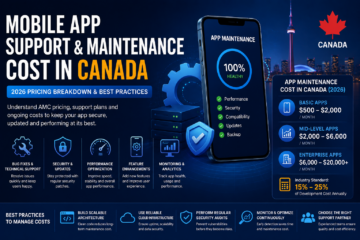
In many cases, maintenance costs range from 15% to 25% of the original development cost annually.

However, the long-term benefits of maintaining a stable and secure application often outweigh the investment.

Best Practices for Mobile App Maintenance

To ensure long-term success, businesses should follow best practices when maintaining their apps.

Monitor App Performance

Regular monitoring helps identify performance issues early.

Gather User Feedback

User reviews and feedback provide valuable insights into areas that need improvement.

Schedule Regular Updates

Planned software updates ensure the application remains secure and functional.

Invest in Professional Support

Experienced developers can provide reliable app maintenance services and ensure your app stays competitive.

Future Trends in Mobile App Maintenance

The future of mobile app maintenance Canada will be influenced by emerging technologies.

Key trends include:

  • AI-powered performance monitoring
  • Automated bug detection
  • Cloud-based app management
  • Advanced security frameworks

These technologies will help businesses maintain apps more efficiently and improve long-term scalability.

Conclusion

Launching a mobile application is a significant milestone, but maintaining it is what determines long-term success. Businesses that invest in ongoing mobile app maintenance Canada strategies can ensure their apps remain secure, fast, and user-friendly.

With reliable app maintenance services, continuous mobile app support, and regular software updates, organizations can improve performance, reduce risks, and deliver better digital experiences to their users.

As mobile technology continues to evolve, ongoing maintenance will remain one of the most important investments businesses can make to keep their applications competitive and successful.

Need reliable mobile app maintenance Canada services? Contact App-Scoop for expert mobile app support, updates, and performance optimization to keep your app running smoothly.

App Development for Small Businesses in Canada: Is It Worth the Investment?

Small businesses across Canada are rapidly adopting digital solutions to remain competitive, improve customer experiences, and scale operations. One of the most impactful investments many companies are considering today is app development for small businesses Canada. From retail stores and service providers to startups and local entrepreneurs, mobile apps are transforming how businesses connect with customers.

But a common question many business owners ask is: Is app development really worth the investment for small businesses?

In this guide, we’ll explore the benefits, costs, use cases, and long-term value of SMB apps, helping Canadian business owners decide whether building a mobile application is the right move for their growth strategy.

The Rise of Mobile Apps in Canada’s Small Business Ecosystem

Canada’s small and medium-sized businesses (SMBs) make up over 98% of all businesses in the country. As consumer behavior shifts toward mobile-first experiences, businesses without digital tools risk falling behind competitors.

Today’s customers expect convenience. Whether they want to order products, book services, track orders, or receive personalized offers, they prefer doing it directly from their smartphones.

This shift has accelerated the demand for small business software and local business apps, allowing companies to automate operations and improve customer engagement.

A well-designed mobile app helps businesses:

  • Improve customer accessibility
  • Increase brand visibility
  • Streamline operations
  • Build stronger customer relationships
  • Generate recurring revenue

For many Canadian companies, mobile apps are no longer a luxury, they are becoming a necessity.

What Is App Development for Small Businesses?

App development for small businesses Canada refers to creating custom mobile applications designed specifically for SMB needs such as customer engagement, order management, bookings, loyalty programs, and internal operations.

Unlike enterprise software designed for large corporations, SMB apps focus on affordability, ease of use, and practical functionality.

Typical types of local business apps include:

  • E-commerce apps for product sales
  • Booking and appointment apps
  • Loyalty and rewards apps
  • Delivery and ordering apps
  • Customer service apps
  • Internal productivity tools

These apps allow businesses to deliver modern digital experiences while improving operational efficiency.

Key Benefits of Mobile Apps for Canadian Small Businesses

1. Improved Customer Engagement

Mobile apps provide a direct communication channel between businesses and customers.

Features such as:

  • Push notifications
  • In-app messaging
  • Promotions and loyalty rewards

help businesses stay connected with their audience.

For example, a restaurant app can send discount notifications to customers nearby, increasing repeat visits.

This level of engagement is difficult to achieve through websites alone.

2. Stronger Brand Visibility

Having a dedicated mobile app strengthens brand presence. Every time customers unlock their phones and see your app icon, it reinforces brand recognition.

For local business apps, this visibility creates familiarity and trust with customers.

Over time, businesses with apps often experience higher brand recall compared to competitors without mobile platforms.

3. Better Customer Convenience

Convenience drives customer decisions.

Mobile apps allow users to:

  • Order products quickly
  • Schedule appointments
  • Access services instantly
  • Track purchases
  • Receive support

For small businesses, offering these capabilities through small business software significantly improves the customer experience.

Happy customers are far more likely to return and recommend your services.

4. Increased Sales and Revenue

Apps often increase conversion rates because they simplify the buying process.

Key sales-boosting features include:

  • One-click ordering
  • Saved payment options
  • Personalized recommendations
  • Loyalty rewards

Studies consistently show that customers spend more through apps than mobile websites.

For SMBs in Canada, this creates a powerful revenue opportunity.

5. Operational Efficiency

Many SMB apps streamline business operations through automation.

Apps can integrate with:

  • Inventory systems
  • CRM platforms
  • Payment gateways
  • Customer databases

This integration reduces manual tasks and improves productivity.

For example, a salon app can automate bookings, reminders, and payments, freeing staff to focus on customer service.

Popular App Ideas for Small Businesses in Canada

Small businesses can build apps tailored to their industry.

Some of the most common local business apps include:

Retail & E-commerce Apps

Retail businesses use apps for:

  • Mobile shopping
  • Loyalty rewards
  • Personalized offers
  • Order tracking

These apps help businesses compete with large online marketplaces.

Booking & Appointment Apps

Service-based businesses such as salons, clinics, and consultants benefit from apps that allow customers to:

  • Schedule appointments
  • Receive reminders
  • Make payments
  • Manage bookings

This reduces administrative workload.

Food Ordering Apps

Restaurants and cafes are increasingly building mobile ordering apps.

Benefits include:

  • Direct ordering without third-party commissions
  • Faster service
  • Customer loyalty programs

This helps businesses retain more revenue compared to delivery platforms.

Local Service Apps

Businesses such as cleaning services, repair technicians, or home maintenance companies use apps to:

  • Manage service requests
  • Schedule technicians
  • Track job progress
  • Communicate with customers

These apps improve efficiency and customer satisfaction.

Cost of App Development for Small Businesses in Canada

One of the biggest concerns for entrepreneurs is the cost of app development for small businesses Canada.

The cost depends on several factors:

  • App complexity
  • Features and integrations
  • Platform (iOS, Android, or both)
  • Design requirements
  • Development team location

Typical development ranges include:

App TypeEstimated Cost
Basic app$15,000 – $30,000
Moderate complexity$30,000 – $70,000
Advanced app$70,000 – $150,000+

While this may seem significant, many businesses view apps as long-term investments that generate revenue and efficiency.

Additionally, modern technologies like cross-platform development and progressive web apps can reduce costs for SMBs.

Challenges Small Businesses Should Consider

Although apps offer many advantages, businesses should also consider potential challenges.

Initial Development Costs

Developing a high-quality app requires an upfront investment. However, businesses often recover these costs through improved efficiency and increased revenue.

Maintenance and Updates

Apps require ongoing updates for:

  • Security improvements
  • OS compatibility
  • Feature enhancements
  • Performance optimization

Regular maintenance ensures a smooth user experience.

Marketing and User Adoption

Simply launching an app is not enough.

Businesses must promote their apps through:

  • Social media
  • Email marketing
  • In-store promotions
  • website downloads

Successful apps require a clear marketing strategy.

When Is App Development Worth the Investment?

For many companies, app development for small businesses Canada becomes worthwhile when certain conditions are met.

An app is often a good investment if your business:

  • Has frequent customer interactions
  • Offers repeat purchases or bookings
  • Wants to improve customer engagement
  • Needs operational automation
  • Plans to scale services or products

Businesses that rely heavily on customer convenience and repeat interactions benefit the most from SMB apps.

App Development vs Website: What’s Better?

Many small businesses ask whether they should build a mobile app or simply invest in a website.

Both solutions serve different purposes.

Websites

Best for:

  • Discoverability through search engines
  • Informational content
  • Online presence

Mobile Apps

Best for:

  • Frequent customer interactions
  • Personalized experiences
  • Push notifications
  • Faster performance

In many cases, businesses use both a website and a mobile app to maximize reach and engagement.

The Future of Small Business Apps in Canada

Technology trends are making apps more powerful and accessible for SMBs.

Emerging innovations include:

  • AI-powered personalization
  • Voice search integration
  • Augmented reality shopping
  • Automated customer support
  • Advanced analytics

These features help businesses deliver smarter digital experiences.

As customer expectations continue to evolve, small business software will play an increasingly important role in business growth.

Tips for Successful Small Business App Development

If you’re considering building an app, keep these best practices in mind.

Focus on Core Features

Avoid building overly complex apps initially. Start with essential functionality and expand later.

Prioritize User Experience

A simple, intuitive interface ensures customers enjoy using your app.

Ensure Strong Security

Apps must protect customer data through secure authentication and encryption.

Plan for Scalability

Your app should handle increasing users as your business grows.

Work with Experienced Developers

Partnering with experienced development teams ensures higher quality and fewer technical issues.

Final Thoughts

Mobile apps are rapidly becoming an essential digital tool for Canadian businesses. For companies looking to improve customer engagement, streamline operations, and increase revenue, app development for small businesses Canada can be a valuable long-term investment.

While the initial development cost may seem significant, the benefits of SMB apps, including stronger customer relationships, improved efficiency, and higher sales, often outweigh the investment.

As mobile usage continues to grow, businesses that adopt local business apps and modern small business software solutions will be better positioned to compete in Canada’s evolving digital marketplace.

For many entrepreneurs, the real question is no longer whether to build an app, but when to start.

How Much Does It Cost to Build an App in Canada? (2026 Guide)

If you’re considering developing a mobile app in Canada in 2026, understanding the costs involved is crucial for budgeting and planning. The cost to build an app can vary significantly based on factors such as complexity, platform choice, development team location, and additional features. This comprehensive guide will provide you with detailed insights into app development costs in Canada, helping you make informed decisions for your project.


Average App Development Charges in Canada (2026)

The cost of developing a mobile app in Canada ranges from approximately CAD 8,000 to CAD 200,000, depending on various factors. Here’s a breakdown based on complexity:

App ComplexityEstimated Cost (CAD)Development Time
Simple App8,000 – 16,0002 – 4 months
Mid-Scale App18,000 – 32,0004 – 8 months
Large-Scale App45,000 – 55,0008 – 10 months
Complex App80,000 – 95,0006 – 10 months
Enterprise-Level AppStarts from 95,0008 – 12 months

Source: TekRevol

Development Using AI for Faster, & Cost-Effective App Development

AI is transforming the app development landscape by making the process faster, smarter, and more cost-efficient. By integrating AI into development workflows, businesses can build high-quality applications while saving time and resources.

  • Reduced cost and faster development: AI-powered development helps reduce project costs and delivery time by automating repetitive tasks, accelerating testing, and improving overall efficiency without compromising quality.
  • Our team uses AI-driven development: Our experts actively leverage advanced AI technologies to streamline workflows, optimize performance, and build smarter, scalable applications tailored to your business needs.
  • Powered by tools like Cloud.ai: We use modern AI tools to accelerate development and deliver cost-effective solutions.

If you believe AI can make your app development faster, smarter, and more affordable, talk to us to explore how we can help.

Factors Influencing App Development Costs

Several factors can impact the cost of developing a mobile app in Canada:

1. App Complexity

  • Simple Apps: Basic functionalities like calculators or note-taking apps.
  • Mid-Scale Apps: Include features like user accounts and basic backend integration.
  • Large-Scale Apps: Advanced features, real-time data synchronization, and custom animations.
  • Enterprise-Level Apps: Comprehensive solutions with extensive features and integrations.

2. Platform Choice

  • iOS Development: Typically ranges from CAD 10,000 to CAD 70,000, depending on complexity.
  • Android Development: Ranges from CAD 10,000 to CAD 70,000, with potential additional costs due to device fragmentation.
  • Cross-Platform Development: Using frameworks like Flutter or React Native can be more cost-effective, with costs ranging from CAD 25,000 to CAD 60,000.

3. Developer Location and Expertise

Developer rates vary across Canadian cities:

  • Toronto: CAD 120 – 150/hour
  • Montreal: CAD 90 – 110/hour
  • Calgary and Halifax: CAD 80 – 100/hour

Source: Ptolemay

These rates can significantly influence the overall development cost.

4. App Category

Different app categories have varying cost structures:

  • On-Demand Apps: CAD 35,000 – 90,000+
  • eCommerce Apps: CAD 40,000 – 100,000+
  • Fintech Apps: CAD 60,000 – 150,000+
  • Gaming Apps: CAD 70,000 – 250,000+
  • Social Media Apps: CAD 45,000 – 120,000+
  • Healthcare Apps: CAD 50,000 – 150,000+

Source: Apptunix


Cost Breakdown by App Complexity

App ComplexityEstimated Cost (CAD)Development Time
Basic App6,000 – 18,0003 – 4 months
Medium Complexity App18,000 – 60,0004 – 7 months
High-End App60,000 – 160,0005 – 9 months

Source: Digittrix


Additional Costs to Consider

  • App Maintenance: Typically accounts for 15-20% of the initial development cost annually.
  • Hosting and Backend Services: Costs vary based on usage and provider.
  • Marketing and App Store Fees: App Store fees are approximately CAD 137.11/year for iOS, and Google Play charges a one-time fee of CAD 34.64.

Tips to Optimize Your App Development Budget

  • Define Core Features: Focus on essential functionalities to reduce complexity.
  • Consider Cross-Platform Development: Utilize frameworks like Flutter or React Native to save costs.
  • Adopt an MVP Approach: Launch a Minimum Viable Product to test the market before full-scale development.
  • Choose the Right Development Team: Select a team with the necessary expertise and experience to ensure quality and efficiency.

City-Specific Insights

  • Toronto: High developer rates but access to a large talent pool and market opportunities.
  • Montreal: Lower developer rates with potential for bilingual support and access to European markets.
  • Calgary and Halifax: Competitive rates with growing tech ecosystems and less saturated markets.

Conclusion

Building a mobile app in Canada in 2026 requires careful planning and budgeting. Understanding the factors that influence development costs can help you make informed decisions and optimize your investment. Whether you’re developing a simple app or an enterprise-level solution, partnering with the right development team is crucial to the success of your project.

At App-Scoop, we specialize in providing transparent mobile app cost estimates and end-to-end app development solutions. Whether you’re looking for a simple app or a complex enterprise solution, we help you navigate app pricing in Canada efficiently while delivering high-quality results. Partnering with App-Scoop ensures your cost to build app stays within budget without compromising on performance or functionality.

If you’re ready to transform your app idea into reality, reach out to App-Scoop today for a personalized consultation and accurate cost estimate.

Progressive Web Apps in Canada: Benefits, Use Cases & Costs

Businesses across Canada are rapidly adopting digital solutions to improve customer engagement, enhance user experience, and reduce development costs. One technology gaining massive popularity is progressive web apps Canada. PWAs offer a perfect blend of web and mobile app functionality, helping businesses deliver fast, reliable, and engaging user experiences without the need for traditional app development.

From startups to enterprises, organizations are investing in web-to-app solutions and offline apps to stay competitive in today’s mobile-first world. In this guide, we’ll explore what Progressive Web Apps are, their benefits, use cases, development costs, and why businesses are choosing PWA developers Canada for their digital transformation.

What Are Progressive Web Apps (PWAs)?

A Progressive Web App (PWA) is a web application that behaves like a mobile app while running in a web browser. It uses modern web technologies to provide an app-like experience, including offline access, push notifications, and fast loading speeds.

Unlike traditional mobile apps, PWAs do not require downloading from app stores. Users can access them directly through a browser and install them on their device home screens.

Key Features of PWAs

  • Fast loading performance
  • Offline functionality
  • Mobile responsiveness
  • App-like user interface
  • Push notifications
  • Secure browsing (HTTPS)
  • Cross-platform compatibility

With increasing mobile usage in Canada, businesses are choosing progressive web apps Canada to improve accessibility and user engagement.

Why Progressive Web Apps Are Growing in Canada

Canada has a highly digital economy with strong internet penetration and mobile device usage. Businesses across industries, retail, healthcare, fintech, and education – are adopting PWAs to deliver seamless digital experiences.

Major Growth Drivers

  • Rising mobile commerce demand
  • Need for cost-effective app development
  • Improved user experience expectations
  • Faster deployment compared to native apps
  • Increased demand for offline apps in remote regions

PWAs are particularly valuable in areas with limited connectivity, making them ideal for Canadian businesses targeting nationwide audiences.

Benefits of Progressive Web Apps for Canadian Businesses

1. Cost-Effective Development

Traditional mobile app development requires separate apps for Android and iOS, increasing costs. PWAs use a single codebase, reducing development and maintenance expenses significantly.

Businesses hiring PWA developers Canada can save up to 50–70% compared to native app development.

2. Faster Performance

PWAs use service workers to cache data, enabling faster load times and smooth navigation even with slow internet connections.

Performance advantages include:

  • Reduced bounce rates
  • Higher engagement
  • Better SEO rankings
  • Improved user satisfaction

3. Offline Functionality

One of the biggest advantages of offline apps is their ability to work without internet connectivity. This is especially useful in remote areas of Canada where network coverage may be inconsistent.

Users can browse content, access features, and perform actions even when offline.

4. No App Store Dependency

PWAs eliminate the need for app store approvals. Users can install the app directly from the browser, reducing friction and increasing adoption rates.

5. Better User Experience

PWAs provide a native app-like interface, including:

  • Full-screen browsing
  • Smooth navigation
  • Push notifications
  • Home screen installation

This improves customer engagement and retention.

6. Improved SEO Performance

Since PWAs are web-based, they are indexed by search engines. This helps Canadian businesses improve online visibility and organic traffic.

7. Easy Maintenance and Updates

Updates are applied automatically without requiring user downloads, ensuring customers always use the latest version.

Progressive Web Apps vs Native Apps

FeatureProgressive Web AppsNative Apps
Development CostLowerHigher
Platform CompatibilityCross-platformPlatform-specific
InstallationBrowser-basedApp store required
Offline SupportYesYes
MaintenanceEasyComplex
Time to MarketFasterSlower

For many Canadian businesses, web-to-app solutions offer a faster and more affordable alternative to native development.

Common Use Cases of Progressive Web Apps in Canada

1. E-Commerce and Retail

Retail businesses use PWAs to create fast shopping experiences and increase conversions.

Benefits for retailers:

  • Faster checkout
  • Offline browsing
  • Push notification promotions
  • Reduced cart abandonment

2. Healthcare Services

Healthcare providers use PWAs for appointment booking, telehealth services, and patient management systems.

PWAs ensure accessibility even in low-connectivity environments.

3. Education Platforms

Educational institutions use offline apps to provide course materials, learning modules, and student portals accessible anytime.

4. Financial Services

Banks and fintech companies use PWAs for secure transactions, account management, and customer engagement.

5. Travel and Hospitality

Travel businesses use PWAs for booking services, itinerary management, and location-based updates.

6. Media and News Platforms

PWAs enable fast content delivery and offline reading experiences, improving user retention.

Web-to-App Transformation: A Growing Trend in Canada

Many businesses already have websites but want mobile app functionality without building native apps. This is where web-to-app conversion plays a crucial role.

Benefits of Web-to-App Conversion

  • Converts existing websites into apps
  • Reduces development time
  • Improves user engagement
  • Enhances performance
  • Adds offline capabilities

Canadian companies increasingly choose web-to-app strategies to accelerate digital transformation.

Technologies Used in Progressive Web App Development

Professional PWA developers Canada use modern technologies to build high-performance applications.

Core Technologies

  • Service Workers for offline functionality
  • Progressive enhancement architecture
  • Responsive web design
  • HTTPS security
  • Web app manifests
  • JavaScript frameworks (React, Angular, Vue)

These technologies ensure reliability, speed, and scalability.

Cost of Progressive Web Apps in Canada

The cost of developing progressive web apps Canada varies depending on features, complexity, and development requirements.

Estimated PWA Development Cost in Canada

Basic PWA

  • Cost: $5,000 – $15,000
  • Simple features
  • Basic UI/UX
  • Limited offline functionality

Mid-Level PWA

  • Cost: $15,000 – $50,000
  • Custom design
  • Push notifications
  • Offline capabilities
  • API integrations

Advanced Enterprise PWA

  • Cost: $50,000 – $150,000+
  • Complex functionality
  • Scalable architecture
  • Advanced security
  • Third-party integrations

Factors Affecting Cost

  • App complexity
  • Features and functionality
  • UI/UX design requirements
  • Integration needs
  • Development team expertise
  • Maintenance and support

Hiring experienced PWA developers Canada ensures high-quality development and long-term ROI.

How to Choose the Right PWA Developers in Canada

Selecting the right development partner is essential for successful implementation.

Key Factors to Consider

  • Experience in progressive web apps
  • Portfolio and past projects
  • Technology expertise
  • Custom development capabilities
  • Post-launch support
  • Client reviews and testimonials

Working with experienced developers ensures performance optimization and scalability.

Challenges of Progressive Web Apps

While PWAs offer many benefits, they also have some limitations.

Potential Challenges

  • Limited access to some device features
  • Browser compatibility issues
  • Performance limitations compared to native apps
  • Restricted functionality on certain platforms

However, continuous technological improvements are reducing these limitations.

Future of Progressive Web Apps in Canada

The future of progressive web apps Canada looks promising as more businesses adopt mobile-first strategies.

Key Trends

  • Increased adoption in e-commerce
  • AI-powered PWAs
  • Advanced offline capabilities
  • Improved performance technologies
  • Expansion of web-to-app solutions

As digital transformation continues, PWAs will play a major role in shaping user experiences.

Why Canadian Businesses Should Invest in PWAs

Businesses investing in Progressive Web Apps gain significant advantages:

  • Lower development costs
  • Faster deployment
  • Better user engagement
  • Improved SEO performance
  • Offline accessibility
  • Cross-platform compatibility

These benefits make PWAs an ideal choice for businesses seeking scalable and cost-effective digital solutions.

Conclusion

The demand for progressive web apps Canada continues to grow as businesses seek faster, more efficient digital experiences. PWAs provide a powerful combination of web accessibility and mobile app functionality, making them a cost-effective alternative to native apps.

From e-commerce to healthcare and finance, organizations across industries are leveraging web-to-app solutions, building reliable offline apps, and partnering with experienced PWA developers Canada to stay competitive.

As technology evolves and user expectations increase, Progressive Web Apps will remain a critical component of digital innovation in Canada. Businesses that invest in PWAs today can achieve long-term growth, improved user engagement, and better return on investment.

On-Demand App Development in Canada: Features, Cost & Business Models

The rise of digital services has transformed how businesses interact with customers. From food delivery to ride-hailing and home services, on-demand apps have reshaped entire industries. In Canada, startups and established companies alike are investing in on demand app development Canada to provide instant services, improve customer convenience, and scale operations efficiently.

This guide explores the features, cost, and business models behind successful service marketplace apps and booking apps, helping Canadian businesses understand how to build and launch their own on-demand platforms.

What Is On-Demand App Development?

On demand app development Canada refers to creating mobile or web applications that allow users to request products or services instantly. These apps connect customers with service providers through a digital platform.

Examples of popular on-demand services include:

  • Food delivery platforms
  • Ride-sharing apps
  • Home service booking platforms
  • Healthcare consultation apps
  • Grocery delivery services

In simple terms, on-demand apps enable real-time service delivery through mobile technology.

Businesses in Canada are increasingly adopting this model because customers expect speed, convenience, and instant access to services.

Why On-Demand Apps Are Growing in Canada

The Canadian digital economy has seen rapid adoption of mobile applications and digital marketplaces.

Key reasons why businesses are investing in on-demand apps include:

1. Changing Consumer Expectations

Modern users want services instantly. Whether booking a taxi or ordering groceries, customers prefer apps that provide fast and seamless experiences.

2. Mobile-First Economy

Smartphone usage in Canada continues to grow, making mobile apps the preferred platform for service access.

3. Growth of Service Marketplaces

Industries such as home services, healthcare, and logistics are moving toward service marketplace apps where multiple providers connect with customers through a single platform.

4. Competitive Advantage

Businesses offering booking apps or service marketplaces gain an advantage by providing faster and more convenient services than traditional businesses.

Types of On-Demand Apps

Different industries use on demand app development Canada to create platforms tailored to specific services.

1. Food Delivery Apps

These platforms allow users to order food from nearby restaurants and track deliveries in real time.

Key Features

  • Restaurant listings
  • Menu browsing
  • Order tracking
  • Secure payment systems

2. Ride-Sharing Apps

Ride-hailing platforms connect drivers with passengers instantly.

Features

  • GPS tracking
  • Driver matching
  • Fare estimation
  • Ride history

3. Home Service Apps

These service marketplace apps connect customers with professionals such as plumbers, electricians, and cleaners.

Features

  • Service provider profiles
  • Appointment booking
  • Ratings and reviews

4. Healthcare On-Demand Apps

Patients can consult doctors, schedule appointments, or request prescriptions online.

5. Grocery Delivery Apps

Users order groceries online and receive delivery within hours.

Essential Features of On-Demand Apps

A successful on demand app development Canada project requires features that ensure convenience, reliability, and smooth interactions between customers and service providers.

User Features

User Registration
Customers can sign up using email, phone, or social media.

Service Search
Users can search for services or providers near their location.

Booking & Scheduling
Customers can schedule services instantly or at a later time.

Real-Time Tracking
Live tracking helps users monitor service progress or deliveries.

Multiple Payment Options
Apps support credit cards, digital wallets, and other payment gateways.

Ratings and Reviews
Users can review services and provide feedback.

Service Provider Features

For service marketplace apps, service providers need tools to manage requests efficiently.

Provider Profiles
Professionals can showcase their skills, services, and ratings.

Job Notifications
Service providers receive instant alerts for new service requests.

Schedule Management
Providers can manage availability and appointments.

Earnings Dashboard
Shows revenue, completed jobs, and performance metrics.

Admin Panel Features

Every on-demand platform needs a centralized dashboard.

User Management
Admins can manage customers and service providers.

Order Monitoring
Track service requests, bookings, and transactions.

Analytics Dashboard
Provides insights into revenue, user behavior, and platform growth.

Payment Management
Handles payments, commissions, and refunds.

Technology Stack for On-Demand App Development

Developing booking apps or service marketplace apps requires modern technologies.

Typical tech stack includes:

Frontend

  • Flutter
  • React Native
  • Swift (iOS)
  • Kotlin (Android)

Backend

  • Node.js
  • Python
  • Java

Database

  • PostgreSQL
  • MongoDB

Cloud Services

  • AWS
  • Google Cloud
  • Microsoft Azure

These technologies ensure apps are scalable, secure, and capable of handling high user traffic.

Cost of On-Demand App Development in Canada

The cost of on demand app development Canada depends on several factors.

Key Cost Factors

  1. App complexity
  2. Number of features
  3. Platform (iOS, Android, or both)
  4. Third-party integrations
  5. Design and UI/UX
  6. Development team location

Estimated Cost Range

Basic On-Demand App

  • Simple features
  • Limited integrations

Estimated Cost: $10,000 – $25,000

Medium Complexity App

Includes:

  • Real-time tracking
  • Payment gateways
  • Booking management

Estimated Cost: $25,000 – $60,000

Advanced On-Demand Platform

Includes:

  • AI recommendations
  • advanced analytics
  • scalable infrastructure

Estimated Cost: $60,000 – $150,000+

These estimates vary depending on the development team and app requirements.

Business Models for On-Demand Apps

Successful on-demand apps generate revenue through multiple business models.

1. Commission Model

The platform charges service providers a percentage of each transaction.

Example:
Ride-sharing or food delivery apps.

2. Subscription Model

Service providers pay a monthly fee to access the platform.

Best for:
Professional service marketplaces.

3. Service Fee Model

The platform charges users a small convenience fee for bookings.

Common in:
Delivery or booking apps.

4. Freemium Model

Basic services are free, while premium features require payment.

Example:
Priority booking or premium listings.

5. Advertising Model

Businesses can promote services or products within the platform.

This model is common in large service marketplace apps with significant traffic.

Challenges in On-Demand App Development

While on demand app development Canada offers significant opportunities, businesses must overcome several challenges.

1. Managing Supply and Demand

Platforms must maintain enough service providers to meet customer demand.

2. Ensuring Service Quality

Maintaining consistent service quality across multiple providers is critical.

3. Data Security and Privacy

Apps must comply with Canadian data protection laws and ensure secure transactions.

4. Scalability

Platforms must handle increasing users without performance issues.

Best Practices for Building On-Demand Apps

Businesses planning booking apps or service marketplace apps should follow best practices to ensure success.

Start With an MVP

Build a Minimum Viable Product (MVP) to test the market before investing in a full platform.

Focus on User Experience

Simple navigation, fast loading speeds, and seamless booking processes improve user satisfaction.

Use Scalable Infrastructure

Cloud-based platforms allow apps to grow without performance issues.

Implement Strong Security

Use encryption, secure authentication, and safe payment gateways.

Use Data Analytics

Analytics tools help understand user behavior and service demand.

Future of On-Demand Apps in Canada

The future of on demand app development Canada is promising as businesses continue adopting digital platforms.

Emerging trends include:

  • AI-powered service recommendations
  • Voice-enabled booking apps
  • Hyperlocal service marketplaces
  • Subscription-based service platforms

As technology evolves, service marketplace apps will become more personalized and efficient.

Conclusion

The demand for on demand app development Canada continues to grow as businesses adopt digital platforms to deliver services faster and more efficiently. From booking apps to large service marketplace apps, on-demand solutions allow businesses to connect with customers instantly, improve convenience, and create scalable revenue models.

Companies that invest in well-designed, feature-rich on-demand platforms can gain a strong competitive advantage in Canada’s evolving digital economy.