
In today’s digital economy, businesses are under constant pressure to innovate faster, launch products sooner, and deliver exceptional user experiences.
Yet despite significant investments in technology, many software products fail to achieve their full potential.
Some struggle with scalability.
Others face performance issues, missed deadlines, rising development costs, or poor market adoption.
The challenge isn’t always the idea.
Often, the problem lies in how the product is engineered from the beginning.
This is why organizations across Canada are increasingly investing in product engineering services to transform ideas into scalable, high-performing software products.
Modern product engineering goes beyond development. It combines strategy, design, architecture, engineering, testing, deployment, and continuous improvement into a unified approach that supports the entire product lifecycle.
In this guide, we’ll explore how product engineering services work, why they matter, and how Canadian businesses can leverage them to build successful digital products in 2026 and beyond.
What Are Product Engineering Services?
Product engineering is the end-to-end process of designing, developing, launching, and continuously improving software products.
Unlike traditional software development, which focuses primarily on coding and delivery, product engineering takes a broader business-focused approach.
It encompasses:
- Product strategy
- User experience design
- Software architecture
- Product development
- Quality assurance
- Cloud infrastructure
- Security
- Product lifecycle management
- Continuous optimization
The goal is not simply to build software.
The goal is to build software products that solve real business problems and remain scalable as the organization grows.
Why Product Engineering Matters More Than Ever in 2026
Technology is evolving rapidly.
Businesses are integrating:
- Artificial Intelligence
- Cloud-native applications
- IoT ecosystems
- Real-time analytics
- Automation platforms
- Enterprise integrations
As products become more complex, engineering decisions have a direct impact on business outcomes.
Organizations that invest in professional product engineering services in Canada gain the ability to:
- Launch products faster
- Reduce development risk
- Improve scalability
- Accelerate innovation
- Lower long-term maintenance costs
- Enhance customer experiences
The result is a product that can evolve with changing market demands.
The Difference Between Software Development and Product Engineering
Many businesses use the terms interchangeably, but they are fundamentally different.
Software Development
Typically focuses on:
- Coding features
- Implementing requirements
- Delivering specific functionality
The objective is project completion.
Product Engineering
Focuses on:
- Business outcomes
- User experience
- Product scalability
- Technical architecture
- Product evolution
- Long-term success
The objective is sustainable product growth.
Product engineering aligns technology decisions with business strategy from day one.
The Product Engineering Lifecycle
Successful digital products follow a structured engineering lifecycle.
1. Idea Validation
Every successful product begins with validation.
Before development starts, businesses need to understand:
- Market demand
- User needs
- Competitive landscape
- Business viability
Validating assumptions early reduces costly mistakes later.
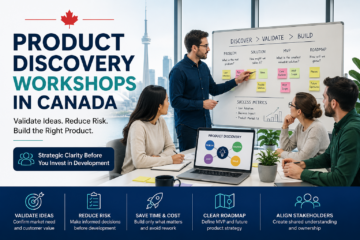
2. Product Discovery
Discovery workshops help define:
- Product goals
- User personas
- Feature priorities
- MVP scope
- Success metrics
This phase creates clarity before significant development investment occurs.
3. Product Strategy and Planning
A strong product strategy answers critical questions:
- What problem are we solving?
- Who are we building for?
- How will the product differentiate itself?
- What defines success?
This stage aligns stakeholders and establishes a roadmap.
4. Architecture and Technical Design
Before writing code, engineering teams define:
- Application architecture
- Infrastructure requirements
- Security models
- Integration strategies
- Scalability frameworks
Strong architecture reduces future technical debt and improves maintainability.
5. Software Product Development
This is where product concepts become working software.
Development activities include:
- Front-end engineering
- Back-end development
- API development
- Database design
- Cloud implementation
- DevOps automation
The focus remains on delivering value rather than simply building features.
6. Quality Assurance and Testing
Product quality directly impacts customer satisfaction.
Engineering teams conduct:
- Functional testing
- Performance testing
- Security testing
- Integration testing
- User acceptance testing
This ensures reliability before launch.
7. Product Launch and Deployment
A successful launch requires more than releasing code.
Teams focus on:
- Deployment automation
- Monitoring systems
- Performance optimization
- Incident response readiness
- Infrastructure scaling
Proper launch planning minimizes operational risk.
8. Continuous Improvement
The best products never stop evolving.
Post-launch activities include:
- User feedback analysis
- Feature enhancements
- Performance optimization
- Security updates
- Product expansion initiatives
Continuous improvement drives long-term growth.
How Product Engineering Services Reduce Business Risk
One of the greatest advantages of product engineering is risk reduction.
Market Risk
Validation ensures there is demand for the product.
Technical Risk
Architecture planning identifies potential scalability and performance challenges early.
Financial Risk
Strategic planning prevents unnecessary development spending.
Operational Risk
Well-engineered systems reduce downtime and support business continuity.
Delivery Risk
Clear processes improve predictability and reduce delays.
Digital Product Engineering: Building for Scale
Today’s products must be designed for growth from the beginning.
Digital product engineering focuses on creating systems that support:
Increasing User Demand
Applications should scale efficiently as adoption grows.
New Features and Integrations
Modern products require flexibility to adapt to changing market requirements.
Security and Compliance
Products must protect user data while meeting regulatory standards.
Cloud-Native Performance
Cloud infrastructure provides scalability, reliability, and cost optimization.
Global Accessibility
Products often serve users across multiple regions and markets.
Scalable engineering ensures growth does not become a technical obstacle.
Product Lifecycle Management: Beyond Product Launch
Many organizations focus heavily on launching a product but underestimate what happens afterward.
This is where product lifecycle management (PLM) becomes critical.
PLM helps businesses manage:
Product Evolution
Tracking feature improvements and future enhancements.
Customer Feedback
Understanding user behavior and identifying opportunities.
Performance Monitoring
Ensuring systems continue to meet business requirements.
Technical Maintenance
Managing upgrades, infrastructure changes, and security updates.
Strategic Growth
Aligning product development with long-term business goals.
A structured lifecycle approach ensures products remain competitive over time.
Why Businesses Choose Product Development Companies in Canada
Canada has become a leading destination for software innovation.
Organizations partner with Canadian product engineering firms because of:
Technical Expertise
Access to experienced architects, engineers, and product specialists.
Innovation Ecosystems
Strong technology communities support emerging products and startups.
Cost Efficiency
High-quality engineering capabilities often provide strong value compared to larger global markets.
Industry Experience
Canadian teams frequently support industries such as:
- Healthcare
- Manufacturing
- Construction
- Logistics
- SaaS
- FinTech
- Artificial Intelligence
Scalable Delivery Models
Companies can quickly scale engineering resources as product needs evolve.
Signs Your Business Needs Product Engineering Services
You may benefit from product engineering support if:
- You have an idea but lack a product strategy.
- Your development team struggles with scalability challenges.
- Product releases are consistently delayed.
- Technical debt is slowing innovation.
- Customer adoption is lower than expected.
- Infrastructure costs are increasing rapidly.
- You need to modernize an existing application.
- You’re preparing for rapid growth.
Professional engineering guidance can significantly improve outcomes.
Choosing the Right Product Engineering Partner in Canada
When evaluating providers, consider:
Product Thinking
Look beyond development capabilities.
The best partners understand business objectives and user needs.
Technical Excellence
Assess expertise in architecture, cloud technologies, security, and scalability.
End-to-End Services
An ideal partner supports the entire product lifecycle.
Industry Knowledge
Experience within your industry often accelerates delivery and reduces risk.
Long-Term Partnership Approach
Successful products require ongoing support and evolution.
Choose a partner invested in long-term success.
The Future of Product Engineering in 2026 and Beyond
Product engineering is evolving rapidly.
Emerging trends include:
- AI-assisted development
- Intelligent automation
- Predictive analytics
- Cloud-native architectures
- Composable applications
- Real-time data ecosystems
- Continuous product experimentation
Organizations that embrace modern engineering practices will be better positioned to compete in increasingly digital markets.
Final Thoughts
Building successful software products requires more than development resources.
It requires a structured approach that combines strategy, validation, architecture, engineering, testing, and continuous improvement.
Professional product engineering services in Canada help organizations reduce risk, accelerate innovation, and build scalable products that support long-term business growth.
Whether you’re launching a new digital product, modernizing an existing platform, or scaling for future demand, product engineering provides the foundation needed for sustainable success.
In 2026, the most successful companies won’t simply build software.
They’ll engineer products designed to evolve, scale, and deliver value for years to come.


0 Comments