
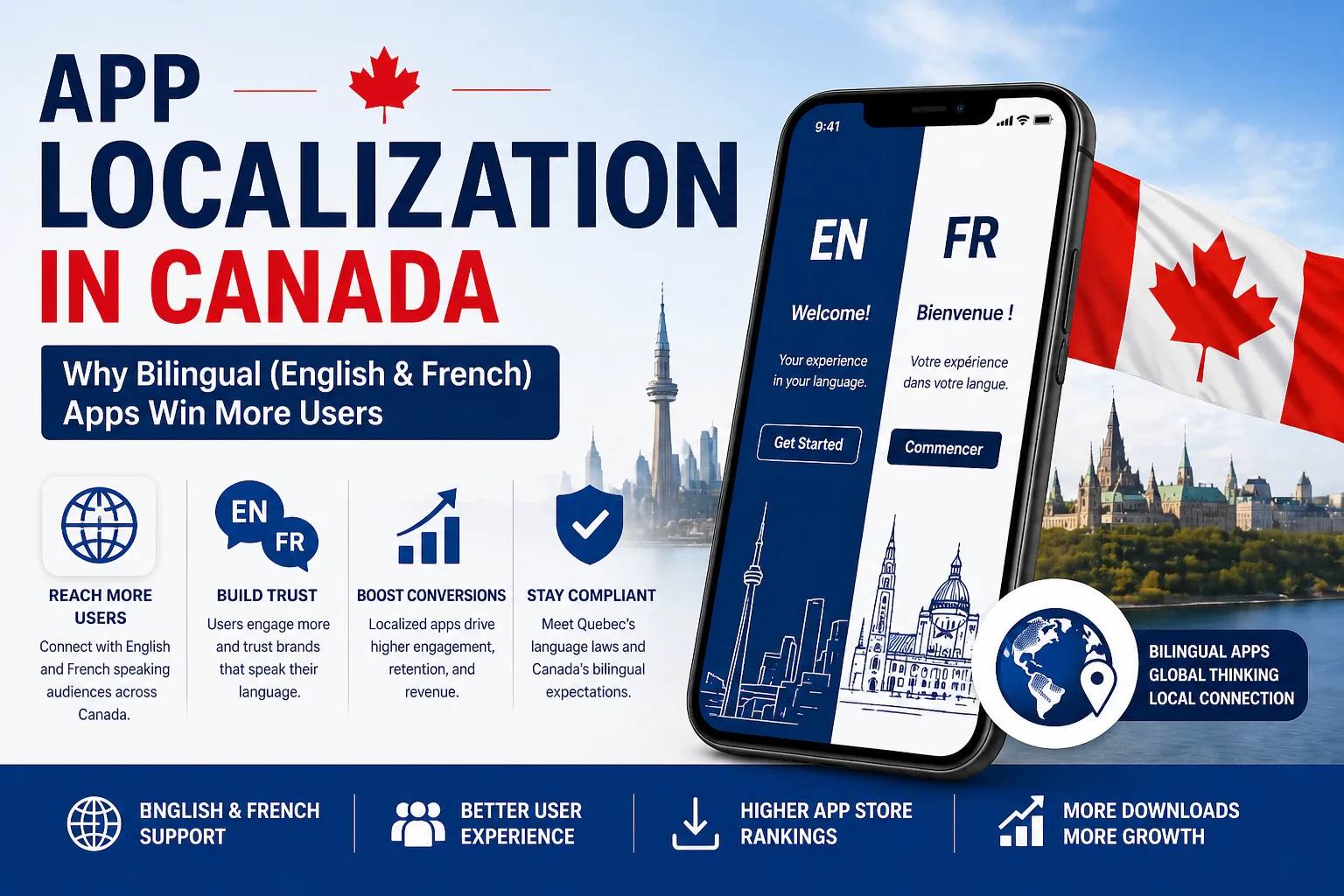
App Localization Canada: Bilingual English & French Guide
Canada is officially bilingual — and your mobile app should be too.
If your app is only available in English, you may be missing a massive segment of the Canadian market, especially in Quebec. App localization in Canada is not just translation — it’s about adapting your app culturally, linguistically, and strategically to connect with more users.
In this 2026 guide, we’ll explain why bilingual and multilingual apps outperform single-language apps in Canada — and how your business can implement localization the right way.
What Is App Localization?
App localization goes beyond direct translation.
It includes:
- Language translation (English ↔ French)
- Cultural adaptation
- Date, currency & measurement formats
- UI/UX adjustments
- Legal compliance updates
- Local marketing messaging
Localization ensures your app feels “native” to Canadian users — not imported.
Why App Localization Is Critical in Canada
🇨🇦 1. Canada Has Two Official Languages
English and French are both official languages at the federal level.
Quebec primarily operates in French, and many businesses must comply with French language requirements. If your app is not localized, you may face adoption barriers in Quebec’s strong consumer market.
📈 2. Bilingual Apps Increase User Trust
Users are more likely to:
- Download apps in their native language
- Complete purchases
- Trust brands
- Leave positive reviews
Language familiarity improves onboarding, retention, and conversions.
🛒 3. Higher Conversion Rates in Quebec
Research consistently shows users convert better when interacting in their primary language.
If you’re targeting:
- E-commerce
- Fintech
- Healthcare
- Education
- SaaS platforms
French localization can significantly increase engagement and revenue.
English vs French App Strategy in Canada
Here’s how Canadian app localization typically works:
| Region | Primary Language | Strategy |
|---|---|---|
| Ontario | English | Default English version |
| Quebec | French | Fully localized French version |
| New Brunswick | Bilingual | Dual-language support |
| Rest of Canada | English-dominant | English default with optional French |
For national brands, bilingual apps are the safest and most scalable approach.
Key Elements of App Localization in Canada
1️⃣ Language Translation (Professional, Not Automated)
Avoid machine-only translation. Use professional French Canadian translators to ensure:
- Correct terminology
- Quebec French dialect accuracy
- Natural user interface language
Canadian French differs from European French — this matters.
2️⃣ Cultural Adaptation
Localization includes:
- Tone of voice adjustments
- Region-specific references
- Local holidays & promotions
- Currency display (CAD formatting)
- Date formats (YYYY-MM-DD variations)
3️⃣ UI/UX Adjustments
French text is often longer than English. Your app design must:
- Support dynamic text expansion
- Avoid layout breaking
- Maintain readable font sizes
- Adjust button widths
4️⃣ Legal & Compliance Considerations
Quebec has strict language laws under Bill 96. Businesses operating there may need:
- French-first interfaces
- French customer support
- French legal documentation
Localization helps reduce legal risks.
Benefits of Bilingual Apps in Canada
✔ Larger Market Reach
Reach users in Quebec and bilingual regions.
✔ Higher App Store Rankings
Localized keywords improve visibility in Canadian App Store searches.
✔ Better Customer Experience
Users feel understood and valued.
✔ Increased Revenue
More downloads → More conversions → Higher retention.
Multilingual App Development: How It Works
Modern frameworks like:
- React Native
- Flutter
- Native iOS & Android
Support internationalization (i18n) and localization (l10n) through language files.
Step-by-Step Process:
- Prepare app architecture for localization.
- Separate content from code.
- Translate text professionally.
- Implement language toggle.
- Test bilingual flows.
- Optimize localized App Store listings.
Localization should be integrated early — not added after launch.
App Store Localization in Canada
Don’t forget:
- App Store description (English & French)
- Screenshots in both languages
- Localized keywords
- French app previews
ASO (App Store Optimization) improves dramatically when apps support multiple languages.
Common Localization Mistakes to Avoid
❌ Using Google Translate only ❌ Ignoring Quebec French differences ❌ Not testing UI for text overflow ❌ Translating marketing copy but not legal content ❌ Forgetting push notifications & emails
Localization must be comprehensive.
Industries That Benefit Most from Localization
- E-commerce apps
- Banking & fintech apps
- Healthcare apps
- Government & public sector apps
- SaaS platforms
- Education apps
Any business targeting nationwide growth should consider bilingual support.
The Future of App Localization in Canada (2026 & Beyond)
By 2026:
- French compliance requirements will become stricter.
- Quebec’s digital economy will continue expanding.
- AI-assisted translation tools will improve — but human review will remain critical.
- Businesses with bilingual apps will dominate national visibility.
Localization is no longer optional for serious growth in Canada.
FAQs
Is app localization mandatory in Canada?
Not nationwide, but Quebec has strict French language requirements under Bill 96.
What’s the difference between translation and localization?
Translation converts text. Localization adapts the entire app experience culturally and technically.
How much does app localization cost in Canada?
Costs vary based on app size and content volume. Planning localization during development reduces long-term costs.
Should startups localize at MVP stage?
If targeting Quebec or nationwide users — yes, at least prepare the architecture for it.
Final Thoughts
App localization in Canada is a growth strategy — not just a technical task.
Bilingual apps build trust, improve conversions, and unlock Quebec’s powerful consumer market. If your business plans to scale across Canada in 2026, English-only apps will limit your potential.
Smart businesses design for localization from day one.
Categories: Uncategorized
Have a project in mind?
Let's talk about how we can build it. Free consultation, no obligation.
Get a Free Consultation