
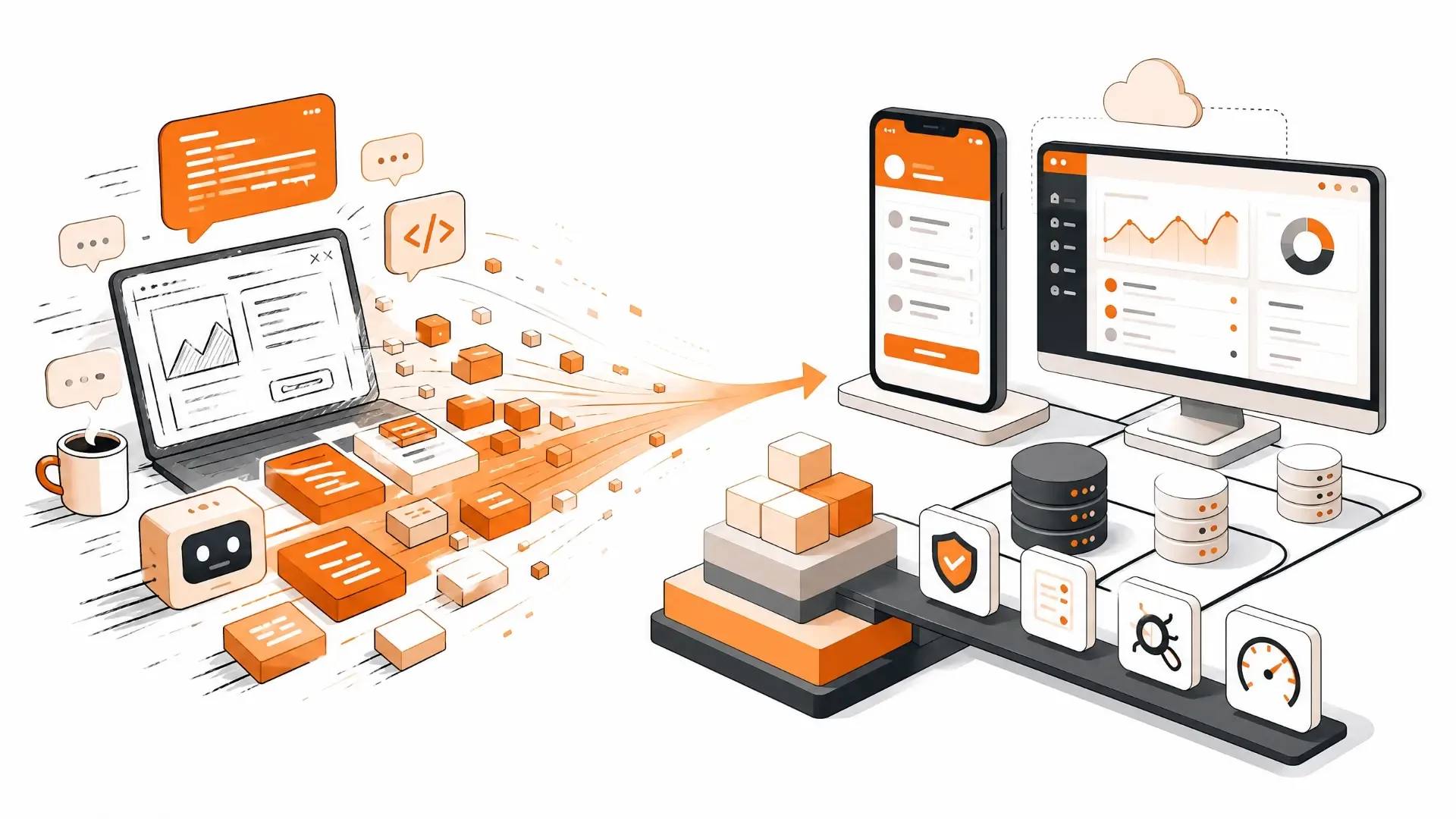
Vibe Coding vs. Professional App Development: When AI App Builders Aren't Enough
Someone on your team has probably already said it: "Just vibe code it — we don't need to hire anyone yet." And for a genuine first pass at an idea, they might be right. Tools like Lovable, Replit, and Cursor can take a plain-language description and turn it into a working app in an afternoon, not a sprint.
The harder question is what happens after that first version works. That's usually where the two camps split: one side says keep building with AI, the other says it's time to bring in real developers. Both have a point, and the honest answer depends entirely on what you're building and who's going to depend on it.
Here's what the current data actually says, and how to tell which side of that line your project is on.
TL;DR
- Vibe coding is genuinely good for prototypes, internal tools, and proving an idea works before you spend real money on it.
- AI-generated code carries real, measured risk once something matters — Veracode's 2025–2026 testing found 45% of AI-generated code samples introduce OWASP Top 10 vulnerabilities, and CodeRabbit's analysis found AI-authored code has a 2.74x higher vulnerability rate than human-written code.
- The pattern that actually works for most founders: validate fast with AI tools, then bring in a professional team once real users, real data, or real money are involved.
What Is Vibe Coding, Exactly?
Vibe coding is building software by describing what you want in plain language and letting an AI tool generate the actual code. You're not writing functions or debugging syntax — you're prompting, reviewing the result, and prompting again until it does what you meant. The term (coined by AI researcher Andrej Karpathy in early 2025) was originally used for exactly that kind of fast, low-friction, "forget the code exists" building style.
It's a genuinely different way of working, not just autocomplete with extra steps. Tools like Lovable and Replit will pick the tech stack, write the code, structure the project, and deploy it, largely without you touching a line yourself. That's the appeal, and it's also exactly where the risk starts.
Where Vibe Coding Genuinely Wins
The speed is real, not marketing. Industry survey data from Sonar puts the share of all code now AI-generated or AI-assisted at around 42%, and that number is expected to keep climbing. Developers using AI coding tools consistently report merging significantly more pull requests and saving several hours a week on routine work.
For a founder with no development team yet, that translates into something concrete: an idea that used to take a hired developer two or three weeks to prototype can now get a rough working version in a weekend. That's a genuine, valuable shift, and it's not something we'd tell anyone to ignore.
What the Data Says About AI-Generated Code Quality
This is where it gets more complicated than "AI is fast, hire pros when you're serious." The quality gap is measurable, and it's larger than most people expect.
Bug and defect rates
CodeRabbit's analysis of AI-authored pull requests found AI-generated code carries a 2.74x higher vulnerability rate than human-written code in the same repositories. Separately, Black Duck's 2026 open source security review of 947 codebases found mean vulnerabilities per codebase had jumped 107% year over year, with 87% of audited codebases containing at least one high or critical severity issue.
Security vulnerabilities specifically
Veracode's large-scale testing across more than 100 language models found that 45% of AI-generated code samples introduced OWASP Top 10 vulnerabilities — a rate that hasn't meaningfully improved across multiple testing cycles despite vendor claims of progress. Java code fared worst, failing security tests at a 72% rate.
The real-world version of this isn't abstract. Security researchers at Escape.tech scanned roughly 5,600 publicly accessible vibe-coded applications and found more than 2,000 vulnerabilities and 400+ exposed secrets sitting in the open — API keys, credentials, and similar sensitive data anyone could find. In one widely-reported 2025 case, a popular AI app-building platform was found to be generating backend database schemas without row-level security enabled by default, an oversight that exposed data across more than 170 live production applications before it was patched.
None of this means AI-generated code is bad. It means it's unreviewed code, and unreviewed code — AI-written or not — has always carried this kind of risk. The difference is volume: a lot more code is getting shipped without that review step than before.
Where It Breaks Down: Scale, Compliance & Systems Thinking
AI tools generate code within a limited context window — enough to handle one feature at a time, not enough to reason about how fifty features interact once your app has real users. Handling concurrent load, keeping a payment flow consistent under failure, or designing a database schema that survives going from 1,000 users to 100,000 are systems problems, not feature problems. That distinction is exactly what separates a working demo from a product people can depend on.
If your app needs to comply with something specific — PIPEDA, HIPAA, PCI-DSS, SOC 2 — vibe coding gets even riskier. Compliance isn't just about the code working; it's about being able to demonstrate exactly how data is stored, encrypted, logged, and retained. "An AI wrote it" isn't an answer an auditor will accept, and AI tools don't generate the audit trail or security documentation that regulators actually ask for.
The Hidden Cost Nobody Budgets For
The pattern we see most often: a founder vibe-codes an MVP in two weeks, it works, it gets users, and now it needs new features and has to scale. But the codebase has no consistent architecture — each AI-generated feature was built in isolation, testing was skipped to move fast, and documentation doesn't exist.
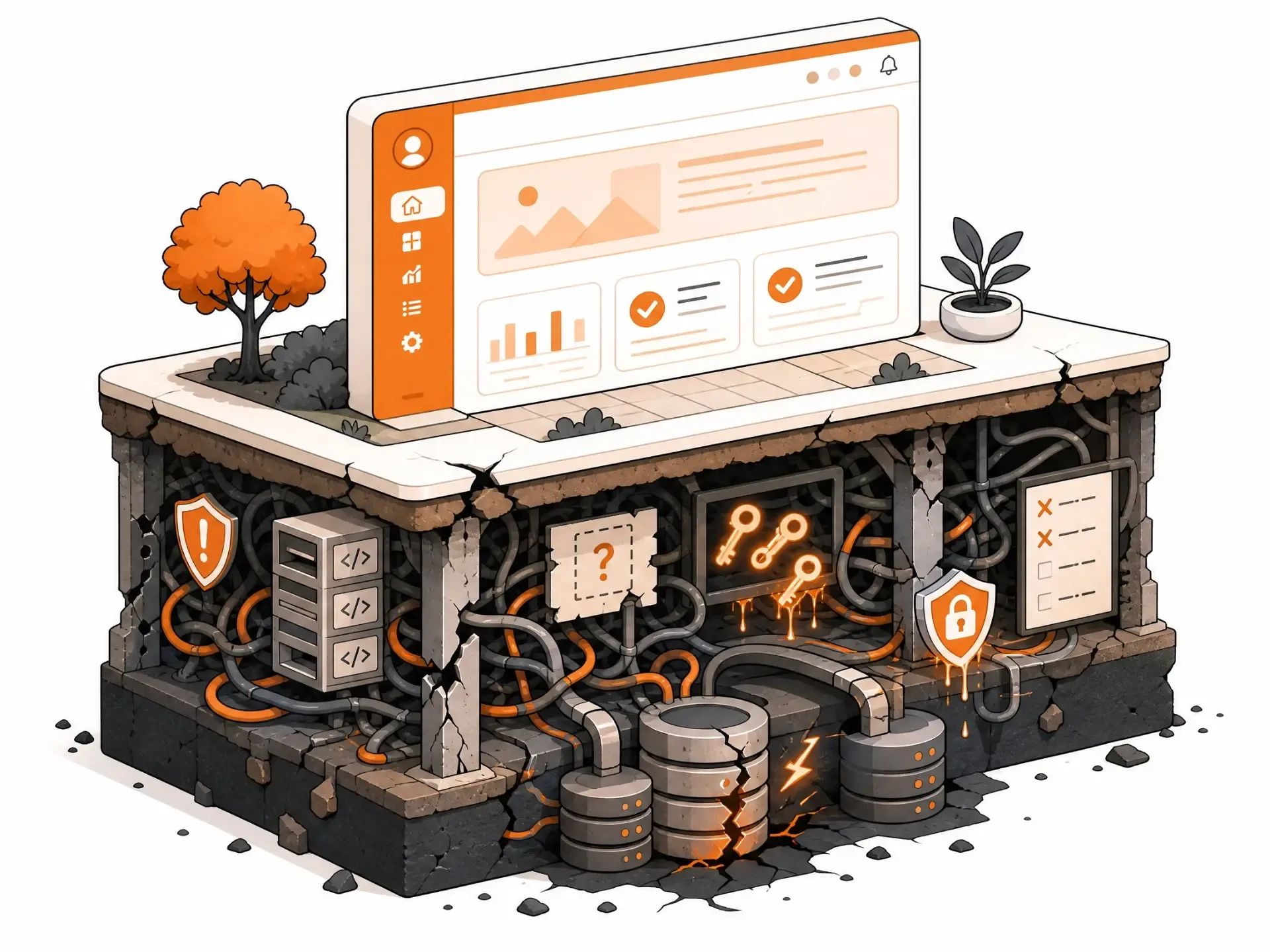
Adding one new feature now means touching five others just to keep things working. Scaling means rebuilding the data layer from scratch. A security review turns up problems in dozens of places at once. What was meant to be a two-week head start quietly turns into a multi-month rewrite — usually costing more than building it properly the first time would have.
This isn't a reason to avoid vibe coding. It's a reason to be honest about what you're actually building each time you reach for it.
When Vibe Coding Is Actually the Right Call
- Prototypes and throwaway builds — anything you're planning to rebuild once it proves the concept.
- Non-critical features — an About page, a blog layout, marketing site components with no access to sensitive data.
- Boilerplate and standard patterns — form validation, basic API scaffolding, the kind of code AI tools have seen thousands of times before.
- Speeding up developers who already know what they're doing — using AI as a productivity tool inside a reviewed, tested workflow is a different thing entirely from replacing that workflow.
- Pitching an idea — a vibe-coded demo can win a client, investor, or stakeholder buy-in long before the real build starts.
When You Need Professional Development
The line is less about company size and more about what's actually at stake. Bring in a professional team once your app handles real user data, processes payments, needs to meet a compliance standard, or has to stay reliable for people who depend on it. If a bug would cost you money, trust, or a legal problem, that's the signal.
A professional team brings things AI tooling alone doesn't: architectural planning instead of feature-by-feature guessing, security built in from the start rather than patched in afterward, code review, real testing, and documentation that makes the system maintainable by someone other than the person who built it.
How the Smartest Founders Actually Use Both
This isn't really a choose-one decision. The founders getting the most out of this moment treat vibe coding and professional development as two stages of the same process, not competing options.
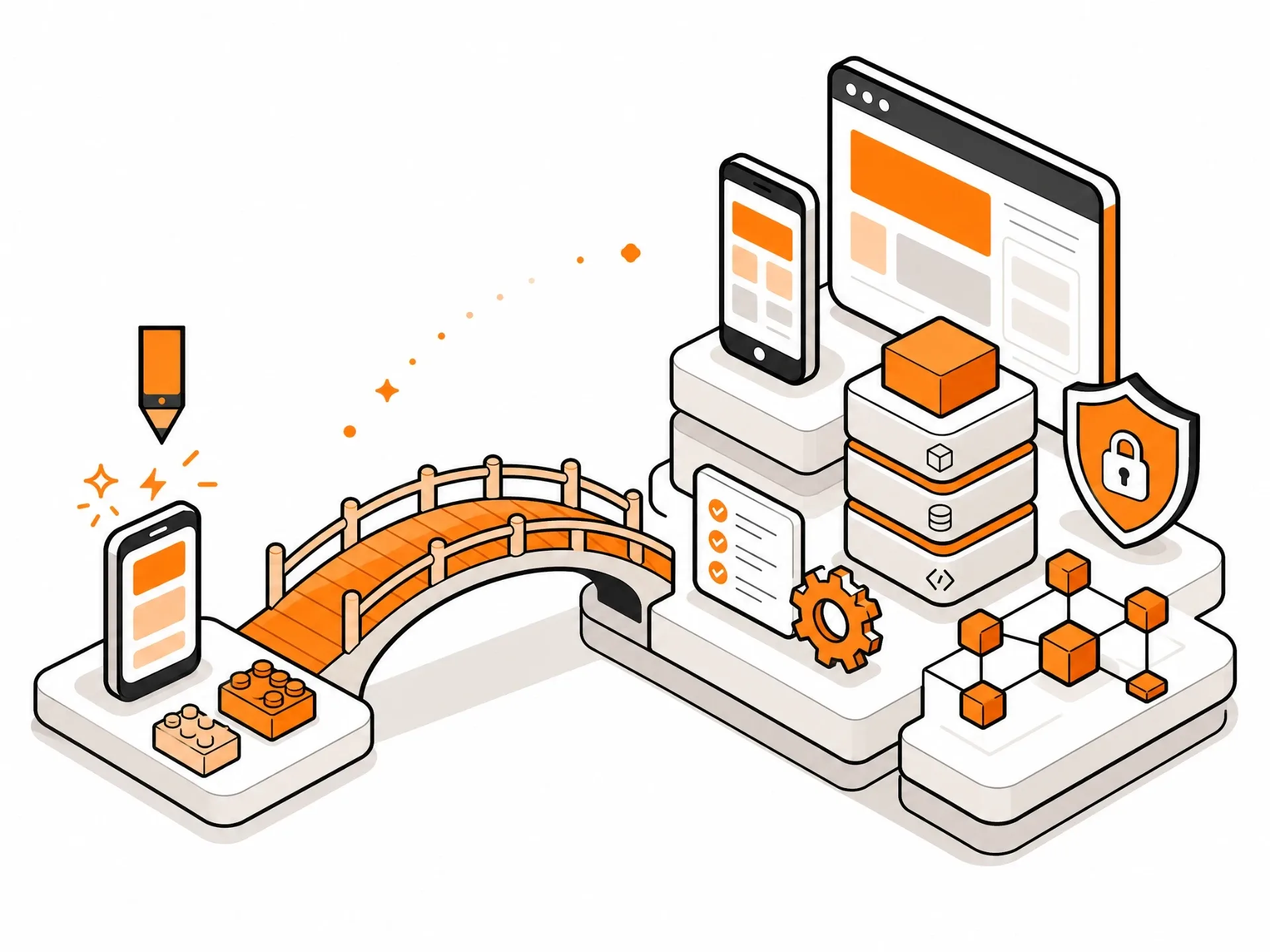
Validate the idea fast and cheap with AI tools first. If it gets real traction, bring in a mobile app development or web application development team to rebuild it properly before it's carrying real users, real data, or real revenue. That sequencing is faster and cheaper than either extreme on its own — you're not paying a full team to build something that might not find customers, and you're not discovering a security hole after launch.
Frequently Asked Questions
Can AI actually generate production-ready code?
For specific, well-scoped features, often yes. For a full production system, not on its own — production-ready means tested, security-reviewed, documented, and built to scale, and AI tools generate code, not that surrounding process. Non-critical features are a reasonable place to trust AI output as-is; core functionality generally isn't.
Is it actually cheaper to vibe code an MVP?
Upfront, yes — often close to free. The catch is the total cost including what happens after: if the MVP gets traction and needs a professional rebuild, you're frequently paying for both the vibe-coded version and the rewrite, which can add up to more than building it properly the first time.
Should a development team even bother using AI tools if we're hiring professionals?
Yes — this isn't an either/or. Most professional developers already use AI tools daily to move faster on boilerplate and routine work. The difference from vibe coding as a full methodology is that a professional team still reviews, tests, and takes ownership of everything that ships.
Is vibe coding safe for anything that touches payments or personal data?
No. This is the clearest line in the data — AI-generated code fails security testing at a high enough rate (Veracode found 45% introduce known vulnerability classes) that handling payments or personal data without a full professional security review is a genuinely risky bet, not just an overcautious one.
What's actually salvageable if I've already vibe-coded a prototype?
Often more than people expect. A professional team can usually assess a vibe-coded MVP, keep what's genuinely sound (UI direction, validated features, core concept), and rebuild the parts that need real architecture underneath — rather than starting completely from zero.
How do I know if my app idea needs professional development from day one?
If it involves user accounts with sensitive data, any kind of payment processing, a regulatory requirement, or you're planning to launch to real customers rather than test with a handful of friendly users, it's worth involving a professional team early, even if AI tools help with the initial exploration.
Does vibe coding replace the need to hire developers long-term?
Not for anything meant to last. It changes what early-stage building looks like and can genuinely delay when you need to hire, but the underlying need for architecture, security, and maintainability doesn't go away just because the prototype came together fast.
What's the single biggest risk of skipping professional development entirely?
Technical debt compounding invisibly. A vibe-coded app can look and feel finished while carrying structural problems that only surface once real usage, real scale, or a security audit hits it — at which point fixing it costs meaningfully more than building it right would have.
Where We Fit In
At App-Scoop, we're not precious about how you got your first version working — plenty of the best client projects we've taken on started as a rough prototype somebody built themselves. What we care about is what happens next: whether the thing you're building needs to hold up under real users, real data, and real money, and whether it's built to do that.
If you've validated an idea and it's time to build it properly, our mobile app development and web application development teams can take it from there — including assessing what's worth keeping from a vibe-coded MVP. And if part of what you're building leans on AI itself, our AI Workflow Automation and ChatGPT & LLM Integration teams build that the way it needs to be built for production, not just for a demo. Get in touch and let's talk through where your project actually stands.
Have a project in mind?
Let's talk about how we can build it. Free consultation, no obligation.
Get a Free Consultation