
The Essential Guide to Healthcare Mobile App Development
Just over half of healthcare apps fail, and it is rarely because the code was bad. It is poor user experience, security that was not taken seriously enough, or a value proposition that was never clear to the people meant to use it every day. That is a sobering number for a category with this much genuine opportunity behind it—healthcare leaders are investing more in digital and virtual care than ever, and patients who try virtual care overwhelmingly say they would use it again.
This guide covers what actually goes into building a healthcare app that clears that bar: what makes healthcare development genuinely different from a regular app build, the compliance you cannot skip, what it costs, and where these projects tend to go wrong.
TL;DR
- Healthcare app development is defined by compliance, security, and interoperability first. Features come after those are solved, not before.
- Apps that solve one problem deeply—medication adherence, remote monitoring, or patient-provider messaging—consistently outperform apps trying to do everything at once.
- Cost realistically runs from $50,000 to $300,000+ depending on compliance scope, integrations, and complexity, with a build timeline of 3 to 18 months.
- The most common failure is not a technical bug. It is launching without a clear problem being solved, or treating compliance as something to retrofit instead of designing around it.
What Makes Healthcare App Development Genuinely Different
A lot of standard mobile development advice still applies here: good UX, solid testing, and a clear user problem. What is different is what sits underneath all of that:
- Compliance is not a feature; it is the foundation. HIPAA in the US, PHIPA in Ontario, and GDPR in Europe shape the architecture from day one. They are not something layered on before launch.
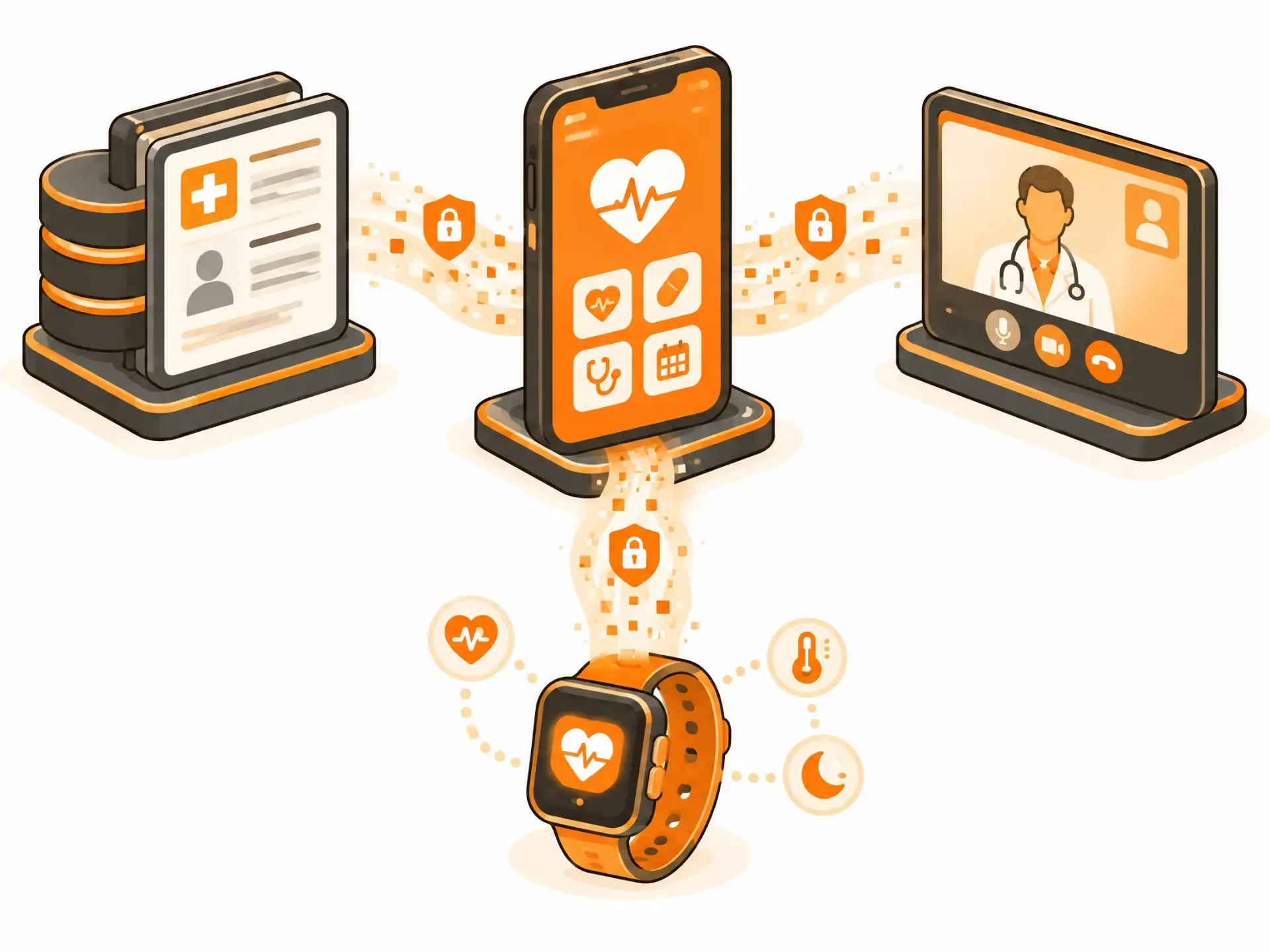
- Interoperability is expected, not optional. A healthcare app that cannot exchange data with EHR systems through standards such as HL7 and FHIR is much less useful to the clinicians and patients meant to rely on it.
- Trust is earned slower and lost faster. Patients and providers are reasonably more cautious about a health app than a shopping app. A visible security or privacy misstep does more damage here than almost anywhere else in mobile.
Types of Healthcare Apps
| Category | Examples | Built For |
|---|---|---|
| Telehealth | Video and audio consultations, virtual visits | Remote care delivery |
| Remote patient monitoring | Vitals tracking through wearables and IoT devices | Chronic condition management |
| EHR and medical records | Patient history, test results, prescriptions | Providers and patients |
| Medication management | Reminders, adherence tracking, refills | Patients managing ongoing treatment |
| Clinical decision support | Diagnostic tools, treatment protocols | Physicians and clinical staff |
| Mental health and wellness | Therapy support, mood tracking | General users |
| Hospital and practice management | Scheduling, billing, staff coordination | Administrative operations |
Core Features: Clinician-Facing vs. Patient-Facing
| Feature | Clinician App | Patient App |
|---|---|---|
| Profile | Specialization, availability, credentials | Medical history, allergies, current medications |
| Scheduling | Manage and view appointments | Book, reschedule, or cancel appointments |
| Records access | Full EHR access | View personal records and results |
| Communication | Secure messaging and video consultations | Chat with a care team and join virtual visits |
| Prescriptions | Generate and send digital prescriptions | Receive and track prescriptions |
| Reminders | Patient follow-up alerts | Medication and appointment reminders |
Where Healthcare Apps Actually Fail
With just over half of healthcare apps failing, it is worth being specific about why rather than treating it as an abstract risk.
Trying to Solve Too Many Problems at Once
A patient or clinician opening a healthcare app usually has one specific need in mind. Apps that address that one thing thoroughly consistently outperform apps that spread themselves thin across many loosely related features.
Treating Compliance as a Launch-Week Checklist
Retrofitting HIPAA or PHIPA compliance onto a nearly finished app is slower, more expensive, and riskier than designing the data architecture around it from the start.
Assuming Security Is Fine Until It Is Not
Healthcare data breaches continue to rise. Encryption, access controls, and regular security testing need to be built in, not assumed because there has not been a problem yet.
Having No Real Interoperability Plan
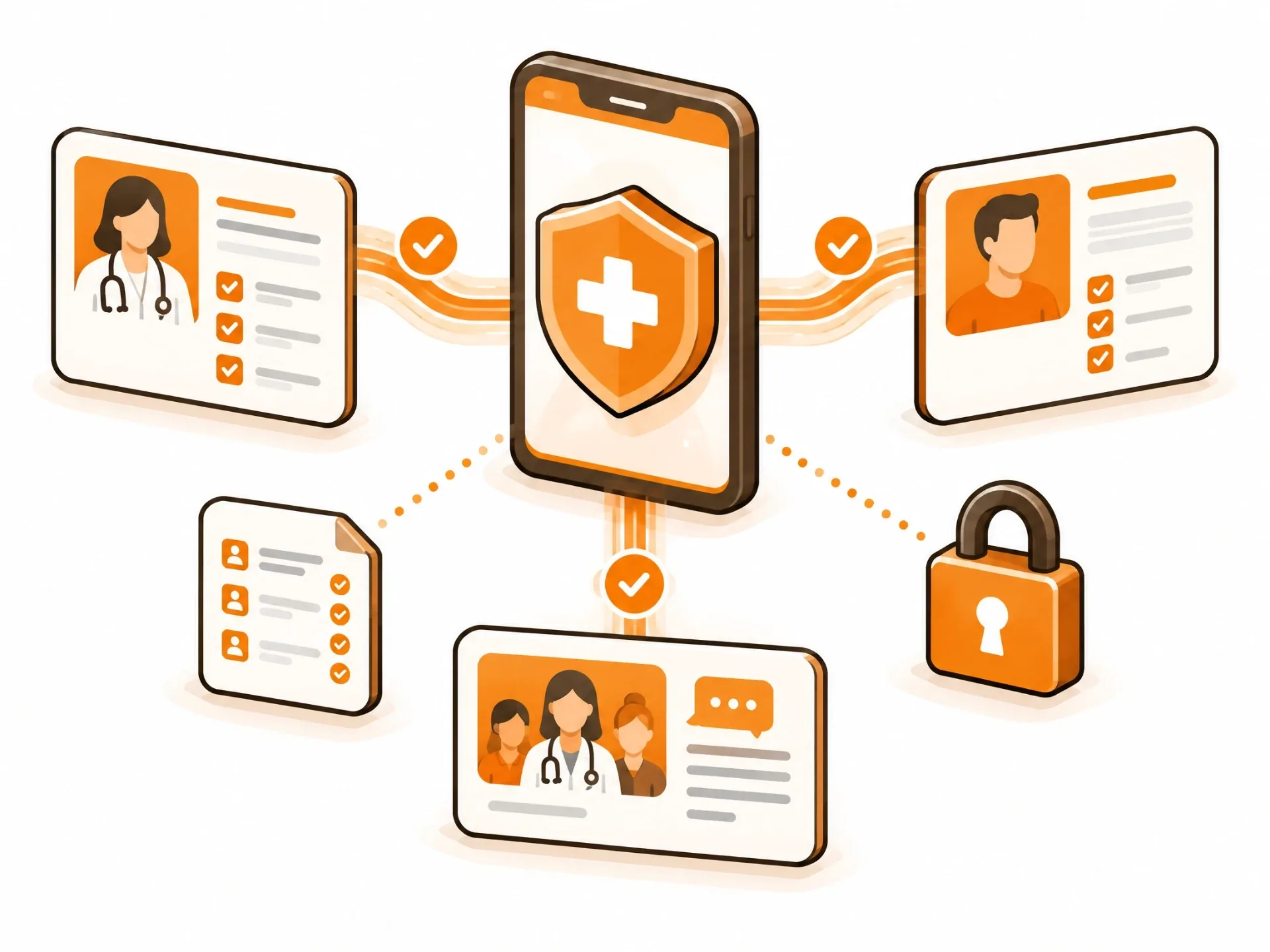
An app that cannot cleanly exchange data with the EHR systems clinicians already use creates more work for them, which is close to the opposite of the point.
Compliance You Actually Need to Know
- HIPAA (US): Governs protected health information for any app serving US patients or providers. Encryption, access control, and audit trails are not optional.
- PHIPA (Ontario): Ontario's framework has specific requirements for storing and handling personal health information.
- GDPR (EU): Applies if your app collects or stores data from users in the European Union, regardless of where your company is based.
For a deeper Ontario-specific breakdown of PHIPA requirements and what they mean for cost and architecture, see our Healthcare App Development Toronto: PHIPA & Cost Guide.
How the Build Actually Goes
The same four-stage process behind every App-Scoop build applies here, with compliance and interoperability requirements mapped early rather than discovered mid-project:
- Discovery and strategy: Define the one problem the app solves well, then map compliance and EHR integration requirements before design work begins.
- Design and prototyping: Test wireframes and a working prototype against real clinical or patient workflows, not assumptions about them.
- Agile development: Build in sprints, validating security and compliance continuously rather than checking them once near the end.
- Launch and growth: Deploy with the ongoing monitoring, security updates, and compliance maintenance healthcare apps specifically require.
What It Costs
| Scope | Typical Range (CAD) | Timeline |
|---|---|---|
| Focused single-purpose app | $50,000–$85,000 | 3–6 months |
| Mid-complexity with EHR integration or telehealth | $90,000–$200,000 | 6–12 months |
| Highly complex, multi-system, regulated, and clinical | $220,000–$300,000+ | 12–18 months |
Compliance scope, EHR integrations, and security architecture push cost up more than feature count does. For the general cost factors behind any app build, see our full Application Development Cost breakdown.
A Real Project: Cambian Connect
This is not theoretical for us. We built Cambian Connect, a healthcare communication platform designed to keep care teams connected in real time. It is the kind of project this guide is about: solving one clear problem—care-team communication—rather than trying to be everything to everyone. You can see more healthcare and other project work in our portfolio.
Frequently Asked Questions
How much does it cost to build a healthcare app?
Typically $50,000 to $300,000+, depending on compliance scope, EHR integrations, and feature complexity. A focused single-purpose app sits at the lower end; a highly regulated, multi-system platform sits at the higher end.
Do all healthcare apps need to be HIPAA compliant?
Any app handling protected health information for US patients or providers needs to be. If you are not collecting or storing PHI directly—a general wellness or fitness app, for example—the requirement may not apply, but it is worth confirming specifically rather than assuming either way.
Why do most healthcare apps fail?
The most common causes are poor user experience, security vulnerabilities, or a value proposition that was never clearly defined. Apps trying to solve too many problems at once also tend to underperform apps built around one specific need.
How long does healthcare app development take?
Generally 3 to 18 months, depending on complexity. A focused MVP can launch in 3 to 6 months; a highly complex, multi-system, regulated platform typically takes 12 to 18 months.
What is the difference between a wellness app and a medical app for compliance?
Wellness apps such as fitness tracking and general mindfulness usually do not carry the same regulatory weight as apps that diagnose, treat, or integrate directly with clinical systems. Medical apps handling PHI or supporting clinical decisions face stricter requirements under HIPAA, PHIPA, or equivalent regulations.
Can an existing healthcare app be modernized instead of rebuilt?
Often, yes. If the core functionality and user base are solid but the technology underneath has aged or compliance requirements have shifted, modernization is usually faster and less risky than starting over.
What should I look for in a healthcare app development partner?
Look for direct experience with healthcare compliance, a real portfolio of healthcare projects, and a team that treats security and interoperability as core architecture decisions rather than afterthoughts.
Where App-Scoop Fits In
We have built healthcare communication tools and work across mobile app development, web application development, and API & system integration for the EHR and system connections healthcare apps depend on. If part of your app involves processing medical records or documents, our Intelligent Data Processing team handles that properly. Get in touch and we will talk through what your project actually needs.
Have a project in mind?
Let's talk about how we can build it. Free consultation, no obligation.
Get a Free Consultation