
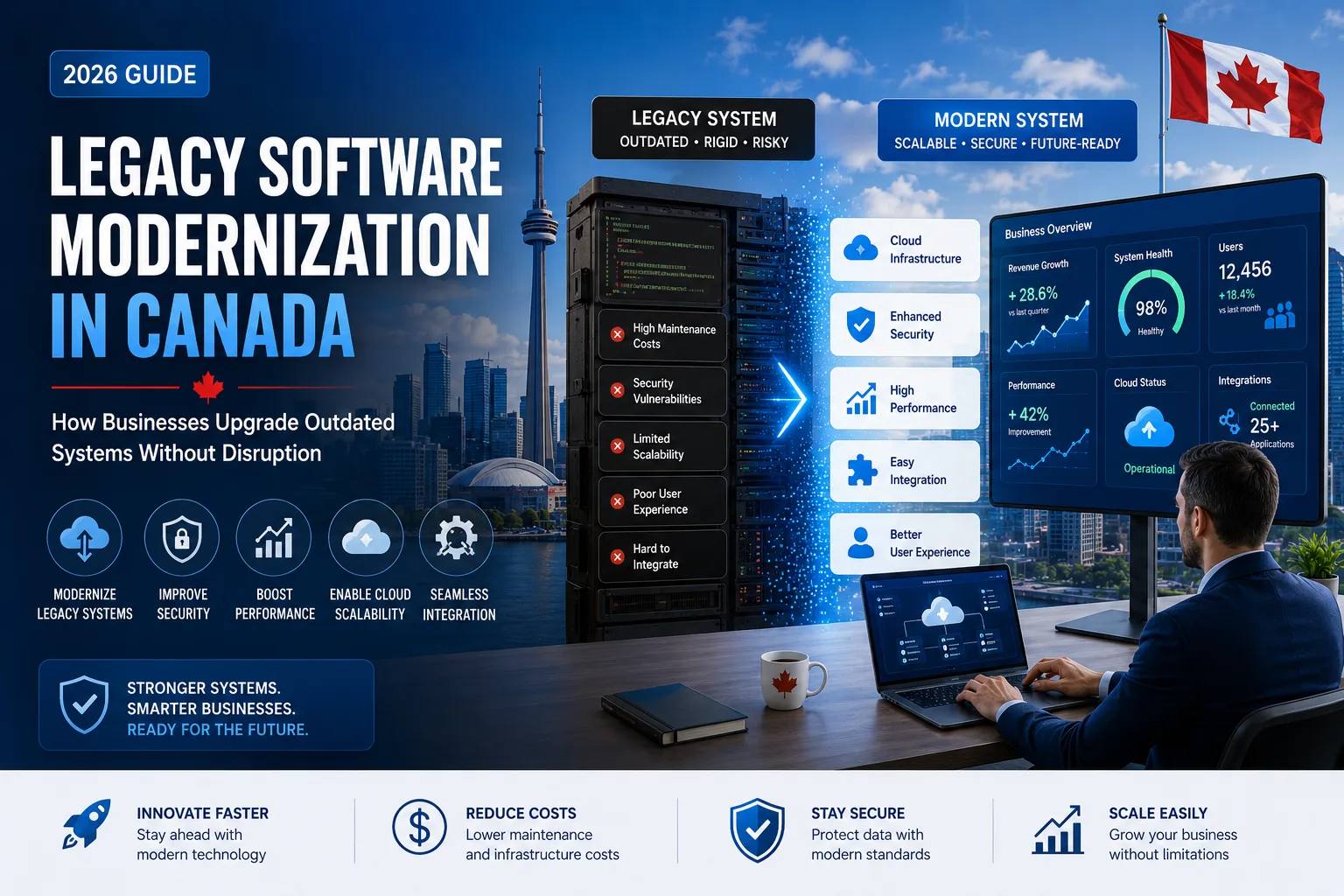
Legacy Software Modernization in Canada
In today’s fast-changing digital economy, many businesses across Canada still rely on outdated software systems that were built decades ago. While these legacy systems may still function, they often limit scalability, slow down operations, and increase maintenance costs.
This is where legacy software modernization becomes essential. Instead of replacing entire systems at once—which can be risky and expensive—organizations are now upgrading and transforming existing software gradually and strategically.
The goal is simple: improve performance, security, and scalability without disrupting day-to-day business operations.
What is Legacy Software Modernization?
Legacy software modernization refers to the process of upgrading old or outdated applications into modern, efficient, and scalable systems.
These legacy systems are often built using outdated programming languages, monolithic architectures, or on-premise infrastructure that no longer meets current business needs.
Modernization typically involves:
- Migrating to cloud-based platforms
- Rewriting or refactoring old code
- Integrating APIs for better connectivity
- Improving UI/UX for modern users
- Enhancing security and compliance
Why Businesses in Canada Still Use Legacy Systems
Many companies in Canada continue to use legacy software because:
- The systems are deeply embedded in business operations
- Replacement seems too expensive or risky
- Data migration appears complex
- The software still “works,” even if it’s outdated
However, continuing with legacy systems can lead to:
- High maintenance costs
- Security vulnerabilities
- Limited integration capabilities
- Poor user experience
- Slower business innovation
Key Approaches to Legacy Software Modernization
There is no one-size-fits-all approach. Businesses choose modernization strategies based on cost, risk, and long-term goals.
1. Rehosting (Lift and Shift)
Moving applications to cloud infrastructure without changing the core system.
2. Replatforming
Making small optimizations while migrating to a modern platform.
3. Refactoring
Rewriting parts of the system to improve performance and scalability.
4. Rebuilding
Completely redesigning the application using modern architecture.
5. Replacing
Switching to a new software solution entirely when legacy systems are no longer viable.
Benefits of Legacy Software Modernization
Modernizing legacy systems offers significant advantages for businesses:
1. Improved Performance
Modern systems are faster, more stable, and more efficient.
2. Lower Operational Costs
Reduced maintenance and infrastructure costs.
3. Better Security
Updated systems follow modern cybersecurity standards.
4. Scalability
Cloud-based systems allow businesses to grow without limitations.
5. Seamless Integration
Easier connection with CRM, ERP, and third-party tools.
Challenges in Legacy Modernization
While beneficial, modernization comes with challenges:
- Data migration risks
- System downtime concerns
- Compatibility issues
- High initial investment
- Resistance to change within teams
However, with proper planning and phased implementation, these risks can be minimized effectively.
Best Practices for Successful Modernization
To ensure smooth modernization, businesses should:
- Start with a full system audit
- Prioritize critical applications first
- Use phased migration instead of full replacement
- Ensure strong backup and recovery systems
- Work with experienced software modernization experts
Role of Software Development Companies
Professional software teams play a key role in modernization by analyzing existing systems and designing transformation strategies tailored to business needs.
Companies like App-Scoop Solutions help businesses modernize legacy systems by offering:
- Cloud migration services
- Custom software redevelopment
- API integration solutions
- Enterprise system upgrades
- Digital transformation consulting
Conclusion
Legacy software modernization is no longer optional—it is a necessity for businesses that want to stay competitive in a digital-first world.
For companies in Canada, upgrading outdated systems ensures better performance, stronger security, and long-term scalability without disrupting daily operations.
A well-planned modernization strategy can transform legacy systems into powerful digital assets that support future growth.
Categories: Uncategorized
Have a project in mind?
Let's talk about how we can build it. Free consultation, no obligation.
Get a Free Consultation