How Much Does It Cost to Build an App in Canada? (2026 Guide)

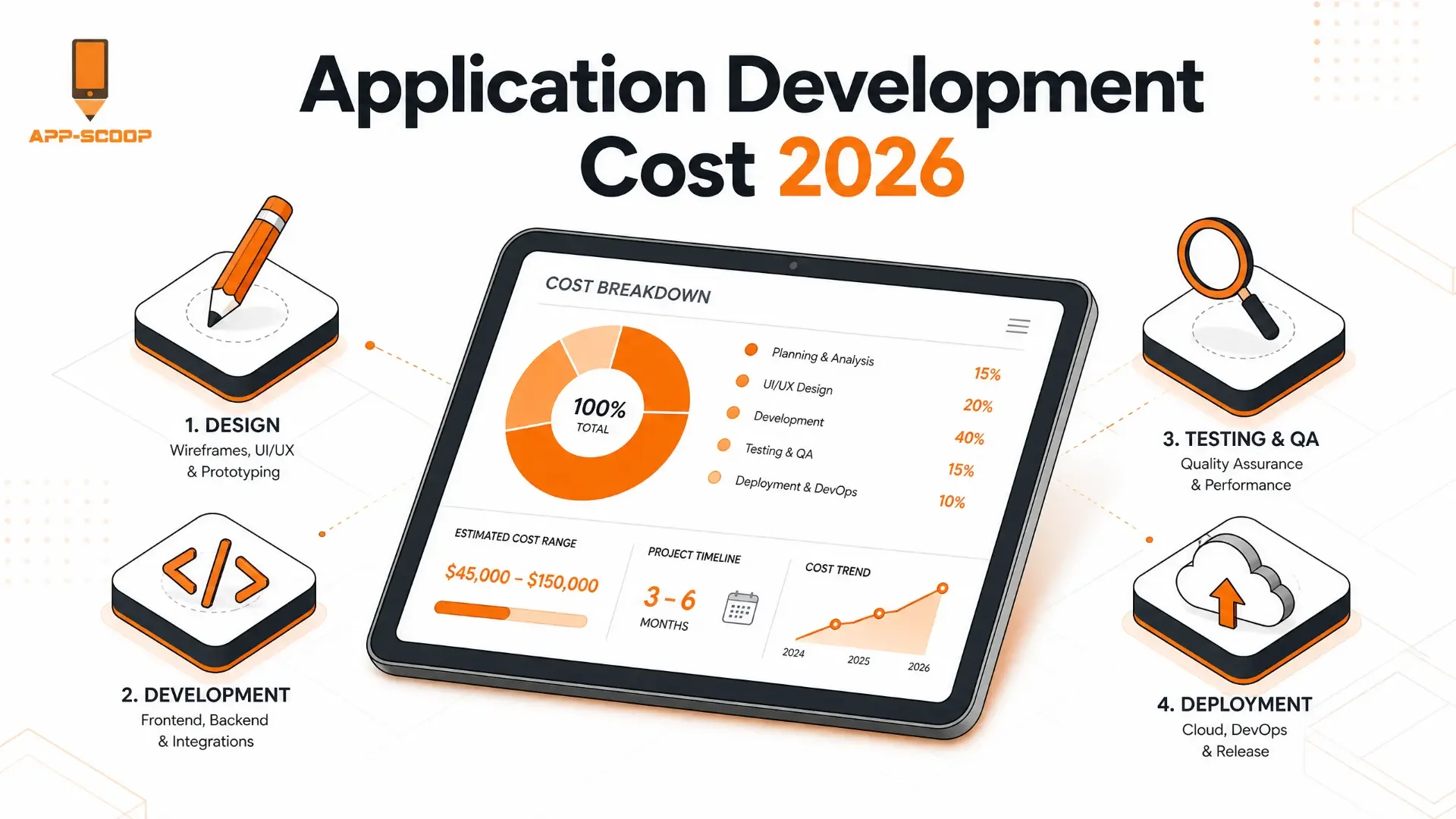
If you’re considering developing a mobile app in Canada in 2026, understanding the costs involved is crucial for budgeting and planning. The cost to build an app can vary significantly based on factors such as complexity, platform choice, development team location, and additional features. This comprehensive guide will provide you with detailed insights into app development costs in Canada, helping you make informed decisions for your project.


Average App Development Charges in Canada (2026)

The cost of developing a mobile app in Canada ranges from approximately CAD 8,000 to CAD 200,000, depending on various factors. Here’s a breakdown based on complexity:

App ComplexityEstimated Cost (CAD)Development Time
Simple App8,000 – 16,0002 – 4 months
Mid-Scale App18,000 – 32,0004 – 8 months
Large-Scale App45,000 – 55,0008 – 10 months
Complex App80,000 – 95,0006 – 10 months
Enterprise-Level AppStarts from 95,0008 – 12 months

Source: TekRevol

Development Using AI for Faster, & Cost-Effective App Development

AI is transforming the app development landscape by making the process faster, smarter, and more cost-efficient. By integrating AI into development workflows, businesses can build high-quality applications while saving time and resources.

  • Reduced cost and faster development: AI-powered development helps reduce project costs and delivery time by automating repetitive tasks, accelerating testing, and improving overall efficiency without compromising quality.
  • Our team uses AI-driven development: Our experts actively leverage advanced AI technologies to streamline workflows, optimize performance, and build smarter, scalable applications tailored to your business needs.
  • Powered by tools like Cloud.ai: We use modern AI tools to accelerate development and deliver cost-effective solutions.

If you believe AI can make your app development faster, smarter, and more affordable, talk to us to explore how we can help.

Factors Influencing App Development Costs

Several factors can impact the cost of developing a mobile app in Canada:

1. App Complexity

  • Simple Apps: Basic functionalities like calculators or note-taking apps.
  • Mid-Scale Apps: Include features like user accounts and basic backend integration.
  • Large-Scale Apps: Advanced features, real-time data synchronization, and custom animations.
  • Enterprise-Level Apps: Comprehensive solutions with extensive features and integrations.

2. Platform Choice

  • iOS Development: Typically ranges from CAD 10,000 to CAD 70,000, depending on complexity.
  • Android Development: Ranges from CAD 10,000 to CAD 70,000, with potential additional costs due to device fragmentation.
  • Cross-Platform Development: Using frameworks like Flutter or React Native can be more cost-effective, with costs ranging from CAD 25,000 to CAD 60,000.

3. Developer Location and Expertise

Developer rates vary across Canadian cities:

  • Toronto: CAD 120 – 150/hour
  • Montreal: CAD 90 – 110/hour
  • Calgary and Halifax: CAD 80 – 100/hour

Source: Ptolemay

These rates can significantly influence the overall development cost.

4. App Category

Different app categories have varying cost structures:

  • On-Demand Apps: CAD 35,000 – 90,000+
  • eCommerce Apps: CAD 40,000 – 100,000+
  • Fintech Apps: CAD 60,000 – 150,000+
  • Gaming Apps: CAD 70,000 – 250,000+
  • Social Media Apps: CAD 45,000 – 120,000+
  • Healthcare Apps: CAD 50,000 – 150,000+

Source: Apptunix


Cost Breakdown by App Complexity

App ComplexityEstimated Cost (CAD)Development Time
Basic App6,000 – 18,0003 – 4 months
Medium Complexity App18,000 – 60,0004 – 7 months
High-End App60,000 – 160,0005 – 9 months

Source: Digittrix


Additional Costs to Consider

  • App Maintenance: Typically accounts for 15-20% of the initial development cost annually.
  • Hosting and Backend Services: Costs vary based on usage and provider.
  • Marketing and App Store Fees: App Store fees are approximately CAD 137.11/year for iOS, and Google Play charges a one-time fee of CAD 34.64.

Tips to Optimize Your App Development Budget

  • Define Core Features: Focus on essential functionalities to reduce complexity.
  • Consider Cross-Platform Development: Utilize frameworks like Flutter or React Native to save costs.
  • Adopt an MVP Approach: Launch a Minimum Viable Product to test the market before full-scale development.
  • Choose the Right Development Team: Select a team with the necessary expertise and experience to ensure quality and efficiency.

City-Specific Insights

  • Toronto: High developer rates but access to a large talent pool and market opportunities.
  • Montreal: Lower developer rates with potential for bilingual support and access to European markets.
  • Calgary and Halifax: Competitive rates with growing tech ecosystems and less saturated markets.

Conclusion

Building a mobile app in Canada in 2026 requires careful planning and budgeting. Understanding the factors that influence development costs can help you make informed decisions and optimize your investment. Whether you’re developing a simple app or an enterprise-level solution, partnering with the right development team is crucial to the success of your project.

At App-Scoop, we specialize in providing transparent mobile app cost estimates and end-to-end app development solutions. Whether you’re looking for a simple app or a complex enterprise solution, we help you navigate app pricing in Canada efficiently while delivering high-quality results. Partnering with App-Scoop ensures your cost to build app stays within budget without compromising on performance or functionality.

If you’re ready to transform your app idea into reality, reach out to App-Scoop today for a personalized consultation and accurate cost estimate.

Web App Development in Canada: When to Choose Web Apps Over Mobile Apps

Web app development in Canada is gaining rapid traction as businesses look for cost-effective, scalable, and faster-to-market digital solutions. While mobile apps remain powerful, web applications and progressive web apps (PWAs) are increasingly becoming the smarter choice for many Canadian startups, SMBs, and enterprises.

But the key question remains:

When should you choose a web app instead of a mobile app?

This guide breaks it down clearly based on cost, performance, user experience, scalability, and Canadian market realities.

What Is a Web Application?

A web application is a software program that runs in a web browser and is accessible via the internet. Unlike mobile apps, web apps do not require downloads from app stores and work across devices such as desktops, tablets, and smartphones.

Common Examples of Web Apps

  • SaaS platforms (CRM, HR tools, analytics dashboards)
  • E-commerce admin panels
  • Booking and scheduling systems
  • Internal business tools
  • Customer portals and dashboards

Web App vs Mobile App: Quick Comparison

FeatureWeb AppMobile App
InstallationNo download requiredApp Store / Play Store
Development CostLowerHigher
Device CompatibilityAll browsersPlatform-specific
UpdatesInstantRequires user update
App Store Approval❌ Not required✅ Required
Offline AccessLimited (PWA improves this)Strong
PerformanceBrowser-dependentNative & faster

Why Web App Development Is Growing in Canada

Canadian businesses are choosing web apps due to several local market factors:

  • High mobile development costs
  • Need for faster MVP launches
  • Multi-device workforce
  • Cloud-first adoption
  • Data privacy & compliance requirements (PIPEDA)

Web apps align perfectly with Canada’s startup ecosystem, SaaS growth, and enterprise digital transformation goals.

When Should You Choose a Web App Over a Mobile App?

1. When You Need Faster Time-to-Market

Web apps can be developed and launched 30-40% faster than mobile apps.

Best for:

  • MVPs
  • Startup validation
  • Early-stage products

Many Canadian startups begin with a web app and move to mobile later.

2. When Budget Is a Major Factor

Mobile apps often require:

  • Separate iOS & Android development
  • App store fees
  • Ongoing maintenance per platform

Web apps:

  • Use a single codebase
  • Have lower development & maintenance costs
  • Avoid app store commissions

Ideal for:

  • Small businesses
  • Bootstrapped startups
  • Internal tools

3. When Your Users Are Mostly Desktop-Based

If your audience primarily uses:

  • Laptops
  • Office desktops
  • Tablets

Examples:

  • B2B platforms
  • Enterprise dashboards
  • Admin portals
  • SaaS products

4. When You Want Cross-Device Compatibility

Web apps work seamlessly across:

  • Windows
  • macOS
  • Android
  • iOS
  • Tablets & Chromebooks

This is crucial for Canadian enterprises with distributed teams.

5. When You Want Easy Updates & Maintenance

With web apps:

  • Updates are instant
  • No app store approval delays
  • Users always access the latest version

This is especially useful for:

  • SaaS platforms
  • Compliance-driven applications
  • Rapidly evolving products

6. When SEO & Discoverability Matter

Web apps can be:

  • Indexed by Google
  • Optimized for Canadian local SEO
  • Discovered through search

Mobile apps rely heavily on:

  • App store optimization (ASO)
  • Paid installs

If organic traffic matters, web apps win.

What About Progressive Web Apps (PWA)?

PWAs combine the best of both worlds.

Benefits of PWAs in Canada

  • Offline access
  • Push notifications
  • App-like UI
  • Installable on devices
  • No app store dependency

PWAs are perfect if you want:

  • Mobile-like experience
  • Lower cost than native apps
  • Wider reach

Cost of Web App Development in Canada

Project TypeEstimated Cost (CAD)
Basic Web App$10,000 – $25,000
SaaS Platform$25,000 – $60,000
Enterprise Web App$60,000 – $120,000+
PWA Development$20,000 – $50,000

Costs vary based on features, integrations, security, and scalability.

Technology Stack Used for Web App Development in Canada

Commonly used technologies by Canadian developers include:

Frontend

  • React.js
  • Vue.js
  • Angular
  • Next.js

Backend

  • Node.js
  • Python (Django, Flask)
  • PHP (Laravel)
  • .NET

Cloud & Hosting

  • AWS
  • Google Cloud
  • Azure

Databases

  • PostgreSQL
  • MongoDB
  • MySQL

Security & Compliance Considerations in Canada

Canadian web apps must comply with:

  • PIPEDA
  • Data residency requirements
  • Secure authentication (OAuth, MFA)
  • Encryption (HTTPS, AES)

Security should be built from day one, especially for healthcare, fintech, and enterprise apps.

When a Mobile App Is Still the Better Choice

Choose a native mobile app if:

  • You need heavy device integrations (camera, GPS, Bluetooth)
  • Offline usage is critical
  • Performance is mission-critical
  • You rely on push notifications for engagement
  • Your product is consumer-first (e.g. social, fitness, gaming)

Web App or Mobile App: How Canadian Businesses Decide

Ask yourself:

  1. Who are my users?
  2. What devices do they use?
  3. What is my budget?
  4. How fast do I need to launch?
  5. Is SEO important?
  6. Do I need app store visibility?

The answers usually point clearly to web app, mobile app, or PWA.

Final Thoughts: Choosing the Right App Strategy in Canada

Web app development in Canada is no longer a secondary option, it’s often the smartest first step.

For many businesses, the ideal roadmap looks like:

  1. Launch a web app
  2. Validate the idea
  3. Scale with a PWA
  4. Build native apps when needed

This approach reduces risk, saves cost, and accelerates growth.

Build the Right App With App-Scoop

If you’re unsure whether to build a web app, mobile app, or PWA, App-Scoop can help you choose and build the right solution for your business.

Talk to our Canadian app experts today