
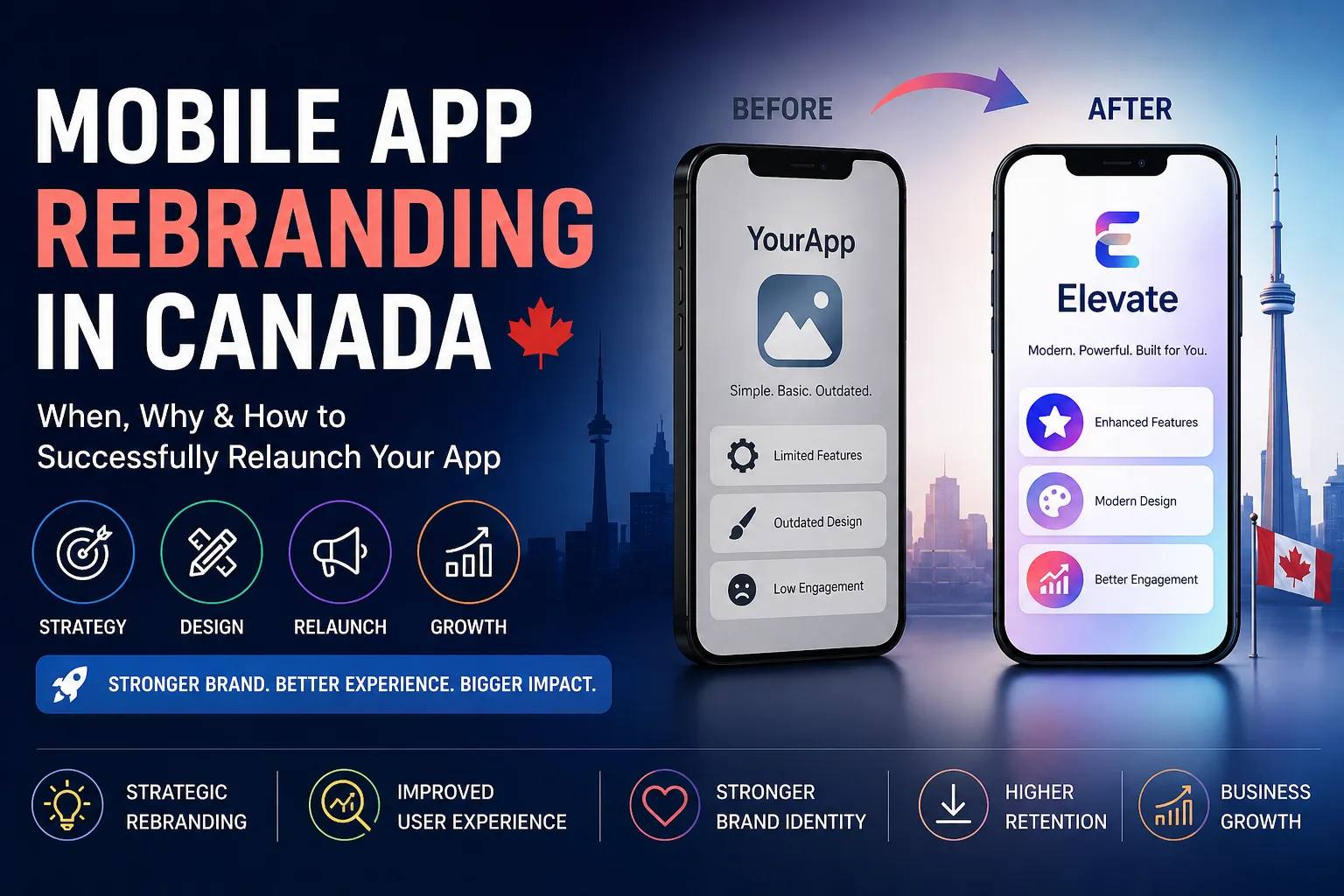
Mobile App Rebranding Canada: Complete Relaunch Strategy Guide (2026)
In Canada’s competitive digital market, launching an app is only the beginning. As user expectations evolve and competition increases, many businesses realize their app branding no longer reflects their growth, audience, or market positioning.
That’s where mobile app rebranding in Canada becomes a strategic move—not just a design update.
Whether you’re a startup pivoting your product or an enterprise modernizing your identity, this guide explains when to rebrand, how to do it properly, and how to relaunch without losing users.
What Is Mobile App Rebranding?
Mobile app rebranding involves changing elements of your app’s identity, including:
- App name
- Logo & visual identity
- UI/UX design
- Brand messaging
- Target positioning
- App Store presence
It can range from a minor refresh to a complete repositioning strategy.
Rebranding is not just cosmetic—it’s strategic.
Why Businesses in Canada Rebrand Their Apps
1. Market Repositioning
You may have shifted your audience, pricing model, or industry focus.
Example: A B2C productivity app repositioning itself as a B2B SaaS tool.
2. Poor User Engagement
Low downloads, retention issues, or declining ratings often signal branding mismatch.
3. Mergers & Acquisitions
If your company merges or gets acquired, branding alignment becomes necessary.
4. Expansion Across Canada
Launching in bilingual markets (English & French) may require localization and brand adjustments.
5. Outdated Design
If your UI feels old compared to competitors, user trust declines.
When Should You Consider App Rebranding?
You should evaluate rebranding if:
- Your growth has stalled
- App Store conversion rates are dropping
- Your brand no longer reflects your value
- You’ve pivoted your product model
- Your visual identity feels outdated
- Negative reviews mention confusion or usability
Rebranding at the right time can revive app downloads and engagement.
Types of App Rebranding
1. Visual Refresh
- Logo redesign
- UI color updates
- Modern typography
Low risk, ideal for established apps.
2. Strategic Repositioning
- Target new audience
- Change pricing model
- Update messaging
Medium to high complexity.
3. Full Rebrand
- New name
- New logo
- New UX
- New positioning
High impact and requires careful rollout.
Step-by-Step App Rebranding Strategy in Canada
Step 1: Brand Audit
Analyze:
- Current user feedback
- Competitor positioning
- Market trends
- Retention metrics
Step 2: Define New Positioning
Clarify:
- Who is your new target audience?
- What problem do you solve better than competitors?
- What emotional message do you want to communicate?
Step 3: Update Visual Identity
This includes:
- Logo
- App icon
- Screenshots
- UI/UX improvements
- Website updates
Consistency is critical across all platforms.
Step 4: Update App Store Optimization (ASO)
Rebranding affects:
- App title
- Keywords
- Description
- Screenshots
- Preview videos
Careful keyword optimization ensures you don’t lose rankings during relaunch.
Step 5: Plan the Relaunch Campaign
Successful relaunch strategies include:
- Email marketing to existing users
- Social media announcement
- PR outreach
- Paid ads campaign
- Influencer collaboration
A silent rebrand often fails. A strategic relaunch builds excitement.
Cost of Mobile App Rebranding in Canada
Costs vary depending on scope:
| Rebranding Type | Estimated Cost (CAD) |
|---|---|
| Visual Refresh | $5,000 – $15,000 |
| Strategic Repositioning | $15,000 – $40,000 |
| Full Rebrand + Relaunch | $40,000 – $100,000+ |
Cost factors:
- UI/UX redesign
- Brand strategy consultation
- ASO updates
- Marketing campaigns
- Development changes
While it requires investment, successful rebranding can significantly increase downloads and retention.
Risks of App Rebranding (And How to Avoid Them)
Risk 1: Losing Existing Users
Solution: Communicate clearly and gradually introduce changes.
Risk 2: Drop in App Store Rankings
Solution: Maintain keyword continuity during title updates.
Risk 3: Confusing Brand Messaging
Solution: Align all touchpoints before launch.
How Rebranding Impacts SEO & ASO
Rebranding affects:
- Website SEO
- App Store rankings
- Backlinks
- Brand searches
Best practice:
- Keep some recognizable brand elements
- Redirect old URLs
- Update schema and metadata
- Monitor ranking fluctuations
App Rebranding Trends in Canada (2026)
- Minimalist app icons
- AI-personalized UI experiences
- Subscription-focused messaging
- Accessibility-first design (WCAG compliance)
- Bilingual branding for Canadian markets
Modern rebrands focus on clarity, trust, and usability.
Final Thoughts
Mobile app rebranding in Canada isn’t just about changing a logo—it’s about redefining how users perceive your product.
A strategic rebrand can:
- Revive stalled growth
- Increase downloads
- Improve retention
- Strengthen brand authority
- Expand into new markets
If executed correctly, a rebrand can transform your app from “just another tool” into a market leader.
Categories: Uncategorized
Have a project in mind?
Let's talk about how we can build it. Free consultation, no obligation.
Get a Free Consultation