
Taxi Booking App Development Canada: Cost, Features Tech Stack Explained (2025)
Introduction
The transportation industry in Canada is undergoing a massive digital transformation. With increasing demand for fast, reliable, and affordable mobility solutions, businesses are actively investing in taxi booking app development in Canada.
From startups building ride-sharing platforms to traditional taxi companies going digital, the need for Uber-like apps is growing rapidly in cities like Toronto, Vancouver, Calgary, and Montreal.
This guide explains everything you need to know — including features, cost, tech stack, business models, and development strategy for 2025.
What Is Taxi Booking App Development?
Taxi booking app development refers to building a digital platform that connects passengers with drivers in real time using GPS and mobile technology.
A modern ride sharing app in Canada typically includes:
- Passenger mobile app
- Driver mobile app
- Admin dashboard
- Payment & tracking system
These apps replicate platforms like Uber and Lyft but can be customized for local markets or niche transportation services.
Why Taxi Booking Apps Are in Demand in Canada
The demand for Uber-like app development in Canada is increasing due to several factors:
- Rapid urbanization and population growth
- High smartphone and internet penetration
- Preference for cashless digital payments
- Demand for safe and transparent transport
- Growth of gig economy drivers
Cities like Toronto and Vancouver are especially strong markets for ride-hailing services.
Types of Taxi Booking Apps
Before development, it’s important to choose the right business model:
1. Ride-Hailing Aggregator Model
Connects passengers with independent drivers (like Uber). Example: Uber
2. Fleet-Based Taxi App
A company owns vehicles and manages drivers internally.
3. Hybrid Model
Combines fleet-owned vehicles + independent drivers for scalability.
4. Corporate Taxi Solutions
Used by businesses for employee transportation and logistics.
Must-Have Features of a Taxi Booking App
A successful transportation app in Canada requires three core modules:
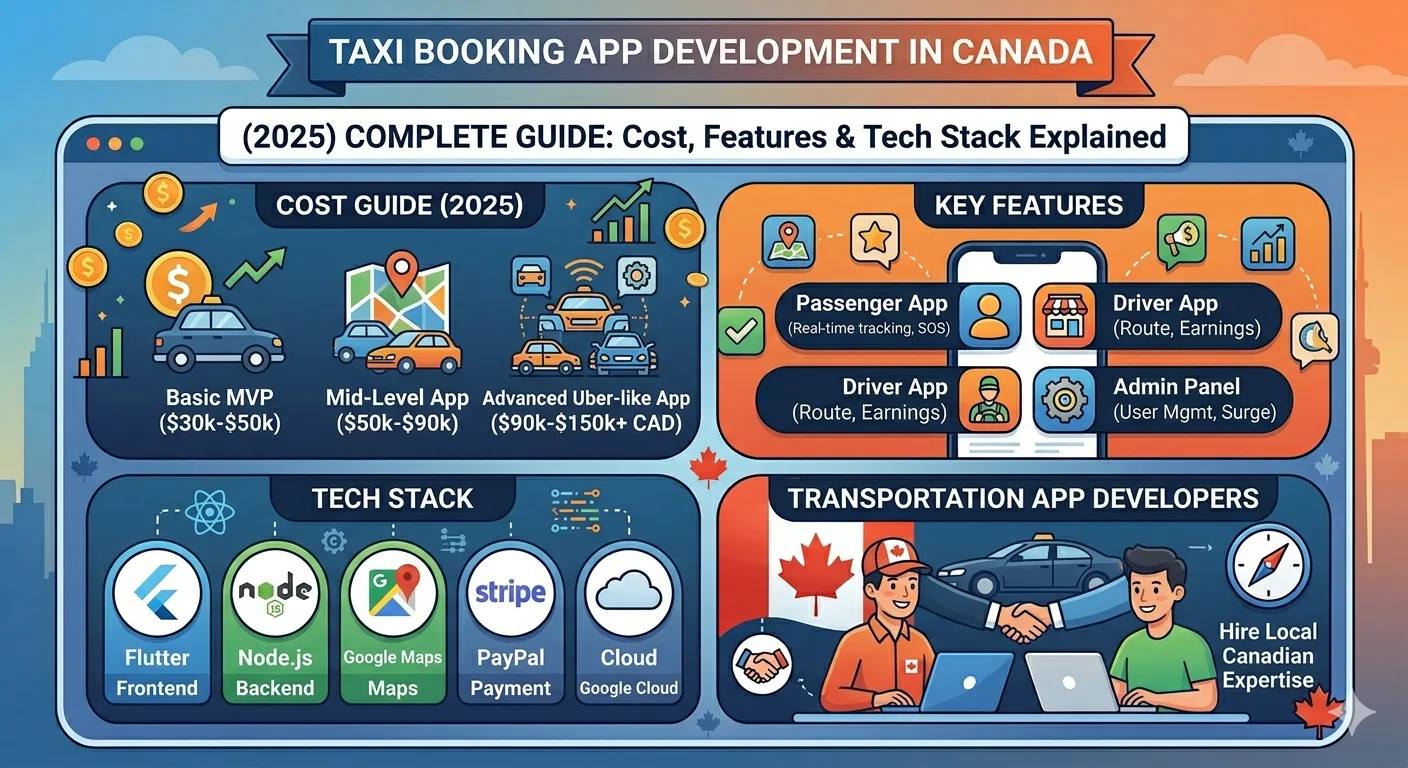
🚕 Passenger App Features
- Easy registration/login
- Live GPS tracking
- Fare estimation
- Ride booking & scheduling
- Multiple payment options (card, wallet, cashless)
- Driver details & ETA tracking
- Trip history
- Ratings & reviews
- SOS emergency button
🚗 Driver App Features
- Driver onboarding & verification
- Ride requests in real time
- Navigation integration
- Earnings dashboard
- Trip history
- Availability toggle
🖥 Admin Panel Features
- User & driver management
- Commission settings
- Ride monitoring dashboard
- Analytics & reporting
- Surge pricing control
- Payment settlement system
Advanced Features (2025 Trends)
To compete in the modern ride-sharing market, apps now include:
- AI-based route optimization
- Dynamic pricing (surge pricing engine)
- Ride pooling (carpool feature)
- In-app chat between driver & passenger
- Voice-based booking
- Electric vehicle integration
- Subscription ride plans
- Real-time fraud detection
Taxi Booking App Development Cost in Canada (2025)
The transportation app cost in Canada depends on complexity and features.
💰 Estimated Cost Breakdown
| App Type | Cost (CAD) |
|---|---|
| Basic MVP App | $30,000 – $50,000 |
| Mid-Level Ride App | $50,000 – $90,000 |
| Advanced Uber-like Platform | $90,000 – $150,000+ |
Key Cost Factors
- Platform (iOS, Android, or both)
- UI/UX complexity
- Real-time GPS integration
- Payment gateway integration
- Backend infrastructure
- Third-party APIs (Maps, SMS, etc.)
- Maintenance & updates
Tech Stack for Taxi Booking App Development
A scalable ride-sharing platform requires a strong tech foundation.
📱 Mobile App Development
- Flutter
- React Native
- Swift (iOS)
- Kotlin (Android)
🖥 Backend Development
- Node.js
- Django
- Laravel
🗺 Location & Maps
- Google Maps API
- Mapbox
💳 Payment Systems
- Stripe
- PayPal
- Apple Pay / Google Pay
☁ Cloud Infrastructure
- AWS
- Google Cloud Platform
- Microsoft Azure
Revenue Models for Ride Sharing Apps
A successful taxi app can generate income through:
💰 Commission per ride (15–30%)
💰 Surge pricing during peak hours
💰 Subscription plans for drivers
💰 Advertising inside the app
💰 Corporate partnerships
Development Timeline
| Phase | Duration |
|---|---|
| Research & Planning | 2–3 Weeks |
| UI/UX Design | 3–4 Weeks |
| Development | 3–6 Months |
| Testing | 3–4 Weeks |
| Deployment | 1–2 Weeks |
Total: 4–7 months
Challenges in Taxi Booking App Development
⚠ High competition from global players ⚠ Real-time tracking accuracy ⚠ Driver acquisition and retention ⚠ Regulatory compliance in Canadian provinces ⚠ Scalability during peak demand
Legal & Compliance Considerations in Canada
To operate legally, ensure:
- Driver background checks
- Commercial insurance coverage
- Provincial transport regulations compliance
- Data privacy compliance (PIPEDA)
- Proper tax handling (GST/HST)
Future of Ride Sharing Apps in Canada (2025 & Beyond)
The industry is evolving with:
- Autonomous (self-driving) taxis
- Electric vehicle fleets
- AI-driven dispatch systems
- Smart city transportation integration
- Sustainable mobility solutions
Early adoption of these technologies will define market leaders.
Conclusion
Taxi booking app development in Canada presents a massive opportunity in 2025. With rising demand for ride sharing apps in Canada, businesses can build scalable, profitable platforms by focusing on:
- Strong UX design
- Scalable backend systems
- Smart monetization models
- Compliance with Canadian regulations
Whether you’re building a startup like Uber or a niche local taxi platform, the right strategy and technology stack can help you succeed in the competitive transportation market.
Categories: Uncategorized
Have a project in mind?
Let's talk about how we can build it. Free consultation, no obligation.
Get a Free ConsultationRelated reading
- Super App Development in Canada: Cost, Features & Business Model Explained (2025)April 14, 2026 · 3 min read
- Game App Development in Canada: Cost, Tech Stack & Monetization Strategies (2025)April 8, 2026 · 3 min read
- iOS App Development in Canada: Cost, Tech Stack & Hiring Guide (2025)March 31, 2026 · 3 min read