
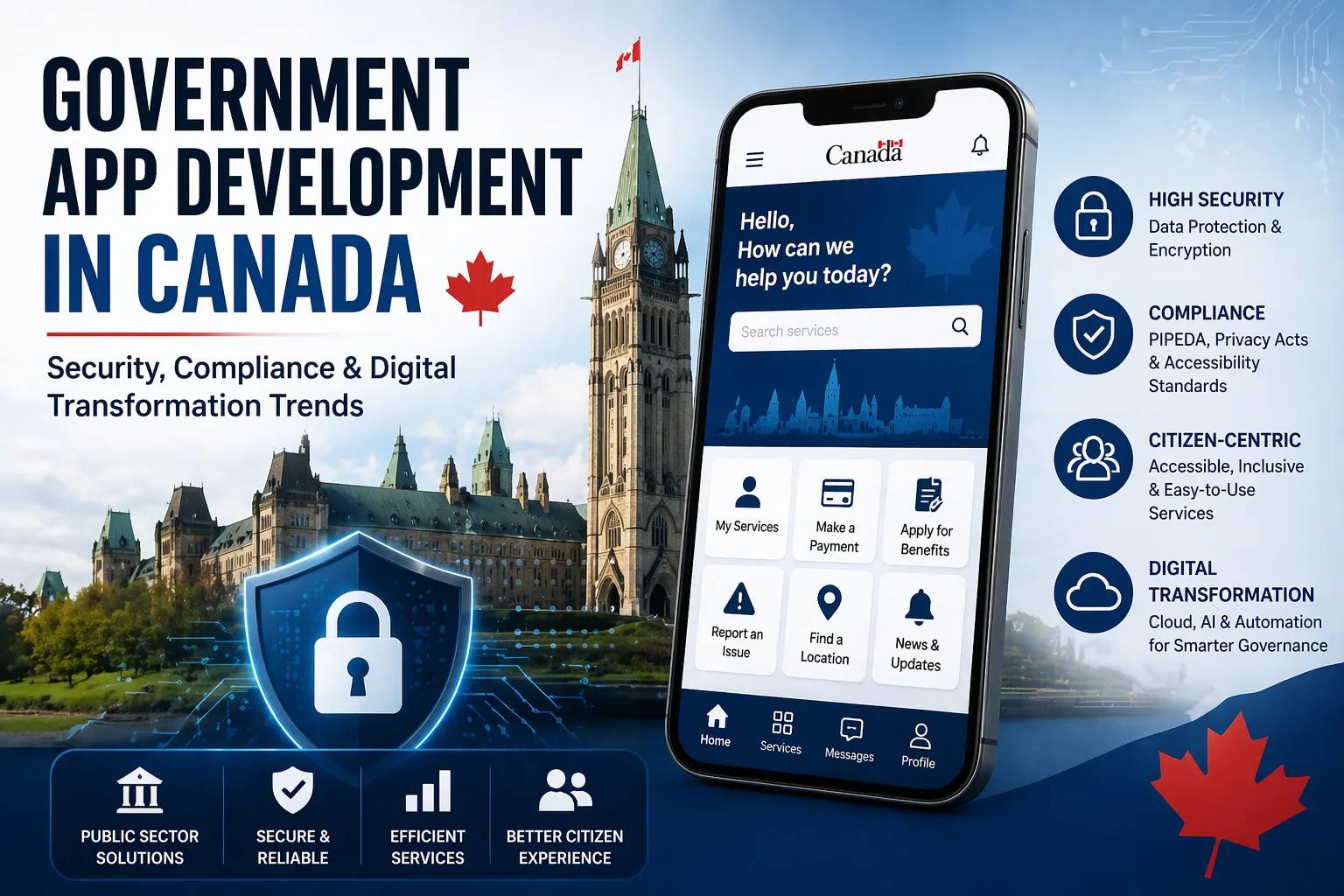
Government App Development Canada (2026 Guide)
Digital transformation is no longer optional for public institutions. Across federal, provincial, and municipal levels, government app development in Canada is accelerating to improve citizen services, transparency, and operational efficiency.
From e-governance portals to mobile service apps and internal workflow systems, public sector software solutions are reshaping how Canadians interact with government services.
In this guide, we’ll explore:
- Compliance and security requirements
- Types of public sector apps
- Development costs
- Key challenges
- Digital transformation trends
- FAQs for government organizations
Why Government App Development Is Growing in Canada
Canadian public institutions are investing in:
- Digital citizen services
- Remote access to government programs
- Secure data management systems
- Automation of internal processes
- AI-driven analytics for decision-making
Citizens now expect the same digital convenience from government services as they receive from private-sector apps.
Compliance & Regulatory Requirements for Public Sector Apps
Security and compliance are the foundation of any government software solution in Canada.
1. PIPEDA (Federal Privacy Law)
Apps handling personal information must comply with Canada’s federal privacy regulations.
2. Provincial Privacy Laws
Each province may have its own legislation governing public-sector data handling.
3. Data Residency Requirements
Many government systems require:
- Canadian data hosting
- Government-approved cloud providers
- Strict data sovereignty compliance
4. Accessibility Standards
Government apps must meet accessibility requirements, including WCAG compliance to ensure equal access for all citizens.
Security Standards in Government App Development
Public sector apps must implement:
- End-to-end encryption
- Multi-factor authentication (MFA)
- Role-based access control
- Audit logs and monitoring
- Secure APIs and backend infrastructure
- Regular penetration testing
Security breaches in government systems can result in legal consequences and loss of public trust.
Types of Government Apps in Canada
1. Citizen Service Apps
- License renewals
- Tax filing portals
- Benefits application systems
- Healthcare service access
2. E-Governance Platforms
- Public record access
- Digital voting systems
- Public consultation platforms
3. Internal Government Workflow Apps
- HR management systems
- Case tracking systems
- Interdepartmental communication tools
4. Emergency & Public Safety Apps
- Alert systems
- Disaster response coordination
- Public safety reporting tools
Cost of Government App Development in Canada (2026)
Government apps are typically more complex due to compliance and security requirements.
Estimated Cost Range (CAD):
| Project Type | Estimated Cost |
|---|---|
| Basic public service app | $60,000 – $120,000 |
| Secure citizen portal | $120,000 – $250,000 |
| Large-scale enterprise system | $250,000 – $500,000+ |
Key Cost Factors:
- Security architecture
- Regulatory compliance implementation
- Cloud infrastructure
- System integrations
- Long-term maintenance & support
Public sector projects often include multi-year maintenance agreements.
Key Challenges in Public Sector App Development
Government organizations in Canada commonly face:
- Complex procurement processes
- Strict compliance requirements
- Integration with legacy systems
- Budget approval cycles
- High public accountability
Working with experienced developers who understand public sector regulations is critical for project success.
Digital Transformation Trends in Canadian Government (2026)
1. Cloud-First Strategy
Many agencies are adopting secure cloud infrastructure for scalability and resilience.
2. AI & Automation
Governments are using AI for:
- Fraud detection
- Predictive analytics
- Citizen support chatbots
3. Mobile-First Citizen Services
More services are being optimized for mobile access to increase accessibility and convenience.
4. Blockchain for Transparency
Some public institutions are exploring blockchain to improve transparency and record integrity.
Best Practices for Successful Government App Development
To ensure project success:
- Conduct thorough security assessments
- Prioritize compliance from the beginning
- Use scalable architecture
- Plan long-term maintenance
- Implement user-centered design
- Ensure accessibility compliance
Government apps must balance innovation with strict regulatory standards.
Final Thoughts
Government app development in Canada requires more than technical expertise. It demands:
- Strong security frameworks
- Deep regulatory knowledge
- Transparent development processes
- Long-term scalability planning
When executed correctly, public sector apps can enhance efficiency, improve citizen engagement, and modernize government services across the country.
Frequently Asked Questions (FAQs)
1. What is government app development in Canada?
Government app development in Canada refers to building secure digital platforms and mobile applications for federal, provincial, or municipal public sector services.
2. Are government apps required to store data in Canada?
In many cases, yes. Government systems often require Canadian data residency to comply with privacy and security regulations.
3. How secure must public sector apps be?
Government apps must implement high-level encryption, multi-factor authentication, audit logging, and compliance with federal and provincial privacy laws.
4. How long does it take to develop a government app?
Timelines range from 6 months for smaller projects to 12–24 months for large-scale enterprise systems due to procurement and compliance requirements.
5. What technologies are used in government software solutions?
Technologies may include secure cloud infrastructure, API-based architectures, AI tools, and scalable backend systems designed for high reliability.
Categories: Uncategorized
Tags: Government App DevelopmentGovernment App Development Canada
Have a project in mind?
Let's talk about how we can build it. Free consultation, no obligation.
Get a Free Consultation