
Importance of Blockchain Intellectual Property Protection
Proving you created something has always been harder than actually creating it. A written contract can be backdated. A file's metadata can be edited. Even a registered copyright only proves you filed paperwork on a certain date, not necessarily when the work was first made. For creators, inventors, and businesses trying to protect original work in a world where content gets copied and reposted in seconds, that gap has always been the weak point.
Blockchain's core trick—an entry that, once made, can't be quietly changed or backdated—turns out to fit that specific problem well. Here's what it actually does for intellectual property protection, how it works in practice, and where it genuinely still falls short.
TL;DR
- Blockchain gives IP owners a tamper-resistant, timestamped record of when a work was registered, which is difficult to alter and easy to verify—useful as supporting evidence in ownership disputes.
- Smart contracts can automate licensing and royalty payments, so a creator gets paid when their work is used without chasing down each transaction manually.
- Real institutions, including intellectual property offices and customs agencies, have explored blockchain-based registration and enforcement systems.
- It is not a legal cure-all: courts are still deciding how much weight to give blockchain evidence, standards vary by platform, and implementation requires real investment.
How Blockchain Actually Helps Protect IP
Proof of Ownership and Timing
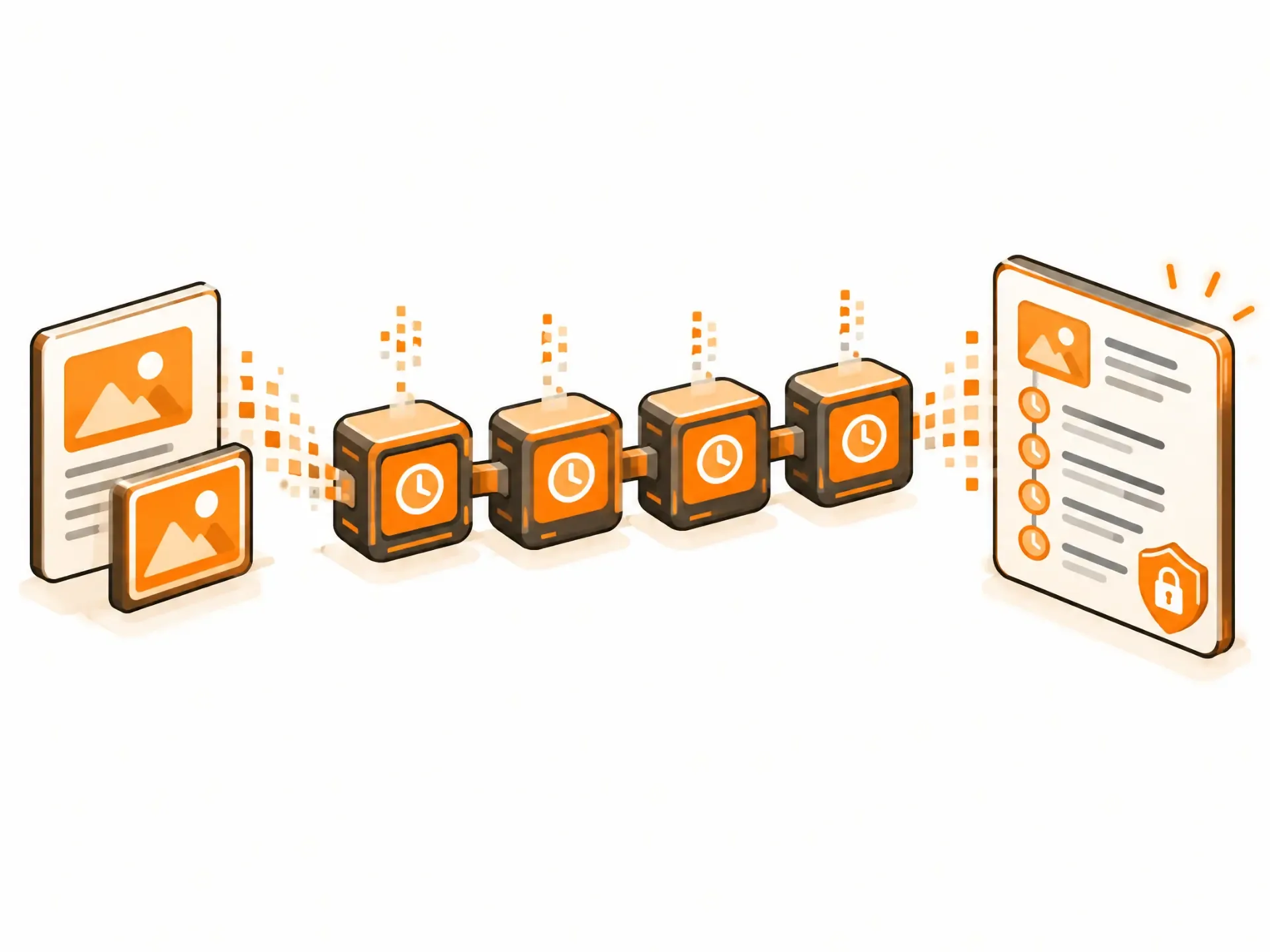
Every entry added to a blockchain gets cryptographically timestamped and becomes effectively permanent—it can't be quietly edited after the fact the way a file's metadata can. In disputes where the exact date of creation matters, that's a genuinely useful thing to have. It is not entirely hypothetical either: in one closely watched copyright case, a French court accepted a blockchain timestamp as evidence of when a work was authored.
Smart Contracts for Licensing and Royalties
A smart contract is essentially a set of rules written into the blockchain that executes automatically when its conditions are met. Applied to IP, that means a license can pay out royalties the moment a work is used or sold, with no invoicing, no manual tracking, and no waiting on someone else to remember to pay. For creators who currently rely on a platform or middleman to calculate and distribute royalties, this removes a layer that has historically been a common source of disputes.
Tracking Usage and Version History
Because entries on a blockchain build on each other in sequence, it is well suited to tracking how a piece of work evolves over time—every draft, every version, and every recorded use in order, without anything getting quietly overwritten. For patents and trademarks specifically, this can create a running record of actual usage, which matters in disputes over whether a mark has been abandoned or a patent's priority date is genuine.
A Marketplace for Licensing IP Directly
Some platforms are exploring blockchain-based IP marketplaces where creators list their work with licensing terms attached, and interested parties can license it directly through the platform—registration, exchange, and payment handled in one place rather than through separate lawyers, contracts, and invoices for each step.
How This Actually Works in Practice
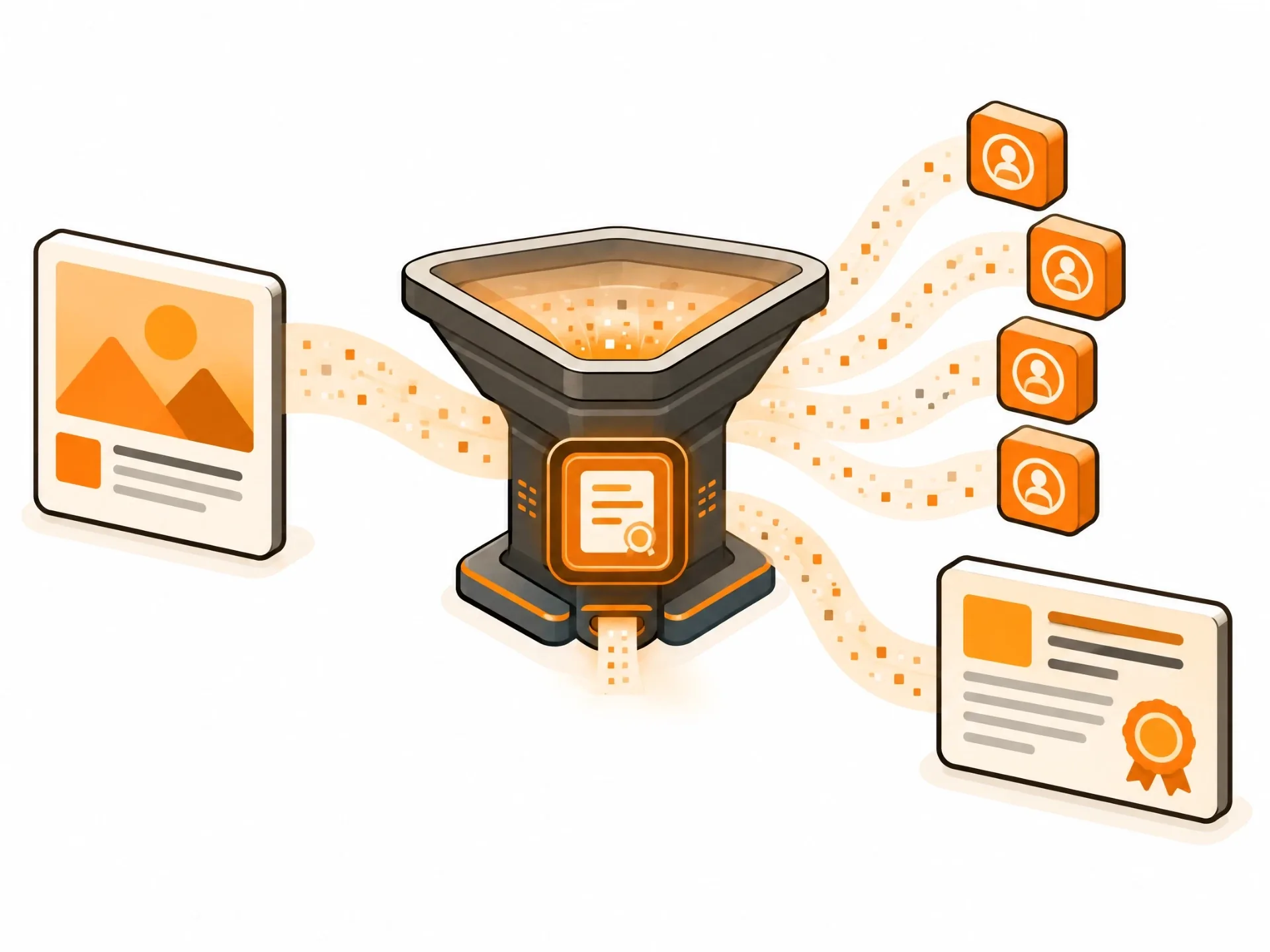
Strip away the jargon and a blockchain IP platform typically involves three kinds of participants: creators who own original work, consumers or licensees who want to use it, and copyright or patent management bodies that step in when something gets disputed.
- The creator registers. They create a profile and submit identifying details about themselves and the work—title, description, classification, and keywords.
- The work goes on the chain. Once registered, the entry becomes part of the permanent, auditable record. It is visible to the relevant participants on the network from that point on.
- A licensee requests access. Someone wanting to use the work submits a request. A smart contract can then be generated automatically, setting out the terms—fee, usage rights, and duration—before access is granted.
- Disputes start with the record, not from scratch. If a disagreement comes up—unauthorized use or a question over who actually owns something—the timestamped history becomes the starting point for resolving it, rather than each side trying to reconstruct events after the fact.
Who Is Actually Testing This Right Now?
This is not purely theoretical. A number of public institutions have explored blockchain's potential for intellectual property registration and enforcement:
- The European Union Intellectual Property Office has researched blockchain applications within IP registration and enforcement.
- India's Patent Office has discussed a blockchain-and-AI-assisted system aimed at making the patent process faster and more transparent.
- U.S. Customs and Border Protection, alongside the Department of Homeland Security, built a proof-of-concept blockchain system for verifying imports and reducing IP theft at the border.
- Thailand's Ministry of Commerce ran a feasibility study with the British Embassy on using blockchain for IP registration.
Real Examples Worth Knowing
Mediachain built a blockchain-based record for multimedia content, letting creators register work and receive attribution when it was used. Spotify acquired Mediachain in 2017 to strengthen how it handles music rights and royalty attribution, providing a concrete example of the technology's perceived value in this space.
Ujo Music, based in London, has used blockchain to let musicians self-publish and manage royalties directly without routing everything through a label. Blockai has taken a similar timestamp-based approach for writers and visual artists trying to document and defend original work.
Where It Still Falls Short
Most discussions of blockchain and IP stop at the upside. The limitations matter because they determine whether this is actually worth pursuing now.
Legal Uncertainty
Blockchain evidence is still new territory for many courts and IP offices. The French case mentioned earlier is an encouraging sign, but it is one data point rather than an established, predictable legal standard. Laws in most jurisdictions have not fully caught up to blockchain-based evidence, creating uncertainty for anyone relying on it as their primary proof.
No Standardization Across Platforms
There is no single blockchain standard for IP registration—different platforms use different approaches, and none is universally recognized. That fragmentation is a genuine adoption barrier: registering a work on one platform does not automatically mean it is recognized or verifiable on another.
Real Cost and Technical Complexity
Setting this up properly is neither free nor simple. It means building custom infrastructure or adopting an existing platform, either of which requires investment to implement and enough technical understanding to rely on it responsibly.
Immutability Cuts Both Ways
The same permanence that makes blockchain useful for proving ownership also means mistakes cannot be quietly corrected once entered. That makes access control and data handling critical design decisions rather than afterthoughts—sensitive information, once recorded on-chain, may be difficult or impossible to remove.
Frequently Asked Questions
Can blockchain replace registering a copyright or patent?
No, not currently. Blockchain can create strong supporting evidence of when a work was registered, but it does not replace formal registration with a patent or copyright office. Think of it as reinforcing your case, not substituting for the official process.
Has blockchain evidence actually held up in court?
In at least one notable case, yes—a French court accepted a blockchain timestamp as evidence in a copyright dispute over authorship date. That said, this is still an emerging area of law, and how much weight courts give blockchain evidence varies by jurisdiction and case.
What is the benefit of smart contracts for IP specifically?
They can automate licensing and royalty payments. When a triggering event happens, such as a sale or recorded usage, the contract can calculate and pay out automatically, with the terms and execution recorded immutably. This removes much of the manual tracking and trust-based follow-up that royalty payments traditionally depend on.
Is blockchain IP protection only useful for digital content like music or art?
No. While it has received significant attention for digital and creative works, the same timestamping and record-keeping can apply to patents, trademarks, and trade secrets—tracking invention disclosures, trademark usage, or version history over a product's development.
What industries are exploring this the most right now?
Government IP offices and customs agencies are among the active public-sector participants, alongside creative industries such as music, art, and publishing where proving authorship quickly and affordably has always been a challenge. Fintech and supply chain are adjacent areas where similar blockchain principles are already more established.
What is the biggest practical risk in building a blockchain IP solution?
Probably the combination of legal uncertainty and lack of standardization. Building on a platform or standard that is not widely recognized means the resulting record might not carry as much weight as expected if it is tested in a dispute. Working with a team that understands both the technology and this uncertainty is important.
Where App-Scoop Fits In
If you are exploring how blockchain could protect original work, automate licensing, or build a registry your business controls, that is exactly the kind of project our Blockchain Consulting & Development team works on—including the Full Stack Development a platform like this needs behind it, not just the blockchain layer in isolation. Get in touch and we will talk through whether it is actually the right fit for what you are trying to protect.
Have a project in mind?
Let's talk about how we can build it. Free consultation, no obligation.
Get a Free Consultation